Blog

  • Omicron variant: What we know, what we don’t, and why not to panic (yet)

    Omicron variant: What we know, what we don’t, and why not to panic (yet)

    On Thanksgiving, my Twitter feed was dominated not by food photos, but by news of a novel coronavirus variant identified in South Africa earlier this week. While the variant—now called Omicron, or B.1.1.529—likely didn’t originate in South Africa, data from the country’s comprehensive surveillance system provided enough evidence to suggest that this variant could be more contagious than Delta, as well as potentially more able to evade human immune systems.

    Note that the words suggest and could be are doing a lot of work here. There’s plenty we don’t know yet about this variant, and scientists are already working hard to understand it.

    But the early evidence is substantial enough that the World Health Organization (WHO) designated Omicron as a Variant of Concern on Friday. And, that same day, the Biden administration announced new travel restrictions on South Africa and several neighboring countries. (More on that later.)

    In today’s issue, I’ll explain what we know about the Omicron variant so far, as well as the many questions that scientists around the world are already investigating. Along the way, I’ll link to plenty of articles and Twitter threads where you can learn more. As always, if you have more questions: comment below, email me, (betsy@coviddatadispatch.com), or hit me up on Twitter.

    Where did the Omicron variant come from?

    This is one major unknown at the moment. South Africa was the first country to detect Omicron this past Monday, according to STAT News. But the variant likely didn’t originate in South Africa; rather, this country was more likely to pick up its worrying signal because it has a comprehensive variant surveillance system.

    Per The Conversation, this system includes: “a central repository of public sector laboratory results at the National Health Laboratory Service, good linkages to private laboratories, the Provincial Health Data Centre of the Western Cape Province, and state-of-the-art modeling expertise.”

    Researchers from South Africa and the other countries that have detected Omicron this week are already sharing genetic sequences on public platforms, driving much of the scientific discussion about this variant. So far, one interesting aspect of this variant is that, even though Delta has dominated the coronavirus landscape globally for months, Omicron did not evolve out of Delta.

    Instead, it may have evolved over the course of a long infection in a single, immunocompromised individual. It also may have flown under the radar in a country or region with poor genomic surveillance—which, as computational biologist Trevor Bedford pointed out on Twitter, is “certainly not South Africa”—and then was detected once it landed in that country.

    Why are scientists worried about Omicron?

    Omicron seems to be spreading very quickly in South Africa—potentially faster than the Delta variant. Based on publicly available sequence data, Bedford estimated that it’s doubling exponentially every 4.8 days.

    An important caveat here, however, is that South Africa had incredibly low case numbers before Omicron was detected—its lowest case numbers since spring 2020, in fact. So, we cannot currently say that Omicron is “outcompeting” Delta, since there wasn’t much Delta present for Omicron to compete with. The current rise in cases may be caused by Omicron, or it may be the product of a few superspreading events that happen to include Omicron; we need more data to say for sure.

    Still, as Financial Times data reporter John Burn-Murdoch pointed out: “There’s a clear upward trend. This may be a blip, but this is how waves start.”

    Another major cause for concern is that Omicron has over 30 mutations on its spike protein, an important piece of the coronavirus that our immune systems learn to recognize through vaccination. Some of these mutations may correlate to increased transmission—meaning, they help the virus spread more quickly—while other mutations may correlate to evading the immune system.

    Notably, a lot of the mutations on Omicron are mutations that we simply haven’t seen yet in other variants. On this diagram from genomics expert Jeffrey Barrett, the purple, yellow, and blue mutations are all those we haven’t seen on previous variants of concern, while the red mutations (there are nine) have been seen in previous variants of concern and are known to be bad. 

    Some of these new mutations could be terrible news, or they could be harmless. We need more study to figure that out. This recent article in Science provides more information on why scientists are worried about Omicron’s mutations, as well as what they’re doing to investigate.

    How many Omicron cases have been detected so far?

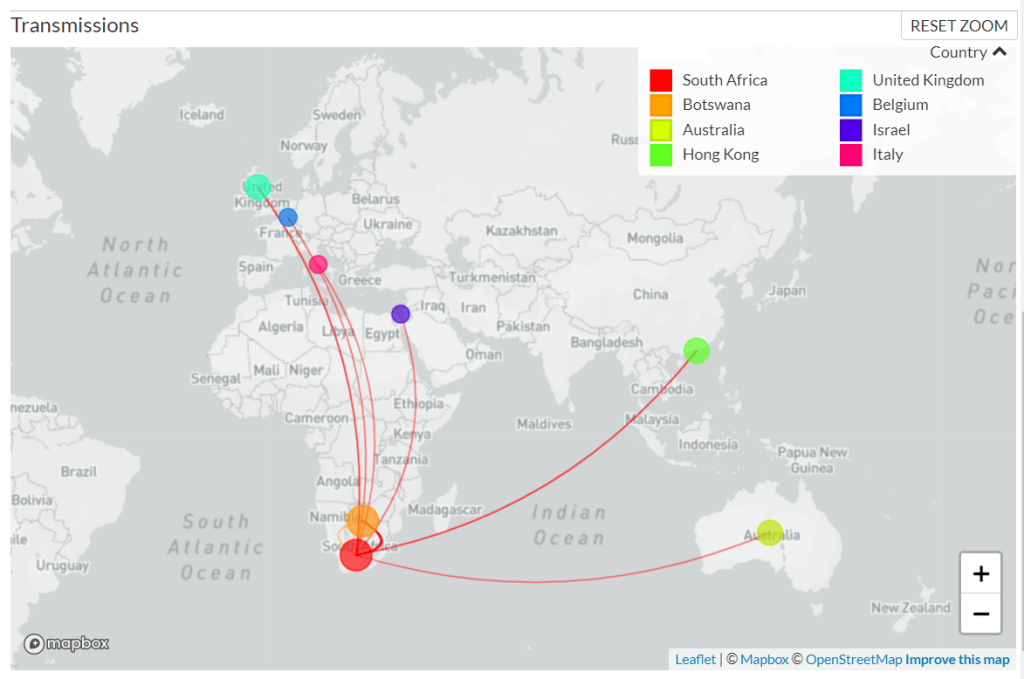
    As of Sunday morning, genetic sequences from 127 confirmed Omicron cases have been shared to GISAID, the international genome sharing platform. The majority of these cases (99) were identified in South Africa, while 19 were identified in nearby Botswana, two in Hong Kong, two in Australia, two in the U.K., one in Israel, one in Belgium, and one in Italy.

    According to BNO News, over 1,000 probable cases of the variant have already been identified in these countries. Cases have also been identified in the Netherlands, Germany, Denmark, the Czech Republic, and Austria. Many of the cases in the Netherlands are connected to a single flight from South Africa; the travelers on this flight were all tested upon their arrival, and 61 tested positive—though authorities are still working to determine how many of those cases are Omicron. 

    The U.K. Health Security Agency announced on Saturday that it had confirmed two Omicron cases in the country. Both of these cases, like those in Israel and Belgium, have been linked to travel—though the Belgium case had no travel history in South Africa. “This means that the virus is already circulating in communities,” Dr. Katelyn Jetelina writes in a Your Local Epidemiologist post about Omicron

    After South African scientists sounded the alarm about Omicron, cases were detected in Botswana, Australia, Hong Kong, Israel, the U.K., and other countries. Chart via GISAID, screenshot taken about 11:30 AM NYC time on November 28.

    Omicron hasn’t been detected in the U.S. yet. But the CDC is closely monitoring this variant, the agency announced in a rather sparse Friday press release.

    Luckily, Omicron is easy to identify because one of its spike protein mutations enables detection on a PCR test—no genomic sequencing necessary. Alpha, the variant that originated in the U.K. last winter, has a similar quality.

    How does Omicron compare to Delta?

    This is another major unknown right now. As I mentioned earlier, Omicron is spreading quickly in South Africa, at a rate faster than Delta spread when it arrived in the country a few months ago. But South Africa was seeing a very low COVID-19 case rate before Omicron arrived, making it difficult to evaluate whether this new variant is directly outcompeting Delta—or whether something else is going on.

    (Note that a couple of the tweets below refer to this variant as “Nu,” as they were posted prior to the WHO designating it Omicron.)

    We also don’t know if Omicron could potentially evade the human immune system, whether that means bypassing immunity from a past coronavirus infection or from vaccination. However, vaccine experts say that a variant that would entirely evade vaccines is pretty improbable.

    Every single coronavirus variant of concern that we’ve encountered so far has responded to the vaccines in some capacity. And the variants that have posed more of a danger to vaccine-induced immunity (Beta, Gamma) have not become dominant on a global scale, since they’ve been less transmissible than Delta. Our vaccines are very good—not only do they drive production of anti-COVID antibodies, they also push the immune system to remember the coronavirus for a long time.

    It’s also worth noting here that, so far, Omicron does not appear to be more likely to cause severe COVID-19 symptoms. Angelique Coetzee, chairwoman of the South African Medical Association, announced on Saturday that cases of the variant have been mild overall. Hospitals in South Africa are not (yet) facing a major burden from Omicron patients.

    What can scientists do to better understand Omicron?

    One thing I cannot overstate here is that scientists are learning about Omicron in real time, just as the rest of us are. Look at all the “We don’t know yet.”s in this thread from NYU epidemiologist Céline Gounder:

    Gounder wrote that we may have answers to some pressing questions within two weeks, while others may take months of investigation. To examine the vaccines’ ability to protect against Omicron, scientists are doing antibody studies: essentially testing antibodies that were produced from past vaccination or infection to see how well they can fight off the variant.

    At the same time, scientists are closely watching to see how fast the variant spreads in South Africa and in other countries. The variant’s performance in the U.K., where it was first identified on Saturday, may be a particularly useful source of information. This country is currently facing a Delta-induced COVID-19 wave (so we can see how well Omicron competes); and the U.K. has the world’s best genomic surveillance system, enabling epidemiologists to track the variant in detail.

    How does Omicron impact vaccine effectiveness?

    We don’t know this yet, as scientists are just starting to evaluate how well human antibodies from vaccination and past infection size up against the new variant. The scientists doing these antibody studies include those working at Pfizer, Moderna, and other major vaccine manufacturers. Pfizer’s partner BioNTech has said it expects to share lab data within two weeks, according to CNBC reporter Meg Tirrell:

    If BioNTech finds that Omicron is able to escape immunity from a Pfizer vaccination, the company will be able to update that vaccine within weeks. Moderna is similarly able to adjust its vaccine quickly, if lab studies show that an Omicron-specific vaccine is necessary.

    Even if we need an updated vaccine for this variant, though, people who are already vaccinated are not going back to zero protection. As microbiologist Florian Krammer put it in a Twitter thread: “And even if a variant vaccine becomes necessary, we would not start from scratch… since it is likely that one ‘variant-booster’ would do the job. Our B-cells can be retrained to recognize both, the old version and the variant, and it doesn’t take much to do that.”

    What can the U.S. do about Omicron?

    On Friday, the Biden administration announced travel restrictions from South Africa and neighboring countries. The restrictions take effect on Monday, but virus and public health experts alike are already criticizing the move—suggesting that banning travel from Africa is unlikely to significantly slow Omicron’s spread, as the variant is very likely already spreading in the U.S. and plenty of other countries.

    At the same time, travel restrictions stigmatize South Africa instead of thanking the country’s scientists for alerting the world to this variant. Such stigma may make other countries less likely to share similar variant news in the future, ultimately hurting the world’s ability to fight the pandemic.

    So what should the U.S. actually be doing? First of all, we need to step up our testing and genomic surveillance. As I mentioned above, Omicron can be identified from a PCR test; an uptick in PCR testing, especially as people return home from Thanksgiving travel, could help identify potential cases that are already here.

    We also need to increase genomic surveillance, which could help identify Omicron as well as other variants that may emerge from Delta. In a post about the Delta AY.4.2 variant last month, I wrote that the U.S. is really not prepared to face surges driven by coronavirus mutation:

    We’re doing more genomic sequencing than we were at the start of 2021, which helps with identifying potentially concerning variants, but sequencing still tends to be clustered in particular areas with high research budgets (NYC, Seattle, etc.). And even when our sequencing system picks up signals of a new variant, we do not have a clear playbook—or easily utilized resources—to act on the warning.

    We also need to get more people vaccinated, in the U.S. and—more importantly—in the low-income nations where the majority of people remain unprotected. In South Africa, under one-quarter of the population is fully vaccinated, according to Our World in Data.

    What can I do to protect myself, my family, and my community?

    In general, do all of the same things that you’ve already been doing. Most importantly, get vaccinated (including a booster shot, if you’re eligible).

    Also: Wear a mask in indoor spaces, ideally a good quality mask (N95, KN95, or double up on surgical and cloth masks). Avoid crowds if you’re able to do so. Monitor yourself for COVID-19 symptoms, including those that are less common. Utilize tests, including PCR and rapid tests—especially if you’re traveling, or if you work in a crowded in-person setting. 

    I’ve seen some questions on social media about whether people should consider canceling holiday plans, or other travel plans, because of Omicron. This is a very personal choice, I think, and I’m no medical expert, but I will offer a few thoughts.

    As I said in the title of this post, we don’t yet know enough about this variant for it to be worth seriously panicking over. All of the evidence—based on every single other variant of concern that has emerged—suggests that the vaccines will continue to work well against this variant, at least protecting against severe disease. And all of the other precautions that work well against other variants will work against this one, too.

    So, if you are vaccinated and capable of taking all the other standard COVID-19 precautions, Omicron is most likely not a huge risk to your personal safety right now. But keep an eye on the case numbers in your community, and on what we learn about this variant in the weeks to come. 

    What does Omicron mean for the pandemic’s trajectory?

    This variant could potentially lead to an adjustment in our vaccines, as well as to new surges in the U.S. and other parts of the world. It’s too early to say how likely either scenario may be; we’ll learn a lot more in the next couple of weeks.

    But one thing we can say right now, for sure, is that this variant provides a tangible argument for global vaccine equity. If the country where Omicron originated had a vaccination rate as high as that of the U.S. and other high-income nations, it may not have gained enough purchase to spread—into South Africa, and on the global path that it’s now taking. 

    As physician, virologist, and global health expert Boghuma Kabisen Titanji put it in a recent interview with The Atlantic:

    If we had ensured that everyone had equal access to vaccination and really pushed the agenda on getting global vaccination to a high level, then maybe we could have possibly delayed the emergence of new variants, such as the ones that we’re witnessing.

    I will end the post with this tweet from Amy Maxmen, global health reporter at Nature. The Omicron variant was a choice.

    More variant reporting

  • National numbers, November 28

    National numbers, November 28

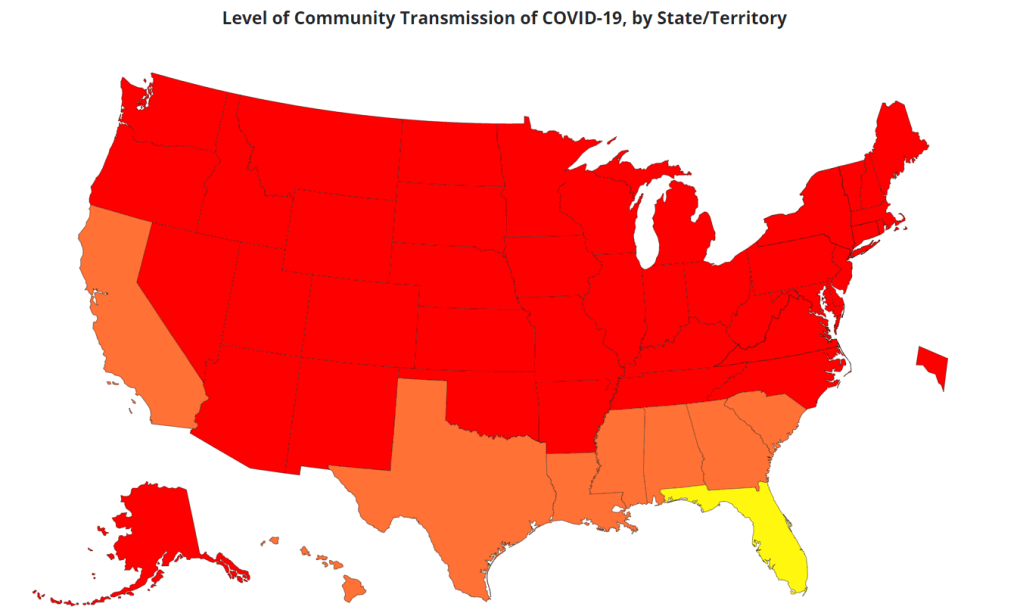
    Community transmission levels by state, as of November 24. Florida is the only state with “moderate” transmission, while several other Southern states have “substantial” transmission. Chart via the CDC.

    In the past week (November 18 through 24), the U.S. reported about 660,000 new cases, according to the CDC.* This amounts to:

    • An average of 94,000 new cases each day
    • 201 total new cases for every 100,000 Americans

    Last week, America also saw:

    • 41,000 new COVID-19 patients admitted to hospitals (12 for every 100,000 people)
    • 6,900 new COVID-19 deaths (2.1 for every 100,000 people)
    • 100% of new cases are Delta-caused (as of November 20)
    • An average of 1.8 million vaccinations per day (including booster shots; per Bloomberg)

    *Note: This week, the CDC did not provide COVID-19 data updates for most metrics on Thursday, Friday, or Saturday due to the holiday, so my update is based on Wednesday’s data.

    As is typically the case on holidays, Thanksgiving has made COVID-19 reporting a bit wonky. The CDC didn’t update its dashboard at all from Thursday through Saturday, and it is not updating vaccination data all weekend. At the same time, public health workers at many state and local agencies are taking a well-deserved long weekend off—leading to delayed reports of cases that will show up in the next couple of weeks. 

    Still, cases seem to continue trending up at the national level. The U.S. is now reporting close to 100,000 new cases a day, and holiday travel is likely to push this number up further. Michigan, Minnesota, and New Hampshire are the country’s three biggest hotspots, per the latest Community Profile Report (released Wednesday), all with over 500 total new cases per 100,000 people in the past week.

    Other Northern states—Wisconsin, Maine, Colorado, Vermont—are also reporting high case rates, while Southern states continue to see lower numbers. Florida actually has the lowest case rate in the country, at 49 new cases per 100,000 people in the past week. This state is likely benefitting from COVID-19’s seasonal nature, combined with a lot of built-up immunity from the region’s summer Delta surge.

    Nationally, the number of COVID-19 deaths in the U.S. in 2021 has surpassed the total deaths from the virus in 2020. Even though vaccines have been widely available for most of this year. The 2020 number is likely a significant undercount, as many people who contracted the coronavirus in spring 2020 were unable to get tested—but still, this milestone is disheartening.

    Vaccination numbers have increased dramatically in the U.S. in recent weeks with well over one million shots given a day, thanks to booster shot availability and new eligibility for children under age 12. About 38 million people have now received their third doses, according to the CDC. But whether this will be enough to blunt the coming winter surge remains to be seen.

  • COVID source callout: CDC’s breakthrough case data

    The CDC has not updated its breakthrough case data since September. A full two months ago.

    Earlier in 2021, the agency reported a total count of breakthrough infections, hospitalizations, and deaths—then switched to reporting only those breakthrough cases leading to hospitalization or death in May.

    The page that used to house this data now no longer includes total case counts; instead, the CDC redirects users to a couple of other pages:

    The CDC and FDA expanded booster shot eligibility to all adults in part because of increasing COVID-19 cases across the country.  But without comprehensive breakthrough case data, as I’ve said numerous times, it’s hard to pinpoint exactly how well the vaccines are working—and who’s most at risk of a breakthrough case.

    MedPage Today, which published a detailed article on this topic, received a statement from the CDC claiming that the breakthrough case and death data will be updated “in mid-November, to reflect data through October 2.” This long lag is due to the time it takes for the CDC to link case surveillance records to vaccination records, the agency said.

    Almost a year into the U.S.’s COVID-19 vaccination campaign, you’d really think our national public health system would have a better way of monitoring breakthrough cases by now.

  • Sources and updates, November 21

    • CDC adds data on 5-11 vaccinations: The main vaccinations page on the CDC’s COVID-19 dashboard now includes vaccination rates for all U.S. residents ages 5 and older, in addition to all the previous categories (12 and older, 18 and older, 65 and older). These rates are available by dose and by state. Plus, the CDC has added an age 5-11 category to its demographic vaccination trends page. Notably, age 5-11 data haven’t been added to the Community Profile Reports yet, but I expect this will happen in the next couple of weeks.
    • Breakthrough case reporting by state: 36 states are reporting breakthrough COVID-19 cases, 34 are reporting breakthrough hospitalizations, and 37 are reporting breakthrough deaths, according to a report from former COVID Tracking Project researchers and the Rockefeller Foundation. The report also discusses the challenges of tracking breakthrough cases and the importance of linking clinical and demographic data to these cases.
    • Long COVID resources from ApresJ20: ApresJ20, a Long COVID association based in France, has compiled this extensive document of over 1,000 scientific papers about the condition. Topics include defining Long COVID, characterizing symptoms, managing patient care, genetic associations, and more. For each paper, the document includes its title, authors, publish date, peer review status, and summary.

  • Reader question: How long will COVID-19 restrictions continue?

    Reader question: How long will COVID-19 restrictions continue?

    When will we exit the COVID-19 safety freeway and enter a “pandemic offramp?” Image edited from Michael Rivera / Wikimedia Commons.

    A couple of weeks ago, I received a reader question from a friend of mine who recently got engaged! He and his fiancée are planning a wedding in summer 2023, and he asked me: “How likely do you think it is that (1) the COVID-19 pandemic remains a serious danger to our safety in the summer of 2023 and (2) the government still has the energy to keep enforcing COVID-19 restrictions?” I’m going to tackle these questions one at a time.

    Will the COVID-19 pandemic still be a serious danger to our safety in summer 2023?

    I talked to an epidemiologist last week (for an upcoming story); he pointed out that COVID-19 is incredibly unpredictable—even for the most knowledgeable experts.

    We don’t know why Delta surges appear to dip after two months, for example, or why cases might pick back up again after a decline. We can hypothesize (at least in the U.S.) that cold weather and more indoor gatherings are playing a role in the current beginnings-of-a-surge, but that’s a hypothesis. And there are plenty of other questions we’re still working to answer about the coronavirus, from why some people are superspreaders to how the virus can cause symptoms that last over a year.

    So, it’s hard for me to say whether we’ll see more COVID-19 surges after the one that seems likely this winter, or what those surges will look like—whether we can stave off most severe infections with vaccinations (and booster shots), or whether hospitals will become overwhelmed yet again.

    At the same time, we know that the vaccines are very good at protecting people from COVID-19. Three-dose series (and two-dose series with Johnson & Johnson) are especially good at protecting people, including from infection, transmission, severe disease, and Long COVID.

    These incredible vaccines were developed based on early coronavirus strains, identified in China in early 2021. And they’re still working great against pretty much all variants. In the past couple of months, I’ve asked several experts what they think future variants might look like; and the consensus is that new mutations basically will arise from Delta at this point. The virus could get more contagious (as we saw with AY.4.2), but it seems unlikely that it would evolve to evade vaccine-induced immunity.

    Here’s Senjuti Saha, a sequencing expert from Bangladesh (whom I interviewed for my Popular Science story on global vaccine equity), discussing this issue:

    If we let infections hang around for too long without protecting people, without decreasing the burden of infection, it would not be surprising at all [if we see] newer variants. Will this be just a more concerning mutant of Delta? It’s possible. But it also could be something completely new that we’re not able to predict at the moment.

    But I think it’s also very, very hard for us to get a new variant that will evade all vaccines. With the number of vaccines we have, we can really vaccinate many, many new people very, very quickly. I think no matter what variant comes, we will be able to bring it under control.

    Of course, as far as I know, nobody saw a variant as contagious as Delta coming—so this could be overly optimistic. Again, there’s still a lot we don’t understand about this virus!

    Will the government still enforce COVID-19 restrictions in summer 2023?

    This second part of my friend’s question gets at a concept called “pandemic offramps,” which I’ve seen discussed a lot in COVID-19 scientist circles recently. The idea is, essentially, we need to decide how to get off the current freeway of COVID-19 safety and resume some kind of “normal life.”

    The New York Times recently devoted its morning newsletter to this concept, asking when Americans will stop needing to “organize their lives around COVID-19.” The newsletter argued that vaccinated people already accept risk that’s comparable to COVID-19 in other ways, such as driving in cars.

    But this piece drew criticism for suggesting that the U.S. loosen restrictions more when a new surge is approaching, more than 1,000 Americans are dying of COVID-19 every day, and billions around the world are still unvaccinated.

    We’re clearly not anywhere close to the “end of the pandemic” right now. But at some point, our leaders will need to answer some questions, such as: When are masks no longer necessary in public spaces? What about rigid vaccination checks, or regular testing for certain schools and businesses?

    In a recent article for The Atlantic, Sarah Zhang argues that the U.S. needs to agree on a new COVID-19 goal. We’re no longer striving for 70% of adults to get vaccinated by July 4, so what are we striving for? Is there a vaccination threshold that we can label “herd immunity,” or a daily case threshold that would signify the ability to loosen restrictions?

    Since public health systems in the U.S. are so fragmented, these questions likely won’t be answered all at once for everyone, but will be answered individually—by states, cities, school districts, businesses, and other institutions. New Mexico has already done this, to a certain extent, with a tiered system that helps counties add or remove COVID-19 safety measures based on outbreak levels.

    And of course, in some states, it seems like leaders have already decided that any level of COVID-19 cases is acceptable, as long as businesses stay open. We can see other (less conservative) leaders go in this direction, too, with the popularization of booster shots rather than, say, implementing new mask mandates.

    So, my TL;DR here is: I think serious restrictions on the level of wedding cancellation are pretty unlikely. Rather, the wedding venue might require vaccines, maybe including booster shots (possibly even multiple rounds of booster shots!). Maybe it will require COVID-19 tests or masks indoors, or the wedding planners might want to impose such precautions themselves for the safety of their guests.

    Personally, I hope that by summer 2023, we can at least buy rapid tests in bulk at Costco.

  • Boosters for all adults: Why eligibility expanded, and what it means for you

    Boosters for all adults: Why eligibility expanded, and what it means for you

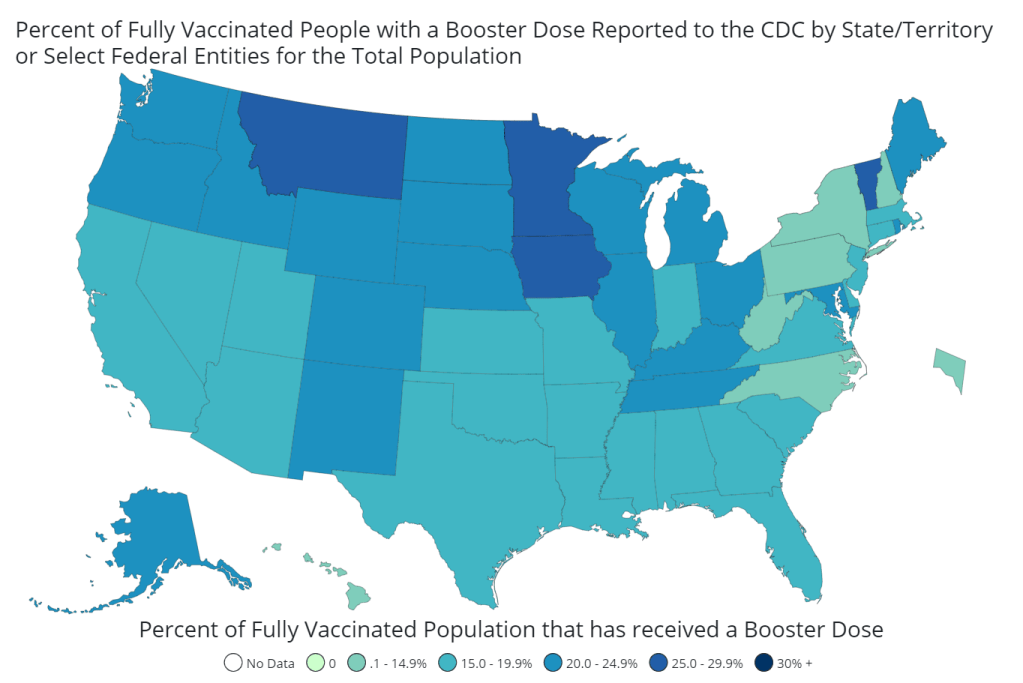
    As of November 20, almost 35 million Americans have received a booster shot. That number is likely to shoot up in the coming weeks with expanded eligibility. Chart via the CDC.

    On Friday morning, the FDA authorized booster shots of Pfizer’s and Moderna’s COVID-19 vaccines for all adults in the U.S., six months after their first two doses. The CDC’s vaccine advisory committee voted to support this expanded booster eligibility that afternoon, and CDC leadership signed off on it a few hours later.

    Although the Biden administration has supported boosters for all adults since August, this specific federal eligibility expansion was preceded by several state and local leaders. Prior to Friday, the governors of Colorado, New Mexico, California, and other states said that any adult living in their jurisdictions could go get a booster, even if they didn’t fit the current national criteria. New York City leaders made a similar announcement this past Monday.

    Perhaps spurred on by these state decisions, the FDA and CDC moved quite quickly to authorize booster shots for a larger group of Americans. The FDA was originally just considering the move for Pfizer’s vaccine, then added Moderna to the mix just this week (when Moderna sent in a formal application).

    And the CDC’s vaccine advisory committee meeting had somewhat less time for deliberation than this committee typically tends to take. As Helen Branswell wrote in STAT News:

    The meeting was called on such short notice — it was announced Tuesday — that only 13 of the committee’s members were able to attend. When the meeting went longer than scheduled, two members had to leave without voting.

    I discussed expanded booster shot eligibility this week in a FiveThirtyEight Chat with editor Chadwick Matlin and science writer Maggie Koerth. Today at the COVID-19 Data Dispatch, I’d like to expand on the ideas in that chat piece, and attempt to answer a couple of other questions.


    Why expand booster eligibility to all adults?

    The short answer here is 1) more compelling evidence that boosters provide additional protection against coronavirus infection and 2) cases are rising in the U.S., and boosters might help make the surge less severe. Also, so far, very few cases of severe side effects have been reported following booster shots.

    Since the last FDA and CDC booster shot deliberations, more evidence has rolled in showing their efficacy. One notable study, from the Imperial College of London, was published this past Wednesday; the report suggests that people who’ve received two COVID-19 vaccine doses are more than twice as likely to test positive than those who’ve received three doses.

    While the study hasn’t yet been peer-reviewed, it’s part of a long-running surveillance project in the U.K. that examines COVID-19 prevalence in the entire population—including all age groups and comparing those who received Pfizer and AstraZeneca vaccines. “What they found is very, very strong data showing that as soon as 7 days after a third COVID-19 vaccine dose, the risk of infection is cut in half when you look at the entire population,” wrote Dr. Jorge Caballero in a Twitter thread summarizing the study. 

    At the same time, cases are going up in the U.S.—appearing to indicate a new winter surge. It’s no coincidence that Colorado and New Mexico, two of the states that were among the first to expand booster eligibility to all adults, are also among the states with the highest COVID-19 case rates.

    When Delta hit Israel this past summer, the country started administering booster shots: first to seniors at the end of July, then for younger and younger age groups until all adults were able to get the shots. Data from the country’s national health agency suggest that these booster shots played a key role in driving down case numbers among both vaccinated and unvaccinated Israelis.

    Personally, I am still a bit skeptical that Israel’s drop in cases was thanks to booster shots alone, as the data don’t necessarily show causation. But for a lot of U.S. leaders, the Israeli data provide a compelling model: it seems like booster shots can potentially drive down a case surge. This fits nicely into the national strategy that the Biden administration has already been preaching for months, which I call “vaccinate out of the pandemic.”

    Here’s how I explained it in the FiveThirtyEight chat piece:

    Listening to the advisory-committee meetings, I noticed that there seems to be this tension between the scientific experts who want to make robust evidence-based decisions — and the sense that, here in the U.S., our overall pandemic strategy is basically “vaccinate our way out of the pandemic.” If we had better masking, distancing, contact tracing, ventilation, rapid tests and everything else, we would not need boosters to stop people’s mild cases. But we’re not doing a great job at any of those other things, so … we kinda need boosters.

    Maggie Koerth also pointed out that booster shots are also politically easier for a lot of leaders than some of the other COVID-19 strategies I mentioned. We already have the shots stockpiled, so it’s just a matter of telling people to go get them—unlike, say, expanding contact tracing, which would take a huge investment in hiring and training people.

    In addition, the eligibility expansion solves communication and logistics challenges: now, every adult in the U.S. can just go get a booster shot, once enough time has passed from their first two doses. Almost 90% of vaccinated Americans were eligible already, but a lot of people were confused about whether they fit the criteria; the situation became much simpler after Friday.

    Should you get a booster shot?

    If you’re over 65 or you have a health condition that makes you particularly vulnerable to severe COVID-19 symptoms, answering this question is easy: YES. Go get a booster shot, as soon as you’re able to do so.

    If you live or work in a setting that puts you at risk of contracting the coronavirus—or if you live or work in a setting with other people who are more vulnerable than you—then you also have a pretty solid argument towards getting a booster shot.

    Even if you’re very unlikely to have a severe case of COVID-19 thanks to your initial vaccination, a mild case could still disrupt your work, your household, and others in your community. A teacher with breakthrough COVID-19 might cause their classroom to shut down for a week, for example, while a parent with breakthrough COVID-19 may interrupt their kids’ lives if those kids are too young to be vaccinated themselves.

    For those who don’t fall into these categories (like me!), the situation is a bit more complicated. But after following all of the news this week, I’ve decided that it does make sense for me to get my booster shot.

    Here’s why: much as I wish that national leadership and my own local leaders in NYC were investing in other measures to control COVID-19 cases, I don’t foresee widespread mask mandates, rapid tests, contact tracing, or any other safety overhauls anytime soon. Instead, my public health leaders are asking me (and those around me) to get booster shots in order to potentially lower case rates. So, I’ll do my part to contribute to that “vaccinate out of the pandemic” strategy, though I don’t necessarily agree with it.

    It’s also important to note here that vaccinating the people who are still unvaccinated is much more important for lowering overall case counts—and for keeping people out of the hospital—than boosters. That includes kids in the 5 to 11 age group. As Maggie Koerth said in our chat:

    If you’re under 65 and you’re not immune compromised, it almost certainly matters more to get your kiddos vaxxed the first time than to get yourself a booster. That’s my parent-centric takeaway from all this reading.

    And, of course, to end the pandemic on a global scale, we need to get first and second doses to everyone in the world. Right now, booster shots are hindering global vaccination: according to the WHO, there are about six times more boosters administered daily in wealthy nations right now than there are first and second doses administered in low-income nations.

    The U.S. has already chosen to stockpile millions of doses for boosters, so refusing a booster shot on an individual level doesn’t have any impact on the global situation. But there are other options for people who want to take action about vaccine inequality: for example, you can contact your congressional representatives about the issue.

    What happens after a lot of Americans get booster shots?

    Someone asked me this question on Twitter earlier this week. Do booster shots lead to other loosening COVID-19 restrictions, or something else?

    It’s difficult to answer that right now, because the U.S. is still close to the beginning of our booster shot rollout. Within a couple of months—and millions more doses—we’ll have some data on whether booster shots here lead to a drop in cases, like what we saw in Israel. At the same time, many European countries are similarly offering booster shots to wide swaths of their populations; we can also watch what happens in those nations.

    The U.S. is still likely to face a case surge this holiday season, I think, simply due to cold weather combined with travel and gatherings. But perhaps booster shots will mean that hospitalizations don’t rise as much as cases do, or that a higher share of the cases are mild. We’ll have to see.

    Looking beyond this winter, we could see three shots become standard for COVID-19 vaccines. (Several other vaccines, such as HPV, are three-shot series.) We could also see annual boosters for COVID-19, similar to flu shots. More study of the booster shots’ effectiveness and of long-term COVID-19 immunity in general will help scientists figure this out.

    Finally, I couldn’t end this post without pointing out the continued data gaps here. The U.S. is still not tracking breakthrough cases in any kind of comprehensive manner, and a lot of information is missing on who’s getting booster shots—the CDC and most states are not reporting demographic data on booster recipients.

    To quote Dr. Katelyn Jetelina from her recap of Friday’s CDC advisory committee meeting:

    And this is it. This [three small studies] is all the data the CDC presented today. Which is insane— the United States does not have a real-time, comprehensive picture of our vaccines, nor the number of breakthrough cases, nor who’s more likely to have a breakthrough case or not. I cannot emphasize enough of how detrimental this is to our public health response. Bad data produces (potentially) bad policy. We are flying blind.


    More vaccine reporting

  • National numbers, November 21

    National numbers, November 21

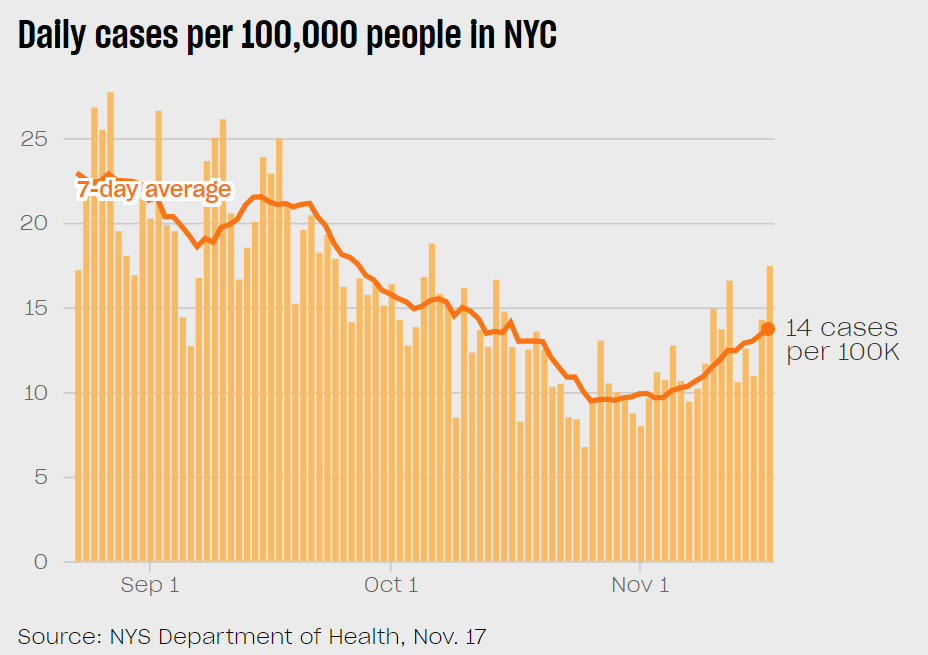
    New York City is now seeing about 14 new cases for every 100,000 people each day. Chart via THE CITY’s COVID-19 dashboard.

    In the past week (November 13 through 19), the U.S. reported about 620,000 new cases, according to the CDC. This amounts to:

    • An average of 88,000 new cases each day
    • 189 total new cases for every 100,000 Americans
    • 16% more new cases than last week (November 6-12)

    Last week, America also saw:

    • 38,000 new COVID-19 patients admitted to hospitals (12 for every 100,000 people)
    • 7,200 new COVID-19 deaths (2.2 for every 100,000 people)
    • 100% of new cases are Delta-caused (as of November 13)
    • An average of 1.3 million vaccinations per day (including booster shots; per Bloomberg)

    Last week, I wrote that the U.S. was at the start of a winter surge; this week, the surge is beginning to take off. Nationwide, cases are up 16% from last week to this week, and up 24% from two weeks ago. It’s not as sharp of an increase as what we saw during the first Delta surge in the summer, but it’s still concerning. New hospitalizations are also rising, up about 5% from last week.

    Michigan and Minnesota are now the country’s top hotspots, with 589 and 524 new cases for every 100,000 people in the past week, respectively, per the latest Community Profile Report. Other hotspots include more northern states: New Hampshire, North Dakota, Wisconsin, Vermont. After being a success story for most of the pandemic, Vermont is now seeing its highest case numbers yet.

    Meanwhile, in Europe, the ongoing surge has prompted increasingly strict COVID-19 safety measures. The government of Austria, which is also seeing record-high case numbers, announced on Friday that COVID-19 vaccination is now mandatory for the entire adult population. This follows a lockdown for unvaccinated Austrians only.

    Nearly 80% of Austrian adults are vaccinated, according to the New York Times; the U.S. is in a similar position. But here, all the attention is on booster shots—more than 33 million Americans have now received boosters—and on shots for kids in the recently eligible 5 to 11 age group. About 10% of kids in that age group have now received their first doses, which may seem less impressive when one considers that the U.S. had enough doses for the entire eligible population ready to go when the FDA and CDC approved the shots.

    In NYC, where I live, the case rate is now up at about 14 new cases for every 100,000 people, every day. That adds up to almost 100 new cases for every 100,000 people in the last week, meeting the CDC’s threshold for high transmission. About three in every four residents are vaccinated.

    To combat this increase, city leaders announced on Monday that all adults were eligible for a booster shot—a few days before the FDA and CDC made the same decision for all adults in the U.S. (More on that eligibility later in this issue.) But no efforts have been made to cut down on indoor dining, curb the crowds in Times Square, or actually enforce mask-wearing on the subway. In this new surge, it truly feels like everyone is out here fending for themselves.

  • (COVID) source shout-out: Data Is Plural

    This week, I want to give a shout-out to Data Is Plural: a newsletter by Jeremy Singer-Vine, the data editor at BuzzFeed News. Every Wednesday, Singer-Vine sends out links to and notes on a few interesting datasets, ranging from toxic pollution to movie script analysis.

    While this is not a COVID-specific source, the newsletter has frequently featured COVID-related datasets in the past two years—and I have occasionally pulled from it for my own featured sources section. I definitely recommend signing up for it, if you aren’t on the list already.

    Also, I got to hear Singer-Vine talk about his data editing philosophy at a training session yesterday, which was pretty cool. It was the first and only time I’ve ever heard someone read a Borges short story during a journalism webinar.

  • Sources and updates, November 14

    • Directory of Local Health Departments: The National Association of County and City Health Officials maintains this database of all local public health departments in the U.S. You can navigate to health department lists for specific states by clicking on the map, or explore a 180-page PDF that includes the name, website link, and contact information (in some cases) for every single department. 
    • Media and Misinformation update from the KFF Vaccine Monitor: The Kaiser Family Foundation typically updates its COVID-19 Vaccine Monitor project with reports once a month. This week, however, the Vaccine Monitor team released an additional report focusing on American adults’ experiences with misinformation. One key finding: about 78% of those surveyed “believe or are unsure about at least one common falsehood” about COVID-19 or the vaccines.
    • More data on vaccination for kids 5-11 is coming: About 900,000 children in the recently-eligible 5 to 11 age group were vaccinated in the first week since the CDC authorized shots for these kids, the White House announced on Wednesday. At the time, this estimate was higher than official numbers on the CDC’s dashboard due to data lags; but the agency is planning to publish more data on this age group by the end next week, according to Bloomberg editor Drew Armstrong.

  • Thinking about COVID-19 risk as winter approaches

    Thinking about COVID-19 risk as winter approaches

    I recently received a question from a COVID-19 Data Dispatch reader that followed a similar theme to many questions that readers, friends, and family members have asked me in the past few months. The question essentially outlined an event in the reader’s personal life that they’d been invited to attend, and asked for my advice: should they go? How risky was this event?

    I have a hard time answering these types of questions directly, because I am no medical expert—I’m far from qualified to give direct advice. Instead, I like to outline my own attitudes towards risk at the pandemic’s current moment, and try to explain what I might do in that situation.

    Right now, this type of decision-making feels harder than ever before. The majority of Americans are fully vaccinated, and we know how well the vaccines work. A growing number of Americans are getting booster shots, which we know are highly protective for seniors (and at least seem to reduce infection risk for others). So many of us are tired of the pandemic, and want to have a normal holiday season this year.

    But at the same time, I feel an impetus to stay cautious—to protect the people around me as much as I can—as COVID-19 cases start to rise again in New York City, where I live, and in many other places around the country. 

    It’s also important to note here that everyone has a different risk comfort zone right now, partially as a product of a dearth of local and federal safety regulations at this point in the pandemic. If you’re fully vaccinated, and you’re comfortable hanging out inside with a large group of fully vaccinated people, there is evidence to suggest that is a largely safe situation for you. But if you’re not comfortable at such an event, there is also evidence to suggest that you may be able to pick up the coronavirus (even from a fully vaccinated crowd) and bring it back to someone who is more vulnerable than you are. Every choice comes with a calculation—what risk are you willing to bring to yourself and to those around you? 

    With all of that in mind, there are a few things I consider when I try to decide how “risky” an event might be. First of all, I still consider outdoor events to be very safe; the benefits of open air, wind, and sun far outweigh Delta’s high capacity for transmission. Then, for indoor events, I think about a few different layers of safety measures:

    • Will everyone be fully vaccinated?
    • Will negative COVID-19 tests be required before the event?
    • Will masks be required?
    • Will windows be open, or will ventilation in the space otherwise be high-quality?
    • What are the COVID-19 case numbers in the surrounding county; are they above or below the CDC’s “substantial transmission” threshold (50 total new cases for every 100,000 people in the past week)?

    When at least three of these five conditions are met, I personally would consider an event safe for attendance. When fewer than three conditions are met, I tend to add additional layers of protection for myself and others in my immediate community by wearing a high-quality mask and getting tested before and after. (I might use an at-home rapid test or a PCR test, depending on how much security I want in that test result.

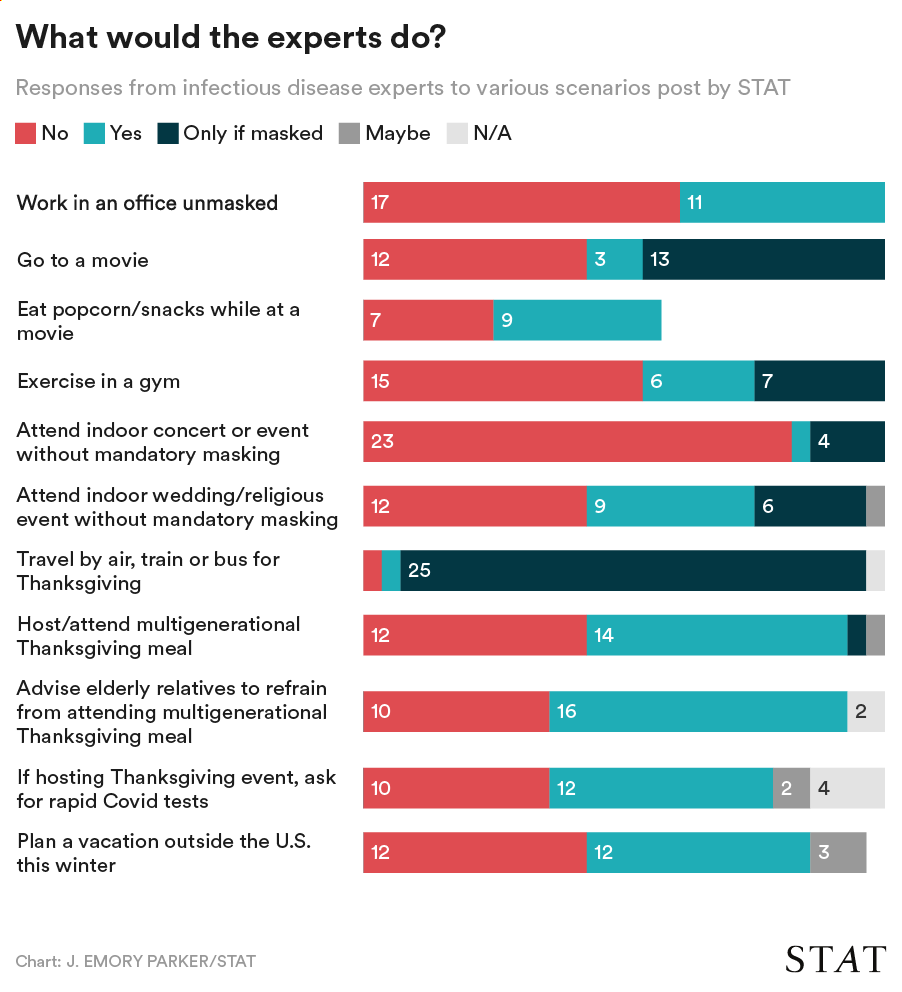
    STAT News surveyed 28 infectious disease experts on activities they would currently feel comfortable doing. Chart via STAT.

    Finally, if you’d rather listen to the insights of some high-profile COVID-19 experts than to me, I’ve got a source for you: STAT News recently surveyed 28 infectious disease experts on which activities they would feel comfortable doing right now. The responses to STAT’s survey reveal a diversity of risk comfort levels, even among people who are incredibly well-informed about the pandemic.

    The vast majority of experts said they would travel by air, train, or bus for Thanksgiving (mostly with a mask on), and the majority said they would not attend an indoor concert or event without mandatory masks. Other than that, all the questions are fairly split. The article (which I recommend reading in full!) includes a number of insights from those experts explaining their survey responses.