Blog

  • National numbers, December 12

    National numbers, December 12

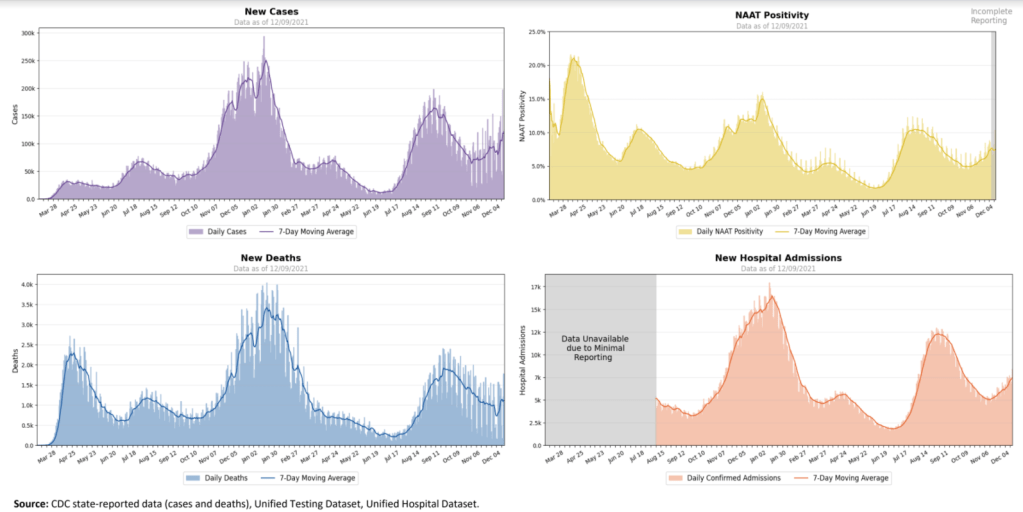
    All major COVID-19 metrics shot up in the U.S. this week. Chart from the December 9 HHS Community Profile Report.

    In the past week (December 4 through 10), the U.S. reported about 830,000 new cases, according to the CDC. This amounts to:

    • An average of 119,000 new cases each day
    • 253 total new cases for every 100,000 Americans
    • 37% more new cases than last week (November 27-December 3)

    Last week, America also saw:

    • 52,000 new COVID-19 patients admitted to hospitals (16 for every 100,000 people)
    • 7,600 new COVID-19 deaths (2.3 for every 100,000 people)
    • 99.9% of new cases are Delta-caused (as of December 4)
    • An average of 2.3 million vaccinations per day (including booster shots; per Bloomberg)

    Remember how, last week, I said that the dip in the CDC’s case counts was a vestige of Thanksgiving data delays—and we’d see more cases in the next week? Well, we’re seeing those cases now. Cases have increased by 37% from last week to this week, and they’ve increased by 55% in the last month.

    Hospitalizations are also going up: the number of new COVID-19 patients admitted to hospitals each day has risen 16%, to over 7,000. About 56,000 people are currently hospitalized with COVID-19 in the U.S., as of Thursday. And, tragically, death counts are rising as well: once again, over 1,000 Americans are dying from COVID-19 every day.

    Current hotspots include states in the Northeast and Midwest. New Hampshire reported the most cases per capita last week, at 659 new cases for every 100,000 people, per the latest Community Profile Report. Michigan, Minnesota, Rhode Island, and New Mexico also all reported over 500 new cases for every 100,000 people.

    In many parts of the country, COVID-19 patients have once again pushed hospitals to their breaking points, as the pandemic intersects with staff shortages and burnout as well as flu and other conditions. “We’re at capacity on a daily basis,” the president of a hospital system in Detroit told a local reporter.

    Despite growing Omicron concerns (more on that later), the Delta variant is clearly driving this surge. According to the CDC’s estimates, the Delta variant has caused more than 99% of cases in the week ending December 4, while Omicron has yet to cause even 0.1%. If Omicron is able to outcompete Delta in the U.S., the situation could become even more dire.

    It’s now been two years since a COVID-19 patient first sought medical attention, at a hospital in Wuhan, China. Though most Americans didn’t become aware of the pandemic until March 2020, the coronavirus was already spreading in December 2019—meaning that now, in December 2021, we’re entering Year Three of this global crisis. I hope this can be the year that we get vaccines to every country in the world, and truly get the virus under control.

  • COVID source shout-out: Collecting Omicron data

    As the world waits for more information on Omicron, I’d like to give a shout-out to the scientists collecting data on this novel variant and sharing it with the public. As of today, over 500 Omicron sequences have been posted to the genome sharing site GISAID.

    If you’d like to keep up with the new sequences, there are three sources I recommend:

    • GISAID, an international organization working to quickly share data on coronavirus and flu virus strains.
    • Nextstrain, an open-source pathogen tracking platform supported by the Fred Hutchinson Cancer Research Center and other institutions.
    • CoVariants, a platform visualizing coronavirus variant data, run by Dr. Emma Hodcroft at the University of Bern with support from other scientists.

  • Sources and updates, December 5

    • State approaches to contact tracing: This report from the National Academy for State Health Policy, updated on December 2, explores how every U.S. state is approaching contact tracing for COVID-19 cases. The report includes state partnerships with research institutions, adjustments for case surges, workforce sizes and training, digital contact tracing apps, and more. (H/t Al Tompkins’ COVID-19 newsletter.)
    • KFF COVID-19 Vaccine Monitor (December update): The newest polling report from the Kaiser Family Foundation’s Vaccine Monitor project is out this week, detailing public opinion on vaccinations, including booster shots, mandates, and more. Two notable findings: four in ten Republican adults are unvaccinated, and Republicans are less likely to report receiving a booster dose than Democrats.

  • Cash incentives for vaccination have little impact

    Cash incentives for vaccination have little impact

    Over the past year, vaccine incentives have become a popular strategy among businesses and state and local governments. From free donuts to free Mets tickets, Americans have had opportunities to get bonus rewards along with protection from the coronavirus. And one particularly common incentive is cash, offered through small payments accompanying vaccinations and lotteries that only vaccinated people can enter.

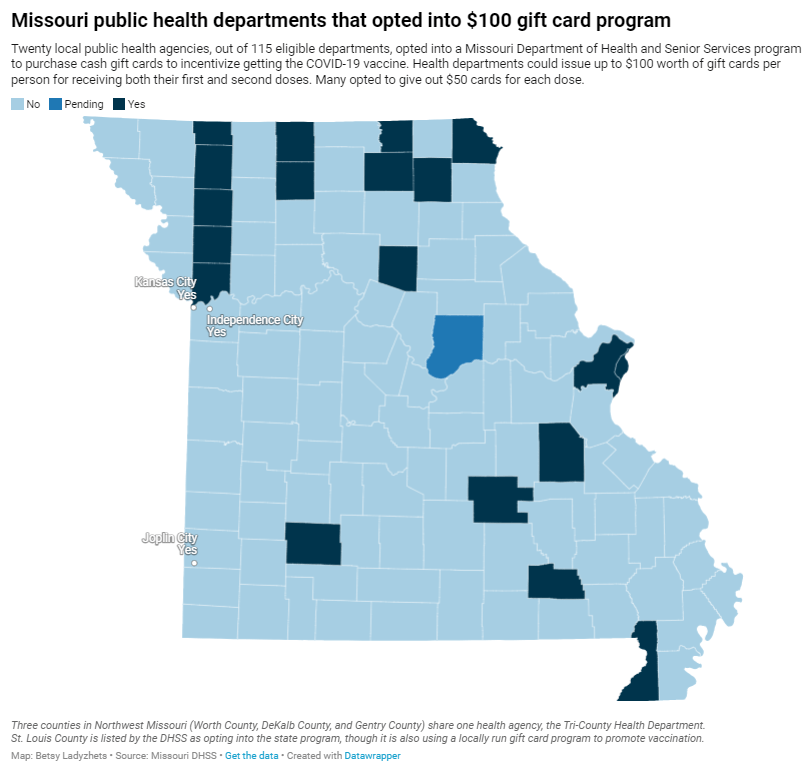
    While politicians at all levels have praised cash incentives, research has shown that this strategy has little impact on actually convincing Americans to get vaccinated. A recent investigation I worked on (at the Documenting COVID-19 project and the Missouri Independent) provides new evidence for this trend: the state of Missouri allocated $11 million for gift cards that residents could get upon receiving their first or second vaccine dose, but the vast majority of local health departments opted not to participate in the program—and a very small number of gift cards have been distributed thus far. 

    The Missouri program’s limited success fits into a national pattern. “It’s hard to tease out a causal effect of a program that’s not introduced with the purpose of a research experiment,” Dr. Allan Walkey, an epidemiologist at Boston University who’s studied vaccine incentives, told me. Still, Walkey said, the majority of research on these programs has found that cash incentives are not driving huge numbers of people to get their shots.

    Walkey specifically studied a vaccine lottery in Ohio, the first state to set up such a program. While initial reports by state leaders suggested that a lot of people got vaccinated after the lottery was announced, Walkey found that, in fact, the new vaccinations were more likely caused by an expansion of vaccine eligibility. Two days before the lottery was announced, the Pfizer vaccine was authorized for children between the ages of 12 and 15.

    The lottery “didn’t have a large effect on vaccine uptake,” Walkey told me. Studies of vaccine lotteries in other states have found similar results.

    For this story, I also spoke to Ashley Kirzinger, a polling expert at the Kaiser Family Foundation (KFF) who helps run KFF’s Vaccine Monitor surveys. In these surveys, KFF sorts unvaccinated Americans into categories based on their vaccine attitudes: “wait and see,” “only if required,” and “definitely not.” Kirzinger told me that cash incentives, vaccine requirements for events, and other social pressures are more likely to “motivate the ‘wait and see’ or ‘only if required’” groups.

    But for those Americans who “definitely” don’t want to get vaccinated, these incentives aren’t likely to move the needle. In fact, the people in this group may be angered by incentives, because they could see such programs as unfair pressure from the health system.

    This was true in some Missouri local public health departments. For example, in Carter County—where the local agency did opt in to the state gift card program—a planned vaccination drive with the gift cards was canceled due to local opposition.

    “​​So many parents and community members were upset, we were not allowed to hold the vaccination event at the school,” said Michelle Walker, the county health center administrator.

    Overall, out of 115 local public health agencies in Missouri that were eligible to participate in the incentive program, just 20 opted to get gift cards. Most departments purchased $50 gift cards, so that residents could get $50 at their first vaccine dose and $50 at their second dose.

    Through surveying the local agencies that participated, my colleague Tessa Weinberg and I obtained data from 10. Out of 6,378 gift cards that the agencies were able to purchase with state funding, we found that just 1,712 had been distributed so far, as of late November.

    !function(){“use strict”;window.addEventListener(“message”,(function(e){if(void 0!==e.data[“datawrapper-height”]){var t=document.querySelectorAll(“iframe”);for(var a in e.data[“datawrapper-height”])for(var r=0;r<t.length;r++){if(t[r].contentWindow===e.source)t[r].style.height=e.data["datawrapper-height"][a]+"px"}}}))}();

    Read the full story for more on why many departments didn’t participate in this gift card program, and how it’s going for the departments that did opt in.

  • Vaccines aren’t enough: What Biden can do about Omicron

    Vaccines aren’t enough: What Biden can do about Omicron

    This past Monday, President Biden gave a speech about the Omicron variant. He told America that Omicron is “cause for concern, not a cause for panic,” and thanked the South African scientists who alerted the world to this variant. (Though a travel ban is not a great way to thank those scientists!)

    Towards the end of the speech, he said: “We’re throwing everything we can at this virus, tracking it from every angle.” Which I, personally, found laughable. As I’ve pointed out in a previous post about booster shots, the U.S.’s anti-COVID strategy basically revolves around vaccines, and has for most of 2021.

    My Tweet about Biden’s vaccine-only strategy got more attention than I’m used to receiving on the platform, so I thought it was a worthwhile topic to expand upon in the COVID-19 Data Dispatch. Why aren’t vaccines enough to address Omicron—or our current surge, for that matter—and what else could the Biden administration be doing to slow the coronavirus’ spread?

    Why aren’t vaccines enough?

    Prior to Delta’s spread, there was some talk of reaching herd immunity: perhaps if 70% or 80% of Americans got fully vaccinated, it would be sufficient to tamp down on the coronavirus. But Delta’s increased capacity to spread quickly, combined with the vaccines’ decreased capacity to protect against infection and transmission, have shown that vaccines are not enough to eradicate the virus.

    In thinking about this question, I returned to an article that Ed Yong wrote for The Atlantic back in August:

    Here, then, is the current pandemic dilemma: Vaccines remain the best way for individuals to protect themselves, but societies cannot treat vaccines as their only defense. And for now, unvaccinated pockets are still large enough to sustain Delta surges, which can overwhelm hospitals, shut down schools, and create more chances for even worse variants to emerge. To prevent those outcomes, “we need to take advantage of every single tool we have at our disposal,” [Shweta Bansal of Georgetown University] said. These should include better ventilation to reduce the spread of the virus, rapid tests to catch early infections, and forms of social support such as paid sick leave, eviction moratoriums, and free isolation sites that allow infected people to stay away from others.

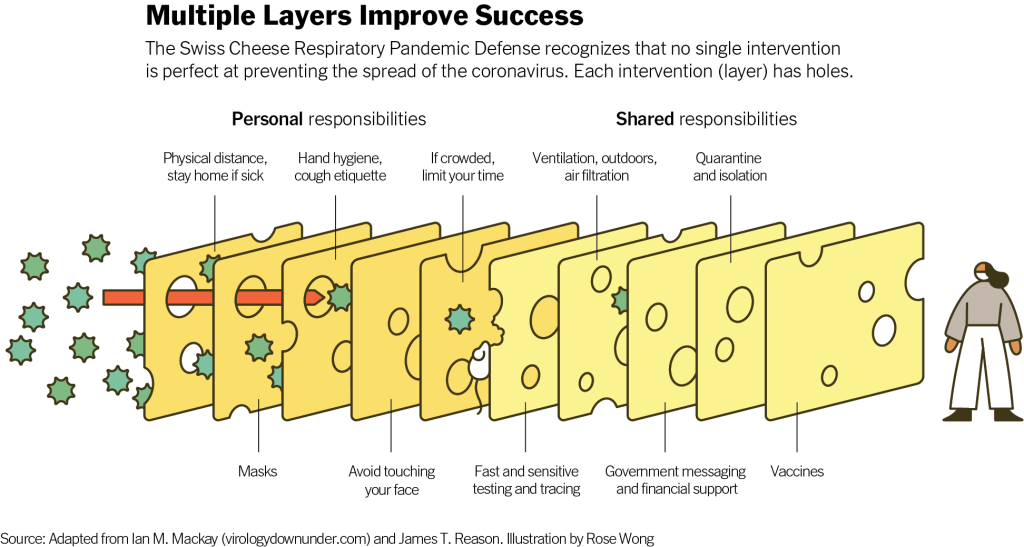
    Remember that Swiss cheese model of pandemic interventions? Vaccines may be the best protection we have against the coronavirus, but they’re still just one layer of protection. All the other layers—masks, testing, ventilation, etc.—are still necessary, too. Especially when we’re dealing with a new variant that might not respond as well to our vaccines.

    What we could do: better masks

    One strategy that we could employ against Omicron, as well as against the current Delta surge, is better masks. While cloth masks certainly make it less likely for the coronavirus to spread from one person to another, their efficacy varies greatly depending on the type of material, the number of layers, and the mask’s fit.

    N95 masks do the best job at stopping the coronavirus from spreading, followed by KN95 masks. Surgical masks do a better job than cloth masks, but making sure these masks fit properly can be a challenge for some people (including yours truly, who has a very narrow face!). Layering a surgical mask and cloth mask may be a safer option to get both good fit and protection, though two layers of mask can be challenging to wear for long periods of time.

    Some experts have recommended that the U.S. mail N95 or KN95 masks to all Americans, or at least require these masks in high-risk areas, such as on flights. Germany and other European countries established similar requirements last summer.

    What we could do: more widely available testing

    In many countries—including the U.K., Germany, India, and others—rapid tests are freely available. Here in the U.S., on the other hand, the tests are quite expensive (often upwards of $10 for one test) and difficult to find, with pharmacies often limiting the number of packages that people can buy at once.

    Biden has attempted to increase rapid testing access as part of his latest COVID-19 plan: in January, private insurance companies will be required to cover the cost of rapid tests. But this doesn’t solve the supply issue, and it doesn’t really make the tests more accessible, either. The measure would still require people to buy tests out of pocket, then fill out insurance reimbursement forms to maybe get their money back. Can you imagine anyone actually doing this?

    In addition, as some experts have pointed out, the people most likely to need rapid tests—essential workers and others in high-risk environments—are also those less likely to have insurance. Biden is also distributing some rapid tests to community health centers, but that’s not enough to meet the need here.

    Ideally, the Biden administration would mail every American a pack of, like, 20 rapid tests, along with that pack of N95 or KN95 masks I mentioned above. Free of charge.

    And at the same time, of course, we need more readily available PCR testing. Even in New York City, which has a better testing infrastructure than most other parts of the country, the lines at free testing sites are getting long again as cases go up. Any American who wants to get tested should be able to easily make an appointment within a day or two, and get their results within another day after that.

    Increased testing is not only important for identifying Omicron cases (and cases of any other new variant); it’s also key for the Merck and Pfizer antiviral treatments due to be approved in the U.S. soon. Without efficient testing, patients won’t be able to start these treatments within days of their symptoms starting.

    What we could do: improve genetic surveillance

    The U.S. is doing a lot more coronavirus sequencing than we were in early 2021: we’ve gone from under 5,000 cases sequenced a week to over 80,000. The CDC worked with state and local health agencies, as well as research organizations and private companies, to increase sequencing capacity across the country.

    But that capacity is still concentrated in specific states and cities, as I noted in the previous post. In a recent STAT News story on sequencing, Megan Molteni writes: 

    Urban centers close to large academic centers tend to be well covered, while rural areas are less so. That means public health departments in large parts of the country are still flying blind, even as they are figuring out ways to prioritize Omicron-suspicious samples.

    A lack of testing compounds this problem. If someone doesn’t confirm their COVID-19 case with a PCR test, their genetic information will never make it to a testing lab, much less a sequencing lab. While rapid tests are very useful for quickly finding out if you’re infected with the coronavirus, you need a PCR test for your information to actually be entered into the public health system.

    In addition, even where the U.S. is sequencing a lot of samples, the process can take weeks. Vox’s Umair Irfan writes:

    Still, it takes the US a median time of 28 days to sequence these genomes and upload the results to international databases. Contrast that with the United Kingdom, which sequences 112 genomes per 1,000 cases, taking a median of 10 days to deposit their results. A delay of only a few days in detection can give variants time to silently spread within communities and across borders.

    Despite sequencing shortfalls in the U.S., we’re still doing much more surveillance than the majority of countries. Many nations in Africa, Asia, South America, and other parts of the world are sequencing fewer than 10 cases per 1,000, Irfan reports. As the U.S. should be doing more to get the world vaccinated, the U.S. should also do more to help other countries increase their sequencing capacity—monitoring for the variants that will inevitably follow Omicron.

    What we could do: stricter domestic travel requirements

    Starting on Monday, all international travelers coming into the U.S. by air will need to show a negative COVID-19 test, taken no more than one day before their flight. This includes all travelers regardless of nationality or vaccination status. At the same time, any non-U.S. citizens traveling into the country must provide proof of their vaccination against COVID-19.

    But travelers flying domestically don’t face any such requirements. There are mask mandates on airplanes, true, but people can wear cloth masks, often pulled down below their noses, and airports tend to have limited enforcement of any mask rules.

    Both experts and polls have supported requiring vaccination for domestic air travel, though the Biden administration seems very hesitant to put this requirement in place. Speaking for myself, I felt very unsafe the last time I flew domestically. A vaccine mandate for air travel would make me much more likely to fly again.

    What we could do: more social support

    In the U.S., a positive COVID-19 test usually means that you’re in isolation for 10 to 14 days, along with everyone else in your household. This can pull kids out of school, and pull income from families. As has been the case throughout the pandemic, support is needed for people who test positive, whether that’s a safe place to isolate for two weeks, grocery delivery, or rapid tests for the rest of the household.

    This type of support could make people actually want to get tested when they have symptoms or an exposure risk, rather than avoiding the public health system entirely.

    More variant reporting
  • Omicron updates: What we’ve learned since last week

    Omicron updates: What we’ve learned since last week

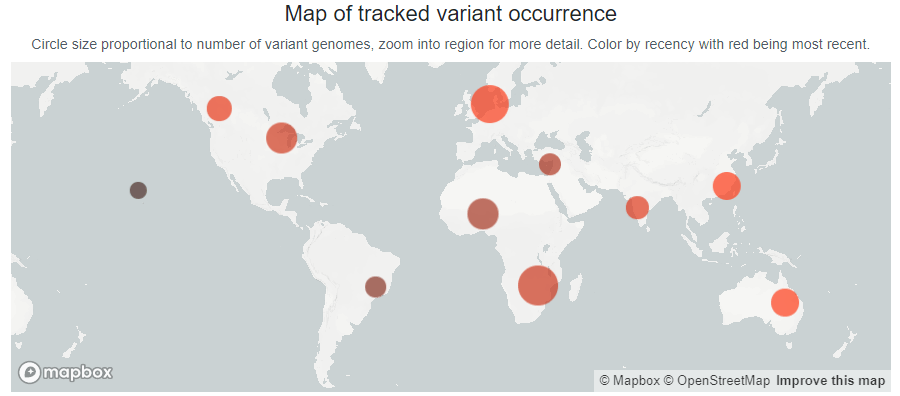
    Within days of its first identification, the Omicron variant has been found on every continent except Antarctica. Chart via GISAID, retrieved December 5.

    There is still a lot we don’t know about the Omicron variant, first identified in Botswana and South Africa in late November. For the most part, what I wrote last Sunday remains true: this variant is spreading quickly in South Africa and has a number of mutations—some of which may correspond to increased capacity for transmission or evading prior immunity—but we don’t yet have enough information to determine how it may shape the next phase of the pandemic. 

    Still, we’ve learned a few new things in the last week. Here’s a quick roundup:

    • More than 30 cases have been detected in the U.S., with the earliest detection in states with robust genetic surveillance. The first U.S. case was identified in California, in a San Francisco resident who had recently traveled to South Africa. As I pointed out on Twitter, California is one state that’s sequencing a lot of coronavirus genomes; combine that with San Francisco’s large international airport, and it may be unsurprising that the variant was first picked up there. The second U.S. case was identified in Minnesota; this state, too, has sequenced a lot of cases, with a lab at the University of Minnesota providing sequencing services for other Midwest states.
    • Omicron is spreading rapidly in South Africa. On Friday, South African scientists said that the variant may be spreading “more than twice as quickly as Delta,” according to the New York Times, though it may also be less contagious than Delta. This announcement aligns with modeling by computational biologist Trevor Bedford, who wrote on Saturday that Omicron appears to have a transmission advantage over Delta. “These are still very early estimates and all this will become more clear as we get comparable estimates from different geographies and with different methods,” Bedford wrote. “But ballpark current Rt of Omicron in South Africa of between 3 and 3.5 seems pretty reasonable.” Rt refers to how fast the virus is spreading; for context, Delta’s Rt when it first hit the U.S. was about 1.5.
    • Anime NYC may have been a superspreading event. The Minnesota resident who became the second Omicron case identified in the U.S. had attended Anime NYC, an anime convention held at the Javits Center between November 19 and 21. City and state officials urged other attendants of the convention to get tested; and a number of the Minnesota resident’s friends have tested positive, according to The Washington Post, though sequencing results are not yet available for these cases. Anime NYC attendees had to be vaccinated to attend, but could meet the requirement with just one dose received right before the convention. And photos from the convention show plenty of people disregarding the mask mandate. It’s too early to say, but I would not be surprised if Anime NYC turns out to be a superspreading event for Omicron.
    • A holiday party in Norway is another likely superspreading event. About 120 people attended a Christmas party in Oslo on November 26. As of this Friday, at least 13 attendees have been identified as Omicron cases, while a number of others have tested positive for COVID-19 (and are awaiting sequencing results). “Our working hypothesis is that at least half of the 120 participants were infected with the Omicron variant during the party,” Norwegian Institute of Public Health physician Preben Aavitsland told Reuters. “This makes this, for now, the largest Omicron outbreak outside South Africa.” Notably, this superspreading event occurred even though “all the attendees were fully vaccinated and had tested negative before the event,” Reuters reports.
    • Omicron appears to be more likely to reinfect people who’ve recovered from a previous COVID-19 case than past variants. On Thursday, South African scientists posted a preprint study suggesting that, when compared to the Delta and Beta variants, Omicron is more capable of reinfecting people who’ve previously had COVID-19. The finding comes from an analysis of over 35,000 reinfections among millions of positive COVID-19 tests. “Although there are a lot of uncertainties in the paper, it looks like an earlier infection only offers half as much protection against Omicron as it does against Delta,” writes Gretchen Vogel in Science, paraphrasing Emory University biostatistician Natalie Dean.
    • Omicron might cause less severe illness than other variants, but a lot more data are needed on this topic. On Saturday, the South African Medical Research Council posted a report that aligns with some other early reports about this variant: so far, patients infected with this variant seem to be getting less sick than those infected with previous coronavirus variants. Specifically: a lower share of Omicron patients in South Africa have required intensive care, oxygen support, or ventilators than physicians there have seen in previous COVID-19 waves. But this report, like other anecdotal reports, has been based on a small number of patients, and many of them have been younger—as older South Africans have been prioritized for vaccination. The number of severe Omicron cases may be low now, but may rise sharply in the coming weeks, Financial Times reporter John Burn-Murdoch pointed out in a Twitter thread responding to the report. Also, it’s way too soon to know how many of the so-called mild Omicron cases thus far may turn into Long COVID. So, a lot of experts are skeptical that Omicron is actually more mild—basically, we need more data. 

    I’ll end the post with this excellent thread from Muge Cevik, infectious disease expert at the University of St. Andrews, discussing the many uncertainties surrounding Omicron:

    More variant reporting

  • National numbers, December 5

    National numbers, December 5

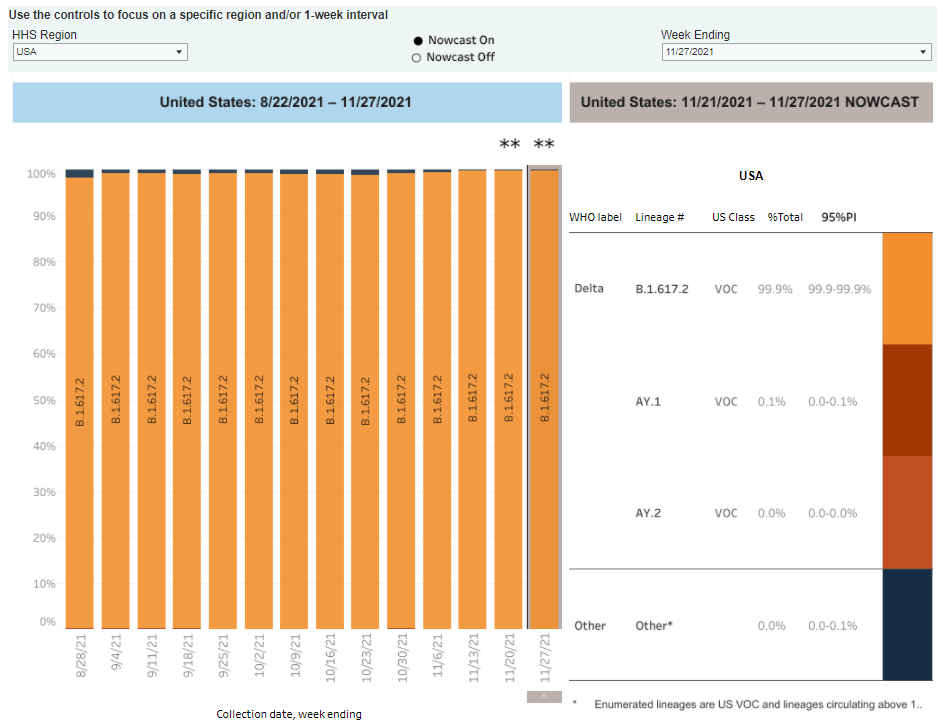
    Though Omicron is making headlines, Delta is still causing 100% of COVID-19 cases in the U.S. Chart via the CDC, screenshot taken on December 5.

    In the past week (November 27 through December 3), the U.S. reported about 600,000 new cases, according to the CDC. This amounts to:

    • An average of 86,000 new cases each day
    • 184 total new cases for every 100,000 Americans
    • 8% fewer new cases than last week (November 20-26)

    Last week, America also saw:

    • 45,000 new COVID-19 patients admitted to hospitals (14 for every 100,000 people)
    • 6,000 new COVID-19 deaths (1.8 for every 100,000 people)
    • 100% of new cases are Delta-caused (as of November 27)
    • An average of one million vaccinations per day (including booster shots; per Bloomberg)

    Don’t be fooled by the apparent case decline in the CDC’s numbers: the U.S. is still in the midst of a new surge. The agency reported fewer cases last week due to Thanksgiving holiday delays, but we can expect cases to shoot up next week as delayed cases are added to the data.

    I use the CDC for these updates because I find the national agency’s data reliable and easy to access, but the CDC does tend to be more heavily impacted by reporting delays than other sources which compile numbers from U.S. states or counties. For example, the New York Times is reporting a daily new case average of 108,000 as of December 4, while BNO Newsroom has reported over 100,000 new cases for five days in a row.

    Meanwhile, hospitalizations are ticking up: with 45,000 new COVID-19 patients admitted to U.S. hospitals last week and almost 50,000 people currently hospitalized, as of December 2. Hospitalizations are one COVID-19 metric that tends to be less impacted by holidays, as the hospitals collecting these data don’t take days off.

    Northern states continue to lead the country in new cases per capita. According to the latest Community Profile Report, top hotspots are New Hampshire, Michigan, Minnesota, North Dakota, and Wisconsin. New Hampshire reported over 500 new cases for every 100,000 people in the last week, and is continually setting new COVID-19 records.

    Michigan is seeing more cases now than it has in any previous surge, and the state’s hospital systems—like many others—are facing dire staff shortages, along with increased numbers of flu patients. The state has almost 900 fewer staffed hospital beds now than in November 2020, according to ABC News.

    While the Omicron variant has now been identified in more than ten U.S. states (more on that below), the Delta variant is still driving this current surge. According to the CDC’s latest variant data, 100% of new cases in the country are caused by Delta. In the coming weeks, we’ll see how much Omicron is able to compete.

  • COVID source shout-out: Community Profile Reports

    We’re now approaching almost a year since the Department of Health and Human Services (HHS) first started publicly releasing Community Profile Reports, massive documents containing COVID-19 data at the state, county, and metro area levels.

    These reports were originally compiled internally, starting in spring 2020, for meetings of Trump’s White House Coronavirus Task Force. Reporters such as Liz Essley Whyte at the Center for Public Integrity were able to obtain some of the documents, but they remained a mostly-secret trove of data until the HHS started publishing them publicly in late December.

    At the time, I wrote that I was excited about the public release because these reports contain a wealth of information in one place—including contextual data (such as population-adjusted case numbers and demographic information) and rankings for policy-makers built right into the Excel spreadsheets.

    Since then, I’ve relied on Community Profile Reports for weekly data updates in this newsletter, along with numerous other stories. While their update schedule has not remained regular, the reports continue to be a one-stop shop for everything from vaccination rates to hospitalization metrics.

    So, this Thanksgiving weekend, I’m thankful for the Community Profile Reports. According to the HHS site, they’ve been downloaded almost 100,000 times, and probably a solid 300 of those are me.

  • Sources and updates, November 28

    • State vaccination data: This weekend, I updated my annotations on state and national vaccination data sources in the U.S. A few more states are now reporting information on booster shots, and several states have adjusted their vaccine coverage metrics to reflect vaccine eligibility for children in the 5 to 11 age group. Notably, since my last update, Alaska, D.C., Utah, and Vermont’s health agencies have all started reporting some demographic information regarding booster shot recipients in their states.
    • Moral injury among healthcare workers during COVID-19: There have been a lot of headlines recently about burnout among healthcare workers. This study, based on a survey of 1,300 healthcare workers and published this week in JAMA Network Open, provides some statistics to underlie the trend. See the supplemental materials for sample quotations from the survey respondents, demonstrating their feelings of fatigue, isolation, and betrayal.

  • Cases are rising on Thanksgiving again, but we’re better protected this year

    Cases are rising on Thanksgiving again, but we’re better protected this year

    Before the Omicron news hit on Thursday, I was planning to write a big post about how the state of the pandemic in the U.S. at Thanksgiving this year compares to the state of the pandemic at Thanksgiving last year. But, well, Omicron happened—so here’s a small post about Thanksgiving, instead.

    Remember: last year, Thanksgiving was a turning point in the winter 2020 surge. While cases had already been going up prior to the holiday, the convergence of travel, indoor gatherings, and cold weather helped the coronavirus spread further. Christmas did the same thing, one month later.

    This year, we saw cases increase once again in the weeks prior to Thanksgiving. But we’re better protected this time, thanks to vaccines and better knowledge of the virus.

    Let’s look at the national metrics:

    • On November 23, 2021 (two days before Thanksgiving), the seven-day average of new COVID-19 cases was about 94,000 new cases a day. That’s about 45% lower than last year’s number, 170,000 new cases a day (on November 26, 2020, Thanksgiving itself).
    • On November 23, 2021, the seven-day average of new COVID-19 deaths was about 1,000 new deaths a day. That’s about 45% lower than last year’s number, 1,800 new deaths a day.
    • On November 25, 2021 (Thanksgiving day), 43,000 people were hospitalized with COVID-19 in facilities across the U.S. That’s just under half as many as the number of patients hospitalized last year, 84,000 people.
    • As of November 24, 2021, 196 million Americans are fully vaccinated against COVID-19—and an additional 35 million have received at least one dose, while more than 37 million have received booster shots.

    Clearly, while the trajectory of cases (and other metrics) may be the same as they were last year, the numbers are way lower. But the national metrics obscure local patterns. In some parts of the country, particularly some northern states, case numbers are actually higher at Thanksgiving this year than they were last year. 

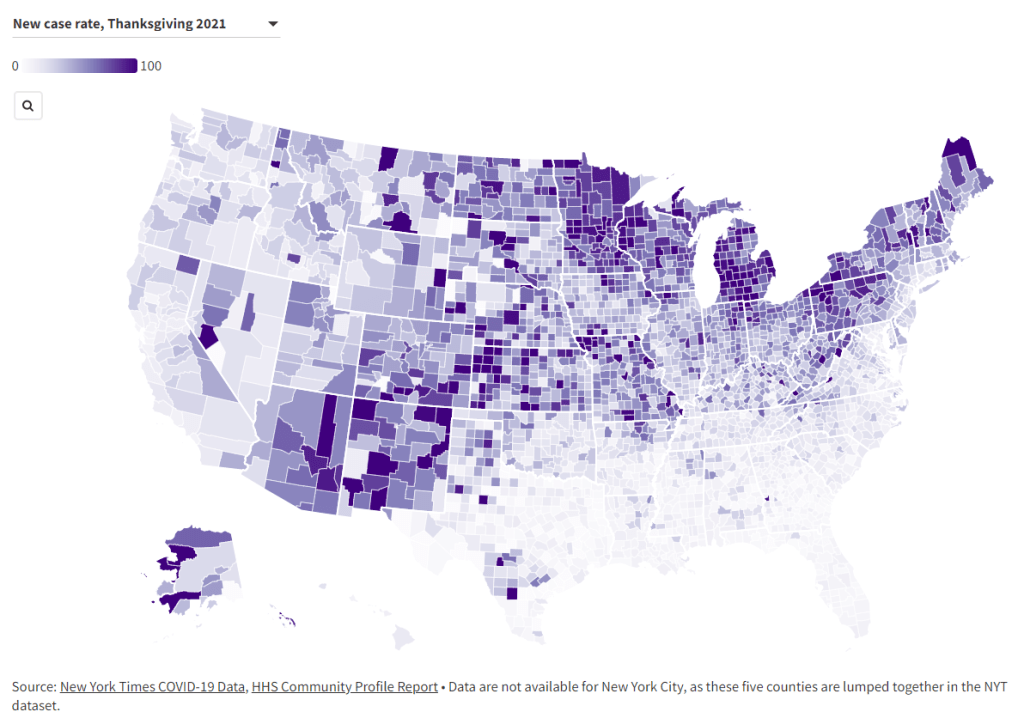
    You can see how your county is faring on this map, which I put together for a DailyMail.com story on this topic. Use the drop-down menu at the top to click between Thanksgiving 2020 and Thanksgiving 2021.

    For that DailyMail.com story, I asked several COVID-19 experts for their thoughts on this winter’s oncoming surge, as well as their advice for staying safe while gathering for the holidays. Key pieces of advice included:

    • Get vaccinated, including a booster shot if you’re eligible.
    • Get tested prior to travel or large gatherings.
    • Use high-quality masks (especially N95s and KN95s) while traveling.
    • Be aware of case rates at both your point of origin and your destination.
    • If you’re gathering indoors with others, make sure everyone is on the same page about safety.