Opening profile: Public health collaboration in Austin, Indiana

By Betsy Ladyzhets

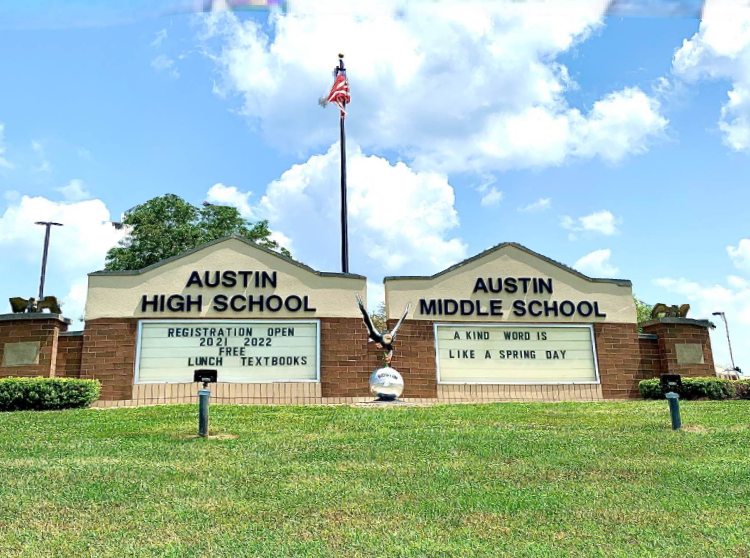
The middle and high school campus in Austin, Indiana. Photo from the Scott County School District 1 Facebook page.

In 2015, Austin, Indiana was hit with a deadly epidemic: HIV/AIDS. This city, then over 4,000 people, saw over 200 HIV cases in about a year during its outbreak, which one health reporter called “the worst drug-fueled HIV outbreak ever to hit rural America.”

So when the COVID-19 pandemic hit, the small city was prepared to respond. The school district and public health department took advantage of their existing relationship and community trust to plan for a safe school reopening that stands out as one of the most successful in the state, according to a COVID-19 Data Dispatch analysis.

“The HIV outbreak actually brought a lot of people together,” said Brittany Combs, a Scott County public health nurse who worked with the district. “We all came to the same table and figured out what we needed to do to tackle the HIV outbreak. And so, for the pandemic, we all were already at the table.”

This school district, Scott County School District 1, is the subject of the first profile in the COVID-19 Data Dispatch’s “Opening” series. Alongside four other school communities, it was selected because the majority of the district’s students returned to in-person learning during the 2020-2021 school year — and under 5% of the student population was identified as a COVID-19 case. (According to the CDC, about 5% of school-aged children in the U.S. have contracted COVID-19 since the start of the pandemic.)

While Austin’s experience with HIV/AIDS is unique, the school district offers lessons for other communities. An open line of communication between Austin’s county public health agency, school administrators, and other local leaders fostered an environment of collaboration and trust. Plus, the administrators took advantage of teachers’ and parents’ knowledge of their students to make them an integral part of identifying COVID-19 cases and stopping outbreaks.

Demographics for Austin, Indiana
American Community Survey 2019 5-year estimates

  • Population: 3,700
  • Race: 97.8% white, 0.7% Native American, 0.8% other, 0.8% two or more races
  • Education: 75.8% have high school degree, 4.7% have associate’s degree, 2.0% have bachelor’s degree
  • Income: $34,200 is median household income, 27.4% in poverty
  • Computer: 80.6% have a computer, 65.9% have broadband internet1
  • Free lunch: 64.7% of students eligible for free or reduced-price lunch2

COVID-19 stats for Scott County School District 1, 2020-2021

  • Total enrollment: 1,200 students2
  • In-person enrollment: About 80% at the start of the year, 85% at the end3
  • Total cases, 2020-2021 school year: 47 in students, 25 in staff4
    • 13 elementary school students (Austin Elementary School)
    • 19 middle school students (Austin Middle School)
    • 15 high school students (Austin High School)

1Source: County-level statistic
2Source: National Center for Education Statistics
3Source: Interview with Superintendent Trevor Jones
4Source: Data from Head School Nurse Deana Broadus. Numbers include students who did not attend in-person classes while sick, but whose cases were reported to the district.


Public health collaboration

In planning for reopening the school district after spring 2020 closures, the public health department had “constant meetings with the school,” Combs said. The existing relationship between the school and public health experts streamlined these meetings. And thanks to past outreach efforts around HIV and opioids, the public health department already had relationships with Austin families.

“I like to think that the health department already has a lot of trust because we were in the news a lot, we were forefront a lot, so they kinda know who we are,” Combs said. “Hopefully, the majority of the county really trusted in what we said.”

Families were also likely to collaborate with the school district because they wanted their kids back in classrooms, according to Superintendent Trevor Jones. He referenced Austin’s high poverty level (27.4%, compared to a national average of 10.5%) and explained that the majority of students get free breakfast and lunch. Combined with the community’s past drug abuse issues, he said, there was ample motivation among parents and teachers alike to protect students from the isolation of remote learning.

“The safest place our kids can be is here at school,” Jones said.

While the schools had some basic safety measures in place, such as six-foot spacing, masks required everywhere except at spaced-out desks, and regular handwashing, this community trust paid off most in identifying students with COVID-19 symptoms. Deana Broadus, head school nurse at the district, said that teachers and parents acted as a first line of defense in identifying symptoms. At the beginning of the school day, teachers took students’ temperatures and asked them about other symptoms.

“As the school year went on, teachers [get to] know their kids,” Broadus said. “They can kind of tell, oh, she doesn’t look that well today, go see the nurse.”

Broadus and the other school nurses also got to know their students by following up on symptom questionnaires and developing medical histories. Some students would erroneously mark every symptom on the checklist, she said: “You get to know who’s trying to go home.” In other cases, the symptom checks inspired the nurses to keep better track of seasonal allergies, recurring stomach aches, and other chronic conditions that were previously reported by parents but not thoroughly documented by the school.

Parents took part in the informal COVID-19 surveillance, too. “Parents would call in and report certain symptoms,” Broadus said. “[Students] either needed a doctor’s note or a negative COVID test to return to school.”

The procedure was similar if a student was sent home. While the district initially quarantined full classes following a positive case, the strategy shifted to close-contact identification: figuring out which students had sat next to an infected child. Broadus said that the chief concern she heard from parents calling in to report a case was often ensuring that no more children than necessary would need to miss in-person class, though students who missed class could still follow along online.

Keep sick students home

Through collaboration with the public health department — which took charge of contact tracing for parents, staff and other non-students — Broadus found that the vast majority of school cases came from outside the buildings. 

“Usually what we found was that a parent or someone else that the child lived with was sick, and then subsequently the student got sick,” she said. And among those students, cases were typically identified quickly enough that the virus didn’t spread to others.

One of the Austin district’s major lessons from the past school year was the importance of telling families to keep their kids home if they were sick. In the past, students and staff alike tended to “push through it” and still come in if they didn’t feel well, Broadus said. Now, the policy is to stay home from school or work if you have any symptoms, not just those matching COVID-19. To reinforce this, Jones said, the district is removing rewards for perfect attendance and similar bonuses for staff. The schools are also continuing to emphasize handwashing and other good hygiene habits.

Still, the district did not avoid cases entirely. A total of 47 students contracted COVID-19 over the course of the school year, including 13 students at Austin Elementary School, 19 at Austin Middle School, and 15 at Austin High School — or about 4% of the district’s total enrollment. According to Broadus, the district identified the most cases (17 total) during November and December 2020, at the peak of the fall COVID-19 surge. The district added additional COVID-19 safety precautions at this time, such as limiting spectators at sporting events.

Delta poses new challenges

This fall, Austin’s school district is facing further challenges amplified by the country’s Delta surge. School started in-person on August 3; unlike the previous year, masks were optional. Several student cases in the first week of school led the district to switch to all-virtual classes for two weeks, Superintendent Jones said in an email on August 10.

When students return after this virtual period, COVID-19 symptom monitoring will continue — though the district is phasing out formal checklists that proved to be less helpful than parent and teacher intuition. The six-feet distancing rule has shrunk to three feet. Ventilation has also improved, thanks to grant money from the federal government for which many districts were able to apply.

Austin will continue to rely on its community to identify cases and stay safe in the new school year. “I feel like it wasn’t just one thing that we were doing,” Broadus said. “Everyone was working together.”


The COVID-19 Data Dispatch’s “Opening” series is available for other publications to republish, free of charge. If you or your outlet is interested in publishing any part of this series, please contact betsy@coviddatadispatch.com.

Update, Sept. 7, 2021: After two weeks of all-virtual classes in August 2021 prompted by high case numbers, the Austin school district returned to the COVID-19 safety protocols followed in the previous school year. Masks are once again required whenever students are not stationary at distanced desks, and desk spacing is back at six feet where possible. “We made some adjustments to our COVID procedures that have minimized the number of students in quarantine,” Superintendent Jones said in an email on Sept. 7.

More K-12 schools reporting

Comments

85 responses to “Opening profile: Public health collaboration in Austin, Indiana”

  1. Opening profile: Community over wifi in Garrett County, Maryland - K-12 schools Avatar

    […] Similarly to Austin, Indiana, partnerships between the school district and the local public health department proved crucial in reopening. While school buildings were closed in spring 2020, the district’s nursing staff worked with the Garrett County public health department to run testing sites. […]

    Like

  2. […] Similarly to Austin, Indiana, partnerships between the varsity district and the native public well being division proved essential in reopening. Whereas faculty buildings have been closed in spring 2020, the district’s nursing employees labored with the Garrett County public well being division to run testing websites. […]

    Like

  3. Fall 2021 school reopening: Stats so far - K-12 schools Avatar

    […] school districts that closed include Scott County School District 1, the subject of our first “Opening” profile. This Indiana district originally opened in August […]

    Like

  4. Opening project conclusion: 11 lessons from the schools that safely reopened - K-12 schools Avatar

    […] Scott County School District 1 in Austin, Indiana: This small district faced a major HIV/AIDS outbreak in 2015, leading to an open line of communication between Austin’s county public health agency, school administrators, and other local leaders which fostered an environment of collaboration and trust during the COVID-19 pandemic. […]

    Like

  5. […] screenings as an attempt to catch infected students before they gave the coronavirus to others. But in Austin, Indiana, such formalized screenings proved less useful than teachers’ and parents’ intuition. […]

    Like

  6. […] symptom tests as an attempt to catch infected students before giving the coronavirus to others. Ma in Austin, Indiana, such formalized screening proved less useful than the intuition of teachers and parents. […]

    Like

  7. […] screenings as an attempt to catch infected students before they gave the coronavirus to others. But in Austin, Indiana, such formalized screenings proved less useful than teachers’ and parents’ intuition. […]

    Like

  8. How to reopen five American schools without causing an outbreak of the Corona virus - TECHGZ Avatar

    […] symptom checks to try to catch infected students before they gave the coronavirus to others. but in Austin, IndianaThese formal examinations have proven to be less useful than the intuition of teachers and parents. […]

    Like

  9. […] Scott County School District 1 in Austin, Indiana: This small Midwestern district faced a major HIV/AIDS outbreak in 2015, laying groundwork for collaboration between schools and public health officials during the pandemic. […]

    Like

  10. […] screening to try to detect infected students before they can spread the coronavirus to others.but Located in Austin, Indiana, Facts have proved that this formal screening is not as useful as the intuition of teachers and […]

    Like

  11. […] screenings as an attempt to catch infected students before they gave the coronavirus to others. But in Austin, Indiana, such formalized screenings proved less useful than teachers’ and parents’ intuition. […]

    Like

  12. […] screenings as an attempt to catch infected students before they gave the coronavirus to others. But in Austin, Indiana, such formalized screenings proved less useful than teachers’ and parents’ intuition. […]

    Like

  13. […] filters as an attempt to catch infected students before transmitting coronavirus to others. But In Austin, Indiana, Such tests are less important than teachers ‘and parents’ perceptions. The teacher can […]

    Like

  14. […] ученици, преди да предадат коронавируса на други. но в Остин, ИндианаТези официални изпити се оказаха по -малко полезни от […]

    Like

  15. […] screening to try to detect infected students before they can spread the coronavirus to others.but Located in Austin, Indiana, Facts have proved that this formal screening is not as useful as the intuition of teachers and […]

    Like

  16. […] and catch contaminated college students earlier than they gave the coronavirus to others. However in Austin, Indiana, such formalized screenings proved much less helpful than lecturers’ and oldsters’ instinct. […]

    Like

  17. […] المصابين قبل إعطائهم الفيروس التاجي للآخرين. لكن في أوستن ، إنديانا، أثبتت هذه الفحوصات الرسمية أنها أقل فائدة من حدس […]

    Like

  18. […] screenings as an attempt to catch infected students before they gave the coronavirus to others. But in Austin, Indiana, such formalized screenings proved less useful than teachers’ and parents’ intuition. […]

    Like

  19. […] screenings as an attempt to catch infected students before they gave the coronavirus to others. But in Austin, Indiana, such formalized screenings proved less useful than teachers’ and parents’ intuition. […]

    Like

  20. […] screenings as an attempt to catch infected students before they gave the coronavirus to others. But in Austin, Indiana, such formalized screenings proved less useful than teachers’ and parents’ intuition. […]

    Like

  21. […] screening to try to detect infected students before they can spread the coronavirus to others.but Located in Austin, Indiana, Facts have proved that this formal screening is not as useful as the intuition of teachers and […]

    Like

  22. […] to catch contaminated college students earlier than they gave the coronavirus to others. However in Austin, Indiana, such formalized screenings proved much less helpful than lecturers’ and fogeys’ instinct. […]

    Like

  23. […] screenings as an attempt to catch infected students before they gave the coronavirus to others. But in Austin, Indiana, such formalized screenings proved less useful than teachers’ and parents’ intuition. […]

    Like

  24. […] screenings as an attempt to catch infected students before they gave the coronavirus to others. But in Austin, Indiana, such formalized screenings proved less useful than teachers’ and parents’ intuition. […]

    Like

  25. […] screenings as an attempt to catch infected students before they gave the coronavirus to others. But in Austin, Indiana, such formalized screenings proved less useful than teachers’ and parents’ intuition. […]

    Like

  26. […] and symptom testing to try to catch infected students before passing them on to coronavirus. But in Austin, Indiana, such legitimate criticism has done little more than educate teachers and parents. Instructors can […]

    Like

  27. […] screenings as an attempt to catch infected students before they gave the coronavirus to others. But in Austin, Indiana, such formalized screenings proved less useful than teachers’ and parents’ intuition. […]

    Like

  28. […] screenings as an attempt to catch infected students before they gave the coronavirus to others. But in Austin, Indiana, such formalized screenings proved less useful than teachers’ and parents’ intuition. […]

    Like

  29. […] screenings as an attempt to catch infected students before they gave the coronavirus to others. But in Austin, Indiana, such formalized screenings proved less useful than teachers’ and parents’ intuition. […]

    Like

  30. […] screenings as an attempt to catch infected students before they gave the coronavirus to others. But in Austin, Indiana, such formalized screenings proved less useful than teachers’ and parents’ intuition. […]

    Like

  31. […] screenings as an attempt to catch infected students before they gave the coronavirus to others. But in Austin, Indiana, such formalized screenings proved less useful than teachers’ and parents’ intuition. […]

    Like

  32. […] screenings as an attempt to catch infected students before they gave the coronavirus to others. But in Austin, Indiana, such formalized screenings proved less useful than teachers’ and parents’ intuition. […]

    Like

  33. […] symptom tests as an attempt to catch infected students before giving the coronavirus to others. Ma in Austin, Indiana, such formalized screening proved less useful than the intuition of teachers and parents. […]

    Like

  34. […] an endeavor to capture infected students right before they gave the coronavirus to many others. But in Austin, Indiana, such formalized screenings proved considerably less practical than teachers’ and parents’ […]

    Like

  35. […] symptom screens to try to catch infected students before spreading the coronavirus to others. Corn in Austin, Indiana, these formalized projections turned out to be less useful than the intuition of teachers and […]

    Like

  36. […] d’attraper les élèves infectés avant de transmettre le coronavirus à d’autres. Mais à Austin, Indiana, ces projections formalisées se sont avérées moins utiles que l’intuition des enseignants […]

    Like

  37. […] screenings as an attempt to catch infected students before they gave the coronavirus to others. But in Austin, Indiana, such formalized screenings proved less useful than teachers’ and parents’ intuition. […]

    Like

  38. […] to catch contaminated college students earlier than they gave the coronavirus to others. However in Austin, Indiana, such formalized screenings proved much less helpful than academics’ and oldsters’ instinct. […]

    Like

  39. […] screenings as an attempt to catch infected students before they gave the coronavirus to others. But in Austin, Indiana, such formalized screenings proved less useful than teachers’ and parents’ intuition. […]

    Like

  40. […] and catch contaminated college students earlier than they gave the coronavirus to others. However in Austin, Indiana, such formalized screenings proved much less helpful than lecturers’ and oldsters’ instinct. […]

    Like

  41. […] screenings as an attempt to catch infected students before they gave the coronavirus to others. But in Austin, Indiana[1], such formalized screenings proved less useful than teachers’ and parents’ intuition. […]

    Like

  42. […] tenter d’attraper les élèves infectés avant de transmettre le coronavirus à d’autres. Mais à Austin, Indiana, ces projections formalisées se sont avérées moins utiles que l’intuition des enseignants et […]

    Like

  43. […] screening to try to detect infected students before they can spread the coronavirus to others.but Located in Austin, Indiana, Facts have proved that this formal screening is not as useful as the intuition of teachers and […]

    Like

  44. […] screenings as an attempt to catch infected students before they gave the coronavirus to others. But in Austin, Indiana, such formalized screenings proved less useful than teachers’ and parents’ intuition. […]

    Like

  45. […] checks as an attempt to catch infected students before they pass on the coronavirus to others. But in Austin, Indianasuch formalized selections were found to be less useful than the intuition of teachers and parents. […]

    Like

  46. […] screenings as an attempt to catch infected students before they gave the coronavirus to others. But in Austin, Indiana, such formalized screenings proved less useful than teachers’ and parents’ intuition. […]

    Like

  47. […] de atrapar a los estudiantes infectados antes de que transmitieran el coronavirus a otros. Pero en Austin, Indiana, estos exámenes formalizados resultaron menos útiles que la intuición de los profesores y los […]

    Like

  48. […] and symptom testing to try to catch infected students before passing them on to coronavirus. But in Austin, Indiana, such legitimate criticism has done little more than educate teachers and parents. Instructors can […]

    Like

  49. […] screenings as an attempt to catch infected students before they gave the coronavirus to others. But in Austin, Indiana, such formalized screenings proved less useful than teachers’ and parents’ intuition. […]

    Like

  50. […] screenings as an attempt to catch infected students before they gave the coronavirus to others. But in Austin, Indiana, such formalized screenings proved less useful than teachers’ and parents’ intuition. […]

    Like

Leave a reply to How five US schools reopened without sparking a covid outbreak – TechNewsMore Cancel reply