Category: Uncategorized

  • Opening project conclusion: 11 lessons from the schools that safely reopened

    Opening project conclusion: 11 lessons from the schools that safely reopened

    By Betsy Ladyzhets

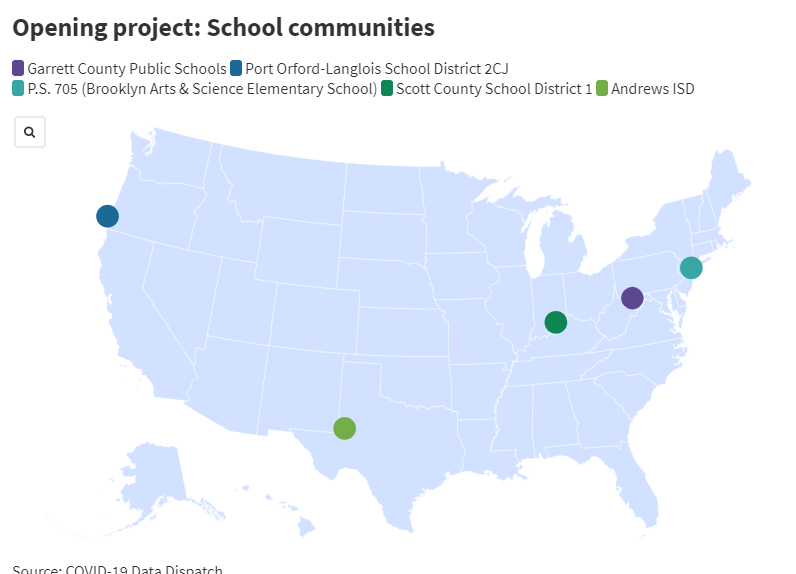
    In the COVID-19 Data Dispatch’s “Opening” series, we profiled five school communities that successfully reopened during the 2020-2021 school year. In each one, the majority of the district’s or school’s students returned to in-person learning by the end of the spring semester — and officials identified COVID-19 cases in under 5% of the student population.

    Through exploring these success stories, we found that the schools used many similar strategies to build trust with their communities and keep COVID-19 case numbers down.

    These are the five communities we profiled:

    • Scott County School District 1 in Austin, Indiana: This small district faced a major HIV/AIDS outbreak in 2015, leading to an open line of communication between Austin’s county public health agency, school administrators, and other local leaders which fostered an environment of collaboration and trust during the COVID-19 pandemic.
    • Garrett County Public Schools in Maryland: In a rural, geographically spaced-out county, this district built trust with its community by utilizing local partnerships, providing families with crucial supplies, setting up task forces to plan reopening, and communicating extensively with parents.
    • Andrews Independent School District in Texas: This West Texas district prioritized personal responsibility, giving families information to make individual choices about their children’s safety. Outdoor classes and other measures also helped keep cases down.
    • Port Orford-Langlois School District 2CJ in Oregon: In two tiny towns on the coast of Oregon, this district built up community trust and used a cautious, step-by-step reopening strategy to make it through the 2020-2021 school year with zero cases identified in school buildings.
    • P.S. 705 in Crown Heights, Brooklyn, New York: This elementary school brought 55% of students back to in-person class, well above the New York City average (40%), by utilizing comprehensive parent communication and surveillance testing of students and staff.

    Here are 11 major lessons we identified from the districts that kept their communities safe.


    1. Collaboration with the public health department is key.

    In Austin, Indiana, an existing relationship between the local school district and local public health department, built during the town’s HIV/AIDS outbreak in 2015, streamlined COVID-19 communication. The district and public health department worked together to plan school reopening, while district residents — already familiar with the health department’s HIV prevention efforts — quickly got on board with COVID-19 safety protocols.

    Garrett County’s school district, in Maryland, worked with their local public health department on making tests available to students and staff. The Andrews County district, in Texas, also collaborated with the county health agency on testing and on identifying student cases in fall 2020 — though the relationship fractured later in the school year due to differing opinions on the level of safety measures required in schools.

    “What the CDC basically said is that each school has to become a little health department in its own right,” said Katelyn Jetelina, epidemiologist at the University of Texas and author of the Your Local Epidemiologist newsletter; but “schools don’t have the expertise to do that,” she said. As a result, public health departments themselves may be valuable sources of scientific knowledge for school leaders. 

    “What’s ideal — and I’ve only seen this happen a few times — is, if there is literally someone from the health department embedded in the school district,” added Robin Cogan, legislative co-chair for the New Jersey State School Nurses Association and author of the Relentless School Nurse blog.

    2. Community partnerships can fill gaps in school services.

    In addition to public health departments, there are other areas where partnerships outside a school may be beneficial; partnering up to address technology and space needs was a particular theme in this project. In Oregon, the Port Orford-Langlois school district relied on the local public library to provide technology services, space for after-school homework help, wifi outside school hours, and even extracurricular activities. Meanwhile, in Garrett County, Maryland, the school district worked with churches, community centers, and other centrally-located institutions to provide both wifi and food to district families.

    Both of these rural districts faced challenges with online learning, as many families did not have wifi at home. By expanding internet access through community partnerships, the districts enabled families to keep up kids’ online learning — while showing parents that school staff were capable of meeting their needs, building trust for future in-person semesters.

    3. Communication with parents should be preemptive and constant.

    Strong communication was one theme that resonated across all five profiles. In a tumultuous pandemic school year, parents wanted to know exactly what their schools were doing and why;  the districts we profiled offered ample opportunities for parents to quickly get updates and ask questions.

    For example, at Brooklyn’s P.S. 705, administrators held weekly town hall meetings — segmented by grade level — and staffed a “virtual open office,” available on a daily basis for parents to log on and ask questions. Jetelina said that such forums are an ideal opportunity for “two-way communication,” in which administrators could both talk to parents and listen to feedback.

    Andrews County also held a town hall for parent questions prior to the start of the 2020 school year. In Garrett County, administrators updated a massive FAQ document (currently 22 pages) whenever a parent reached out with a question. This district, P.S. 705, and Port Orford-Langlois all gave parents the opportunity to talk to school staff in one-on-one phone calls. 

    Cogan pointed out that parents like to be reached on different platforms, such as text messages, Facebook, and Google classroom; by giving parents multiple options, districts may ensure that all parent questions are asked and answered.

    4. Require masks, and model good masking for kids.

    Mask requirements in schools have become highly controversial in fall 2021, with some parents enthusiastically supporting them while others refuse to send their children to school with any face covering. But widespread masking remains one of the best protections against COVID-19 spread, especially for children who are too young to be vaccinated.

    And yes, evidence shows that young children can get used to wearing a mask all day. In the Port Orford-Langlois school district, Principal Krista Nieraeth credits responsible masking among students to their parents. Though the community leans conservative, she said, parents modeled mask-wearing for their kids, understanding the importance of masking up to prevent the coronavirus from spreading at school. Some parents even donated homemade masks to the district for students and teachers.

    As Delta spreads, Cogan said, it’s important that districts require “properly fitting masks that are worn correctly” to ensure that students are fully protected.

    5. Regular testing can prevent cases from turning into outbreaks.

    Brooklyn’s P.S. 705 leaned into the surveillance COVID-19 testing program organized by the New York City Department of Education. The city required schools to test 20% of on-site students and staff once a week, from December 2020 through the end of the spring semester; P.S. 705 tested far above this requirement during the winter months, when cases were high in Brooklyn. The testing allowed this school to identify cases among asymptomatic students, quarantine classes, and stop those isolated cases from turning into outbreaks.

    School COVID-19 testing programs should test students frequently, Jetelina said. “But what’s even more important than regular testing is it’s not biased testing,” meaning the tests are required for all in-person students. Voluntary testing, she said, would be more likely to include only the families who are also more likely to follow other safety protocols.

    More districts are now working to set up regular testing programs for fall 2021, using funding from the American Rescue Plan, Cogan said. If regular testing isn’t possible, it’s still crucial for a district to make tests easily available — with timely results, in under 24 hours — to a student’s close contacts when a case is identified at school. Both the Garrett County and Andrews County school districts worked with their local public health departments to make such testing possible.

    6. Improve ventilation and hold classes outside where possible.

    In addition to funding for COVID-19 testing, the American Rescue Plan made billions of dollars available for improvements to school ventilation systems. The Garrett County and Austin, Indiana school districts both took advantage of this funding to upgrade HVAC systems in their buildings and buy portable air filtration units.

    In Andrews County — where the West Texas weather stays warm through much of the year — the school district opted for more natural ventilation: opening doors and windows, and holding class outside whenever possible. The extra time outdoors was also beneficial to the mental health of students who had been cooped up indoors in spring 2020, administrators said.

    Still, outdoor class may not be possible for districts in urban areas, Cogan said. In these schools, windows and doors may be locked down to protect against a different public health crisis: the threat of gun violence.

    7. Schools may still be focusing too much on cleaning.

    In July 2020, Derek Thompson, staff writer at The Atlantic, coined the term “hygiene theater”: many businesses and public institutions were devoting time and resources to deep-cleaning — even though numerous scientific studies had demonstrated that the virus primarily spreads through the air, not through surface contact.

    More than a year later, hygiene theater is alive and well in many school districts, COVID-19 Data Dispatch interviews with school administrators revealed. When we asked in interviews, “What were your safety protocols?”, administrators often jumped to deep-cleaning and bulk hand sanitizers. Ventilation would come up later, after additional questioning. At the Andrews County district, for example, custodians would clean a classroom once a case was identified — but close contacts of the infected student were not required to quarantine.

    “Cleaning high-touch areas is very important in schools,” Cogan said. But mask-wearing, physical distancing, vaccinations, and other measures are “higher protective factors.”

    8. Give agency to parents and teachers in protecting their kids.

    Last school year, many districts used temperature checks and symptom screenings as an attempt to catch infected students before they gave the coronavirus to others. But in Austin, Indiana, such formalized screenings proved less useful than teachers’ and parents’ intuition. Instructors could identify when a student wasn’t feeling well and ask them to go see the nurse, even if that student passed a temperature check.

    Jetelina said that teachers and parents can both act as a layer of protection, stopping a sick child from entering the classroom. “Parents are pretty good at understanding the symptoms of their kids and the health of their kids,” she said.

    In Andrews, Texas, district administrators provided parents with information on COVID-19 symptoms and entrusted those parents to determine when a child may need to stay home from school. The Texas district may have “gone way overboard with giving parents agency,” though, Cogan said, in allowing students to opt out of quarantines and mask-wearing  — echoing concerns from the Andrews County public health department.

    9. We need more granular data to drive school policies.

    The COVID-19 Data Dispatch has consistently called out a lack of detailed public data on COVID-19 cases in schools. The federal government still does not provide such data, and most states offer scattered numbers that don’t provide crucial context for cases (such as in-person enrollment or testing figures). Without these numbers, it is difficult to compare school districts and identify success stories.

    The “Opening” project also illuminated another data issue: Most states are not providing any COVID-19 metrics down to the individual district, making it hard for school leaders to know when they must tighten down on or loosen safety protocols. At the tiny Port Orford-Langlois district in Oregon, for example, administrators had to rely on COVID-19 numbers for their overall county. Even though the district had zero cases in fall 2020, it wasn’t able to bring older students back in person until the spring because outbreaks in another part of the county drove up case numbers. Cogan has observed similar issues in New Jersey.

    At a local level, school districts may work with their local public health departments to get the data they need for more informed decision-making, Jetelina said. But at a larger, systemic level, getting granular COVID-19 data is more difficult — a job for the federal government.

    10. Invest in school staff and invite their contributions to safety strategies.

    School staff who spoke to the COVID-19 Data Dispatch for this project described working long hours, familiarizing themselves with the science of COVID-19, and exercising immense determination and creativity to provide their students with a decent school experience. Teaching is typically a challenging job, but in the last eighteen months, it has become heroic — even though many people outside school environments take this work for granted, Jetelina said.

    Districts can thank their staff by giving them a say in school safety decisions, Cogan recommended. “Educators, they’ve had a God-awful time and had a lot more put on them,” she said. But “every single person that works in a school has as well.” That includes custodians, cafeteria workers, and — crucially — school nurses, who Cogan calls the “chief wellness officer” of the school.

    11. Allow students and staff the space to process pandemic hardship.

    About 117,000 children in the U.S. have lost one or both parents during the pandemic, according to research from Imperial College London. Thousands more have lost other relatives, mentors, and friends — while millions of children have faced job loss in their families, food and housing insecurity, and other hardships. Even if a school district has all the right safety logistics, school staff cannot truly support students unless they allow time and space to process the trauma that they’ve faced.

    P.S. 705 in Brooklyn may serve as a model for this practice. School staff preemptively reached out to families when a student missed class, offering support. “705 is just the kind-of place where it is a ‘wrap your arms around the whole family’ kind-of a school,” one parent said.

    On the first day of school in September 2021 — when many students returned in-person for the first time since spring 2020 — the school held a moment of silence for loved ones that the school community has lost.


    These lessons are drawn from school communities that were successful in the 2020-2021 school year, before the Delta variant hit the U.S. This highly-transmissible strain of the virus poses new challenges for the fall 2021 semester. The data analysis underlying this project primarily led us to profile rural communities, which may have gotten lucky with low COVID-19 case numbers in previous phases of the pandemic — but are now unable to escape Delta. For example, the Oregon county including Port Orford and Langlois saw its highest case rates yet in August 2021.

    The Delta challenge is multiplied by increasing polarization over masks, vaccines, and other safety measures. Still, Jetelina pointed out that there are also “a ton of champions out there,” referring to parents, teachers, public health experts, and others who continue to learn from past school reopening experiences — and advocate for their communities to do a better job.


    Have you taken lessons from the “Opening” project to your local school district? Do you see parallels between the five communities in this project and your own? If so, we would love to hear from you. Comment below or email betsy@coviddatadispatch.com.

    The COVID-19 Data Dispatch’s “Opening” series is available for other publications to republish, free of charge.
    More from the Opening series

  • National numbers, September 19

    National numbers, September 19

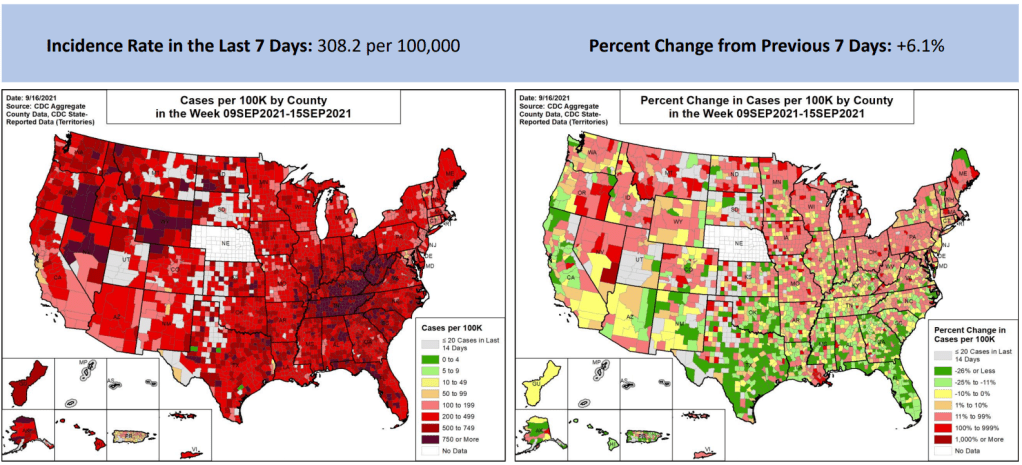
    Some previous Delta hotspots are seeing case numbers decrease, while others are now seeing their highest cases yet. Charts from the September 16 Community Profile Report.

    In the past week (September 11 through 17), the U.S. reported about one million new cases, according to the CDC. This amounts to:

    • An average of 146,000 new cases each day
    • 312 total new cases for every 100,000 Americans
    • 6% more new cases than last week (September 4-10)

    Last week, America also saw:

    • 78,000 new COVID-19 patients admitted to hospitals (24 for every 100,000 people)
    • 10,000 new COVID-19 deaths (3.1 for every 100,000 people)
    • 100% of new cases now Delta-caused (as of September 11)
    • An average of 800,000 vaccinations per day (per Bloomberg)

    Last week, national case numbers appeared to be in a decline, with a 13% decrease from the prior week. This week, cases bumped back up slightly—most likely due to delayed reporting driven by the Labor Day weekend, as I predicted in last week’s issue.

    Still, this week’s daily new case average is lower than it was a couple of weeks ago. And the number of COVID-19 patients newly admitted to hospitals, a crucial metric that’s less susceptible to holiday reporting interruptions, has continued to drop: from about 12,000 new patients a day last week to 11,000 new patients a day this week.

    But we can’t say the same thing for death numbers, unfortunately. Over 10,000 COVID-19 deaths were reported in the U.S. last week, the highest number since March 2021 (at the tail end of the winter surge.)

    The country reached a sad milestone this week: one in 500 Americans have died of COVID-19, according to a Washington Post analysis. For Black, Hispanic, and Native Americans, as well as states that have been harder-hit by the pandemic, that number is lower. In Brooklyn, where I live, COVID-19 has killed one in every 240 residents.

    In some parts of the country, the Delta surge appears to be letting up. Florida saw an 18% decrease in cases from last week to this week, according to the September 16 Community Profile Report, while Texas saw an 8% decrease. California—where residents just voted to keep harsh-on-COVID-19 Governor Gavin Newsom in power—saw a whopping 23% decrease in cases, week over week.

    Meanwhile, other parts of the South and West are seeing their highest case numbers yet. Both Tennessee and West Virginia have recorded over 700 new cases for every 100,000 residents in the past week. (For context: the CDC says that over 100 new cases per 100,000 constitutes high transmission.) In West Virginia, hospitals are “overwhelmingly inundated” with COVID-19 patients. And in Alabama, though case numbers are coming down, a whopping 50% of hospital ICU patients have COVID-19.

    According to the latest CDC variant estimates, 99.7% of new cases in the country are now caused by Delta. Delta has been causing over 99% of cases for a few weeks now. Has the variant run its course here? Could it mutate into something even more transmissible, or more deadly? Or is the CDC even collecting data comprehensively enough for us to tell? Many different scenarios seem plausible as we head into the colder months.

  • Featured sources, September 12

    • K-12 Education Polls: Staff at EdChoice, a nonprofit education research organization, are keeping track of polling on school reopening and various related safety strategies, such as vaccine and mask requirements. This spreadsheet includes over 300 polls going back to March 2020.
    • The Overlooked, K-12 report: Here’s another K-12 reopening source: a new report from the education-focused Walton Family Foundation characterizing families who felt dissatisfied by their education choices in fall 2020. The report includes estimates of students who changed schools, failed to enroll in formal schooling, or otherwise “are frustrated with their current schooling option and lack access to their preferred alternative(s).”
    • Case and death underreporting in nursing homes: In a new paper published this week, researchers from Harvard University estimated that over 68,000 COVID-19 cases and over 16,000 deaths among U.S. nursing home residents have gone unreported in federal data. The researchers made their facility-level underreporting estimates available on GitHub, including nursing homes in 20 states that were utilized for the analysis.
    • Case acceleration by state: In July, STAT News data project manager J. Emory Parker introduced a new metric for visualizing the pandemic: case acceleration, or how fast cases are increasing (or decreasing). Now, you can view state-by-state case acceleration numbers in real-time on STAT’s website. The dashboard is updated daily with data from the CDC, Johns Hopkins, and Our World in Data.

  • Fall 2021 school reopening: Stats so far

    Fall 2021 school reopening: Stats so far

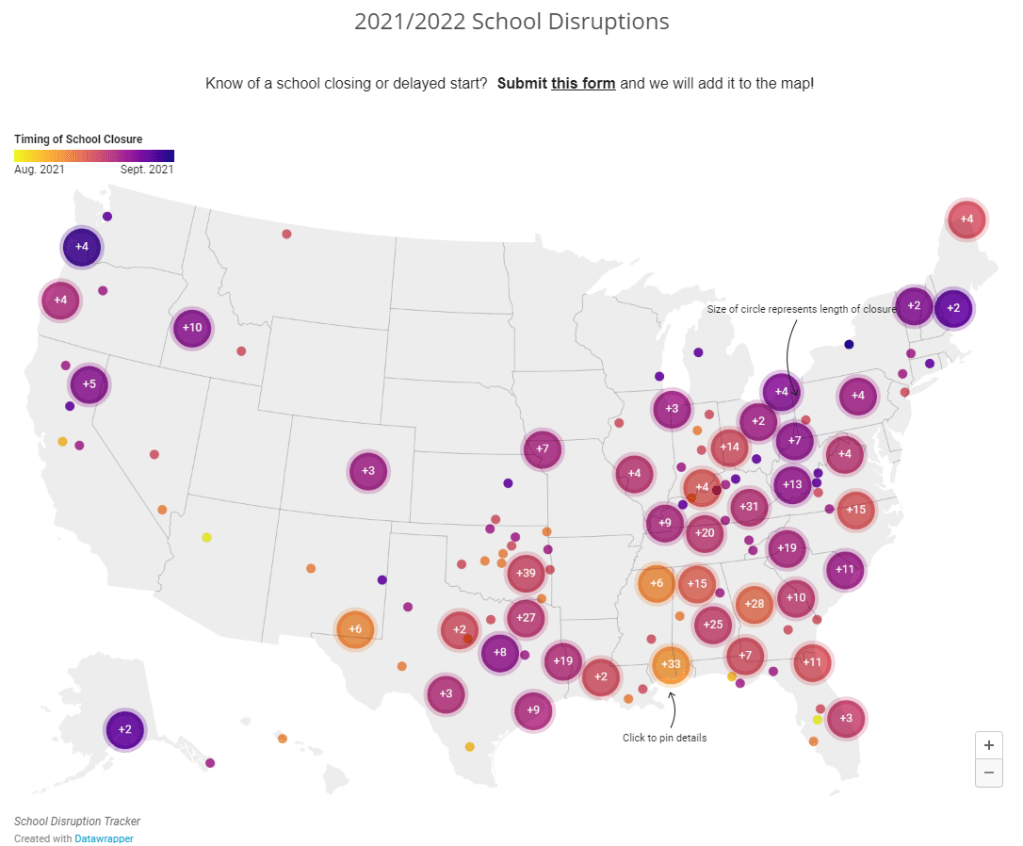
    Over 1,400 schools have closed temporarily thus far in fall 2021, according to data collected by Burbio. Screenshot taken on September 11.

    The COVID-19 Data Dispatch has, clearly, been pretty focused on school reopening in recent weeks. But our “Opening” project is primarily retrospective, looking back at schools that were successful last school year. This fall, the Delta variant and additional political pressures have made reopening success even harder to achieve.

    With some schools now over a month into the fall semester—while others, like those in NYC, are finally starting class next week—let’s talk about how reopening has gone thus far.  

    Many schools in high-transmission areas have closed temporarily. “More than 1,400 schools across 278 districts in 35 states that began the academic year in person have closed,” writes U.S. News reporter Lauren Camera, citing data from the tracking organization Burbio. Due to out-of-control COVID-19 outbreaks, some districts switched temporarily to remote learning while others fully closed or delayed the start of class.

    While that may seem striking, it’s just about 1.4% of the 98,000 public school districts in the U.S. And, as you can see from Burbio’s closure map, many of the districts that had to shut down are located in Southern states with limited COVID-19 safety protocols. In Texas, for example, over 70,000 K-12 students have tested positive for COVID-19 since the beginning of the fall semester, out of about 5.3 million total students. In the 2020-2021 school year, about 148,000 Texas students got COVID-19 in total. This is a pretty clear signifier of the increasing danger that Delta, combined with lower mask use in schools, may bring to classrooms.

    The school districts that closed include Scott County School District 1, the subject of our first “Opening” profile. This Indiana district originally opened in August 2021 with no mask requirement; cases quickly climbed, leading the district to shift to virtual instruction for two weeks. When students returned to classrooms in late August, masks were required once again.

    Schools with stricter COVID-19 precautions are faring better. Many of those school districts that start earlier in August are located in the South. From a news cycle perspective, that means we tend to hear about the schools that shut down due to outbreaks before we hear about the schools that aren’t seeing so much virus transmission.

    For example: this past Thursday, San Francisco’s local health department announced that the city has not seen a single case of transmission at a public school. School started on August 17, giving officials about one month of data for the district’s over 50,000 students. Safety precautions in San Francisco schools include required masking, surveillance testing, ventilation updates, and mandatory vaccination for teachers and staff. Dr. Naveena Bobba, from the city public health department, additionally said that about 90% of residents in the 12 to 17 age group are fully vaccinated.

    We’re starting to see vaccine mandates for students in addition to teachers and staff. Los Angeles Unified is now requiring vaccination for all eligible students, ages 12 and up. LA is the second-largest school district in the country, serving over 600,000 students—including 225,000 who are eligible for vaccination. The majority of those students are already vaccinated, according to the county public health department; the rest will have until October 31 to catch up.

    LA’s school district follows many colleges and universities that have required vaccination and Culver City Unified, another California district that announced a student mandate in late August. As vaccination rates in the 12-17 age group tend to be low and parent hesitation tends to be high, student vaccination mandates likely won’t be as common as staff mandates. But I wouldn’t be surprised if we see more districts make this requirement.

    Despite federal encouragement to provide regular COVID-19 testing, many schools aren’t doing it. The Biden administration “Path out of the Pandemic” plan focuses on COVID-19 testing, including a call for K-12 school districts to set up regular testing for unvaccinated students and staff. If all schools followed the CDC’s testing guidance, they’d be testing at least 10% of students, at least once a week. (This is, again, an area where many colleges and universities are already excelling.)

    School districts have had months to tap into $10 billion set aside specifically for school testing in the American Rescue Plan. But many districts are still not testing, or are offering tests only to students who show COVID-19 symptoms or were recently in contact with a case. The nation’s largest school district (New York City) has even loosened its testing protocol from last year—shifting from mandatory testing for 20% of students and staff every week, to non-mandatory testing for 10% of unvaccinated students every other week. Some parents and staff are not happy about the change, saying that NYC should be testing more, not less.

    The federal government is expanding school data collection, but still not counting cases. After Biden took office, the federal Department of Education started surveying schools on their pandemic protocols—asking whether schools were open online, in-person, or hybrid, how many students were choosing different options, and other similar questions. Survey data are made public on a federal dashboard, updated once a month; but the data are fairly incomplete, with numbers unavailable for about 20 states and all but ten individual districts.

    Now, the federal DOE is expanding its survey efforts “by asking more questions about how students learn and what precautions schools take,” according to EdWeek. But if the DOE doesn’t also expand its survey to more school districts and states, it’s unclear how useful these data will be. And the federal government still isn’t tracking the most important metric here: actual case counts in schools!

    While pediatric case counts soar, children are still at low risk for severe disease. As we see reports of record cases in children and overwhelmed pediatric ICUs, it is important to recognize that—tragic as these reports may be—the majority of kids who contract COVID-19 have mild cases.

    An article from the German news site Spektrum der Wissenschaft, republished in Scientific American, helps to explain how children’s immune systems work to recognize the novel coronavirus and stop the virus from causing severe disease:

    The immune system uses a special mechanism to protect children from novel viruses—and it typically saves them from a severe course of COVID-19 in two different ways. In the mucous membranes of their airways, it is much more active than that of adults. In children, this system reacts much faster to viruses that it has never encountered, such as pandemic pathogens. At least, that is what a recent study by Irina Lehmann of the Berlin Institute of Health at Charité and her colleagues suggests.

    As children get older, the article explains, immune system resources are shifted from this innate response to a memory-based response; adults are thus more protected against viruses that they’ve encountered before.


    Read the Opening series

  • Opening profile: Going above and beyond in Crown Heights, Brooklyn

    Opening profile: Going above and beyond in Crown Heights, Brooklyn

    By Betsy Ladyzhets

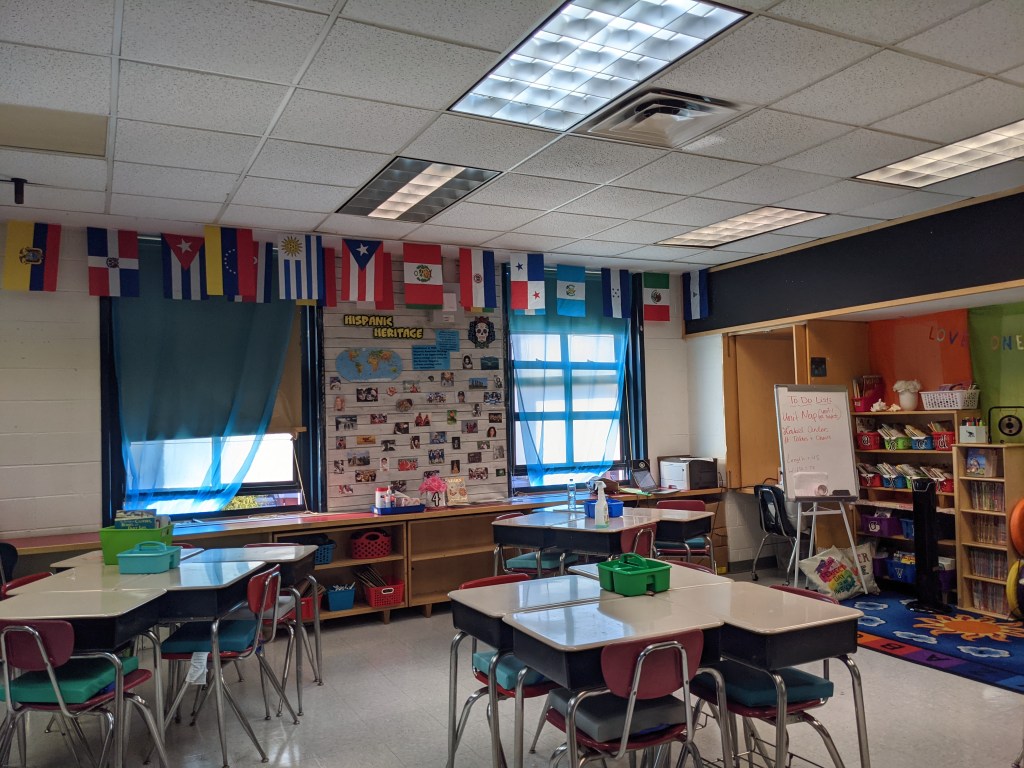
    A fouth-grade classroom at P.S. 705, set up with desks in small clusters, windows open, and improved mechanical ventilation for fall 2021. Photo taken by Betsy Ladyzhets (COVID-19 Data Dispatch).

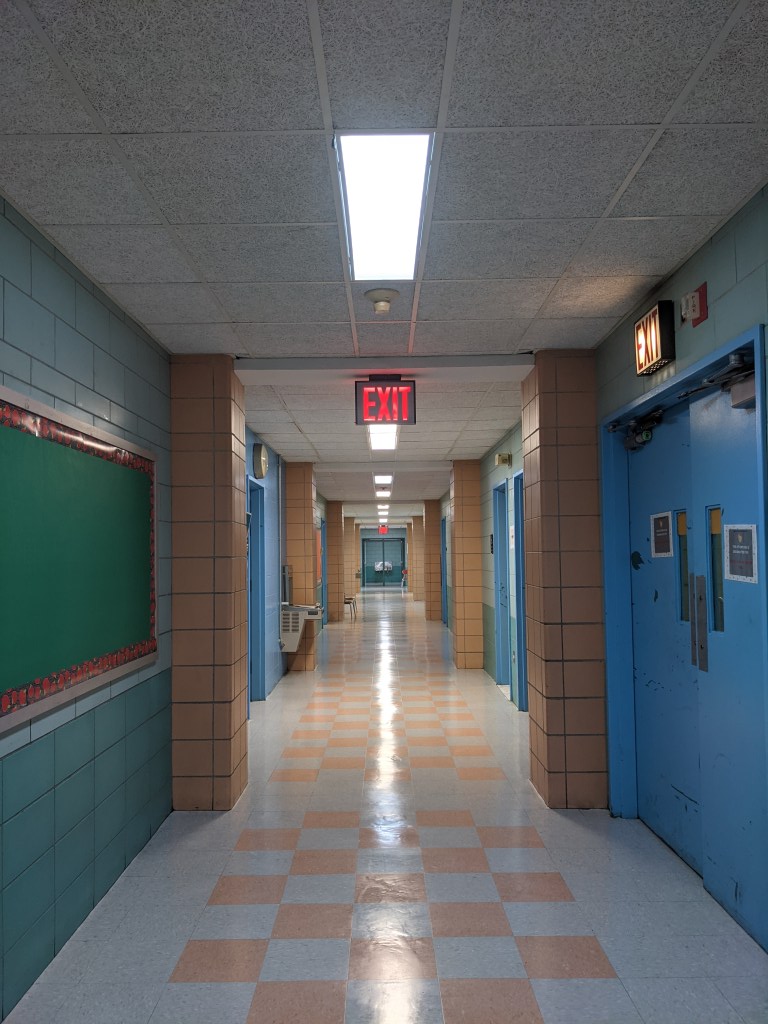
    On the morning of Aug. 26, parents from Brooklyn Arts & Science Elementary School (or P.S. 705) flocked to the school for an open house ahead of the fall 2021 semester. Parents climbed up a flight of stairs — designated P.S. 705-only — to the second floor of a building in Crown Heights, Brooklyn. They walked down squeaky-clean hallways, toured classrooms with desks carefully spaced three feet apart, and heard the whir of newly-installed fans and portable ventilation units.

    The event was live-streamed for those who couldn’t make it in person. About 100 parents attended the open house events online and in-person, Principal Valerie Macey estimated, representing around one-third of the school’s 308 students.

    The school had already done “a lot of communication,” Macey said — so parents were familiar with safety protocols going into the open house, and questions focused on more typical school concerns such as homework policy. This past communication included weekly town hall meetings, virtual office hours, and individual calls to families.

    P.S. 705 went above and beyond New York City school reopening guidance, with a particular reliance on the city’s surveillance testing program. This elementary school had 55% in-person enrollment by the end of the 2020-2021 school year, above the city’s average of about 40%, and made it through the year with just 11 total cases — and zero closures.

    P.S. 705 is the subject of the final profile in the COVID-19 Data Dispatch’s “Opening” series. Alongside four other school communities, we selected it because the majority of the school’s students returned to in-person learning during the 2020-2021 school year — and city officials identified COVID-19 cases in under 5% of the student population. (According to the CDC, about 5% of school-aged children in the U.S. contracted COVID-19 between the start of the pandemic and early August 2021.)

    As the other four school communities in this project are rural districts — following a trend in our data analysis, which primarily identified rural areas — we felt it was important to include a city school in the project. We additionally wanted to highlight New York State’s surveillance testing program, as it’s one of the few school testing programs with public data available. Plus, the COVID-19 Data Dispatch was able to visit this school in person, as this reporter (Betsy Ladyzhets) is based in Brooklyn.

    Demographics for Brooklyn, New York1
    Census population estimates, July 2019

    • Population: 2.6 million
    • Race: 36.8% white, 33.8% Black, 18.9% Hispanic/Latino, 12.7% Asian, 2.7% Two or more races, 0.9% Native American
    • Education: 82.4% have high school degree, 37.5% have bachelor’s degree
    • Income: $60,200 is median household income, 17.7% in poverty
    • Computer: 87.5% have a computer, 80.0% have broadband internet
    • Free lunch: 67.8% of students receive free or reduced-price lunch2

    COVID-19 stats for Brooklyn Arts & Science Elementary School (P.S. 705)
    All data from New York School COVID Report Card

    • Total enrollment: 308 students
    • In-person enrollment: 55% at end of the school year
    • Total cases, 2020-2021 school year: 11 cases (8 among students, 3 among staff)

    1We chose to include borough-level statistics here because the P.S. 705 school district does not clearly align with a specific ZIP code or another smaller geographic area within Brooklyn.
    2Source: National Center for Education Statistics


    Extensive parent communication

    New York City, which has the largest public school district in the U.S., faced challenges with maintaining parent trust during the pandemic. In fall 2020, the city started offering hybrid learning, with cohorts of students returning to classrooms for two or three days a week. But only one in four students actually returned to classrooms by early November, according to the New York Times. In spring 2021, many schools were able to offer five days a week in-person, but most students still stayed home. Parents criticized NYC leaders for confusing communication; teachers protested unsafe conditions at their school buildings; and some staff, like those working with special education students, claimed the city’s plan left them behind.

    At P.S. 705, more students returned to in-person learning (55%) than the city average (40%). School administrators made it a priority to provide parents with information and make themselves available for questions. This frequent communication was a major reason why parents felt safe sending their children back to classrooms, representatives from the Parent-Teacher Association (PTA) said in a group interview with administrators and other school staff.

    Town halls — livestreamed to parents — are one hallmark of P.S. 705’s communication. After initial school-wide meetings, administrators devised a schedule in which the weekly town halls alternated between grade levels, in order to focus on concerns for specific age groups.

    Takiesha Robinson, the PTA president, recalled that these meetings were well-attended; Principal Macey estimated that 30 to 40 parents typically joined the grade-specific events, accounting for the majority of the school’s 40 to 50 students in a grade. “The town halls [were] a very good open forum to let the parents know that you [the administrators] are listening, you do care, you are here,” she said. When parents provided feedback on something they felt wasn’t working, administrators responded quickly, Robinson said.

    In addition to the town halls, P.S. 705 administrators staffed a “virtual main office” where parents could enter and ask additional questions. Each morning, administrators logged onto a virtual meeting which stayed live throughout the day. “Parents could come in and ask any questions when they needed,” said Melissa Graham, P.S. 705’s parent coordinator.

    School staff also reached out to families proactively when they identified a potential need for support, such as after a student missed class. This school is located on the border of Crown Heights and Prospect Heights, both neighborhoods that were hard-hit by the pandemic: in the school’s ZIP code and in a neighboring ZIP code where families live, one out of every 11 people was diagnosed with COVID-19, according to NYC data.

    At P.S. 705 itself, 41% of students are Black and 32% are Hispanic or Latino, two groups that saw disproportionately high COVID-19 hospitalizations and deaths in Brooklyn. Principal Macey explained that the staff wanted to know when students lost loved ones or went through other COVID-related struggles.

    “The staff and administration went above and beyond to reach out to those families,” said Alison Gilles, PTA secretary. “[The pandemic] definitely hit our community really hard. But 705 is just the kind-of place where it is a ‘wrap your arms around the whole family’ kind-of a school.”

    Surveillance testing

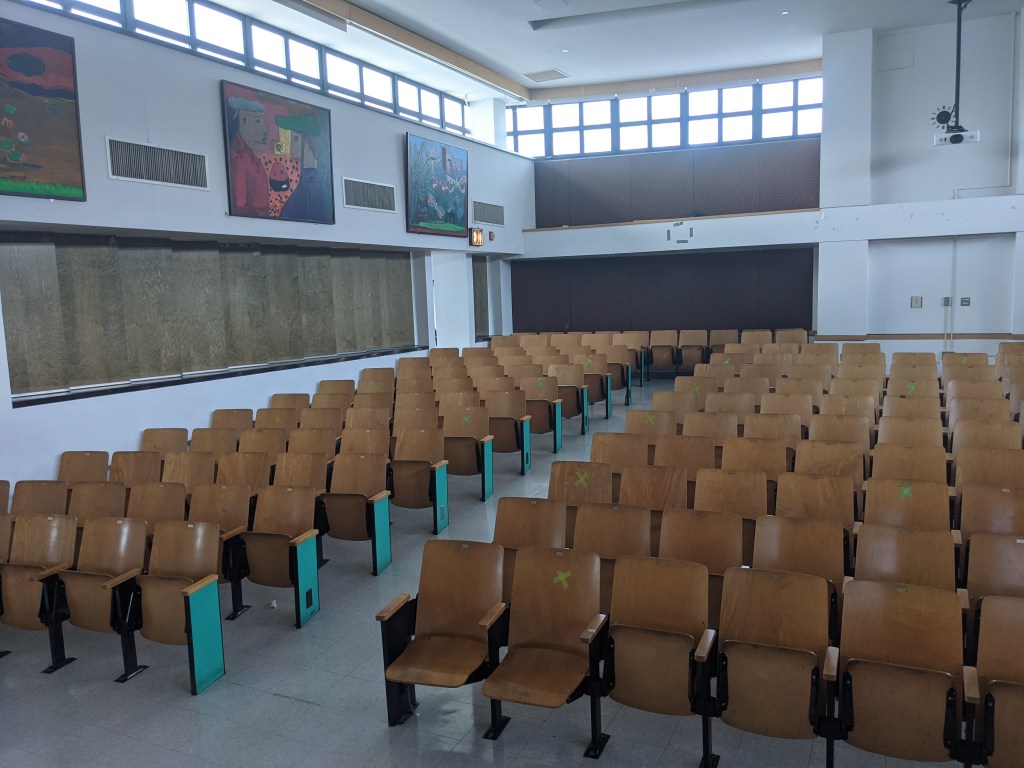
    At P.S. 705, students get swabbed in the school auditorium. Students wait in socially-distanced seats before returning to class. Photo taken by Betsy Ladyzhets (COVID-19 Data Dispatch).

    P.S. 705 utilized NYC’s COVID-19 testing program to identify cases before they turned into outbreaks. Starting in October 2020, the NYC Department of Education (DOE) required all schools open for in-person learning to test 20% of their on-site students and staff once a month. In December, as the winter COVID-19 surge grew, this requirement was increased to once a week.

    Through partnerships between the city DOE and PCR testing labs, students and staff could get tested right at their school buildings, with results available in two to three days. At P.S. 705, students were tested in the school auditorium, one grade at a time: students filed in at one side of the room, got swabbed one by one, then waited in socially-distanced seats to return to class.

    For this school, the city’s 20% requirement shook out to about 45 people. But P.S. 705 “over-volunteered for the testing,” according to DOE spokesperson Nathaniel Styer. Administrators realized that testing was a great tool to keep their classrooms safe and encouraged staff and students to get swabbed even when it wasn’t required.

    “There were a lot of people apprehensive, initially, about being tested,” said Principal Macey. So, she, along with Graham (the parent coordinator) and Assistant Principal Kristen Pelekanakis, routinely got tested first so that students and staff could see how easy the process was. During the week of January 20, 2021, for example, over 150 staffers and students were tested—out of about 200 total people in the building.

    !function(){“use strict”;window.addEventListener(“message”,(function(e){if(void 0!==e.data[“datawrapper-height”]){var t=document.querySelectorAll(“iframe”);for(var a in e.data[“datawrapper-height”])for(var r=0;r<t.length;r++){if(t[r].contentWindow===e.source)t[r].style.height=e.data["datawrapper-height"][a]+"px"}}}))}();

    Just as young students got used to masks in Oregon, the Brooklyn students got used to swabs. Graham recalled: “I would come into the classroom with a clipboard, and I would have kids being like, ‘Take me! Take me! I’m getting tested this week!’”

    In fact, Pelekanakis said that she and other administrators wished testing capacity was higher, so that they could test even more students. The majority of the school’s active cases were caught through random testing, she said; those students were asymptomatic and, she believed, likely wouldn’t have been identified as infected if not for P.S. 705 testing above their required level. The school saw a total of eight student cases and three staff cases all year — comprising just under 5% of the onsite students and staff.

    The city’s testing requirement has become less stringent for fall 2021. Now, only 10% of unvaccinated students will be tested every other week, and students must opt in to the program rather than requiring testing for all. According to Principal Macey, all the students who attended in-person classes in spring 2021 had opted into the fall testing program as of early September; she plans on heavily promoting the program to the students who were remote last year through upcoming town halls and other communication.

    Macey and the other staffers — who must be vaccinated with at least one dose by the end of September, per a city-wide mandate — aren’t required to participate in testing this fall. But Macey still intends to serve as an example for her students: “I’ll test, just because I want my kids to see,” she said.

    Returning to one school community

    NYC is heading into the fall 2021 semester with no remote option. At P.S. 705, this means more than 100 students who learned remotely for the entire 2020-2021 school year will be coming back to classrooms. Administrators are preparing with more parent communication (weekly town hall meetings and the late-August open house), while the DOE updates their building’s ventilation system.

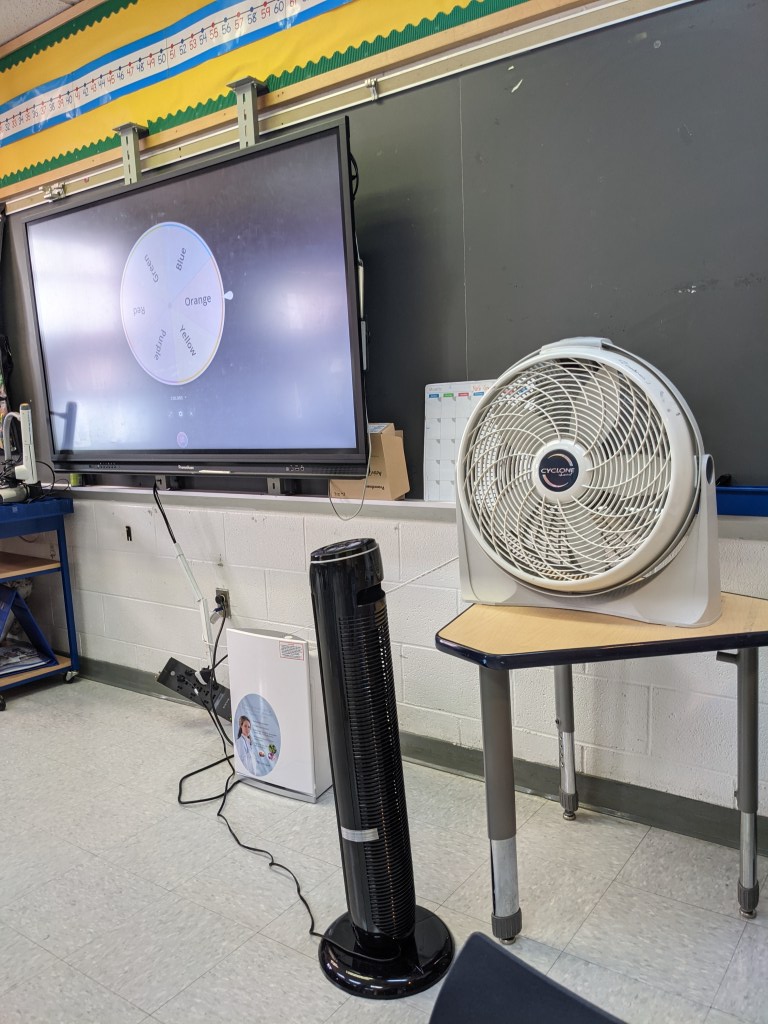
    The COVID-19 Data Dispatch (CDD) visited P.S. 705 on Sept. 3, just ten days before classrooms open for the new school year. At that time, Principal Macey said the school just finished an overhaul of its HVAC system, updating ventilation throughout the building. The school also had external filtration units, fans, and windows open for additional airflow. In classrooms, desks are spaced three feet apart — down from six feet last year. And custodians are making the building look like new: During the CDD’s visit, Principal Macey told a custodian that she wants to see her face “shining in the floor” by the first day of school.

    Summer renovations at P.S. 705 were extensive, according to reporting at Gothamist: In mid-August, “the building that houses Brooklyn Arts and Science Elementary School reported that all 40 of its classrooms were under repair.” At the time of publishing, just one classroom is still marked under repair by the DOE, while three rooms (two staff offices and a bathroom) have no mechanical ventilation.

    At the Sept. 3 visit, administrators and teachers told the CDD that they were optimistic about the new school year. “The kids are really good with [keeping] their masks on,” said fourth-grade teacher Denise Garcia. She felt that, with similar protocols in place, the school could continue to have low case counts like the previous year.

    This year’s first day of school will be far from typical. Principal Macey has planned for a big celebration, including outdoor activities, a literal red carpet, photo opportunities, and a moment of silence for loved ones lost in the pandemic.

    “It can’t just be, ‘go inside, wash your hands,’” she said. “We have to get that space to just reconnect.” With continued communication and acknowledgement of the pandemic’s hardships, she intends to lead her school back into “one school community.”


    The COVID-19 Data Dispatch’s “Opening” series is available for other publications to republish, free of charge. If you or your outlet is interested in publishing any part of this series, please contact betsy@coviddatadispatch.com.

    More from the Opening series

  • National numbers, September 12

    National numbers, September 12

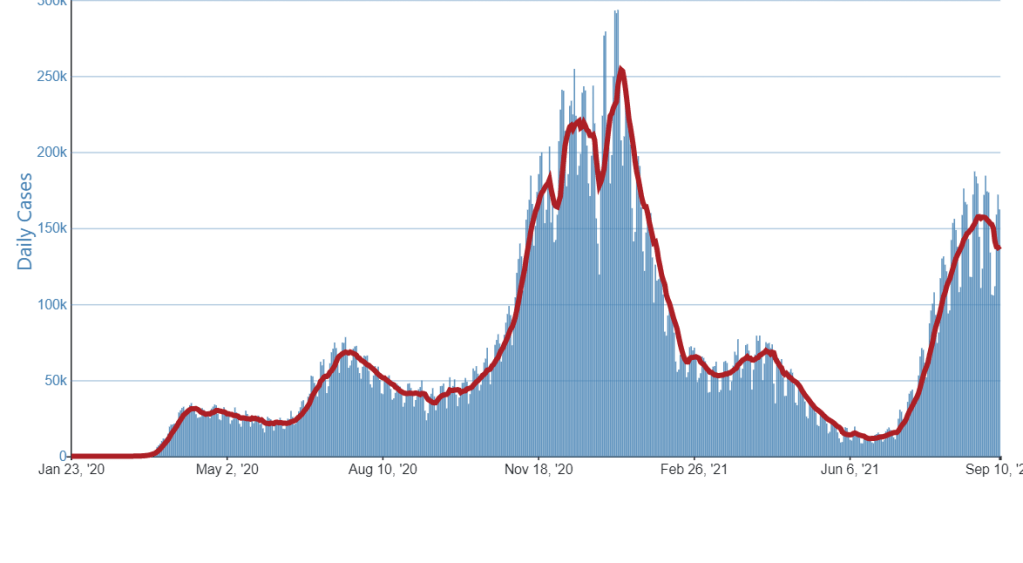
    COVID-19 cases appear to be going down in the U.S., though some of that drop may be due to Labor Day reporting delays. Chart from the CDC, retrieved September 12.

    In the past week (September 4 through 10), the U.S. reported about 960,000 new cases, according to the CDC. This amounts to:

    • An average of 137,000 new cases each day
    • 291 total new cases for every 100,000 Americans
    • 13% fewer new cases than last week (August 29-September 3)

    Last week, America also saw:

    • 82,000 new COVID-19 patients admitted to hospitals (25 for every 100,000 people)
    • 7,500 new COVID-19 deaths (2.3 for every 100,000 people)
    • 99% of new cases now Delta-caused (as of September 4)
    • An average of 700,000 vaccinations per day (per Bloomberg)

    Last week, I wrote that national U.S. COVID-19 cases were in a plateau. The pattern has continued this week: cases are down 13% from last week, new hospitalized patients are down 4%, and deaths are down 11%.

    It’s important to note here, though, that Labor Day likely skewed these numbers. As is typical of COVID-19 reporting on holidays, many local public health agencies—the initial source of case counts and other metrics—took the weekend off, leading those counts to get delayed. We may see higher numbers next week as reports catch up.

    Even as the national numbers drop, though, some states are seeing record case counts and overwhelmed hospitals. South Carolina is one example: this state is now seeing the highest case rate in the U.S., with 680 new cases for every 100,000 residents in the past week, per Community Profile Report data. Kentucky and West Virginia are ranking highly too, with 625 and 586 new cases for every 100,000 people in the past week, respectively.

    Both South Carolina and Kentucky have record numbers of COVID-19 patients in hospitals right now, while West Virginia is approaching its winter 2020 numbers. In Idaho, another state seeing record hospitalizations, state public health leadership placed several northern hospitals under “crisis standards of care,” meaning that clinicians could ration limited resources and prioritize those patients who are deemed most likely to survive.

    All of these states, of course, have low vaccination rates—under 50% of their populations are fully vaccinated. While vaccination rates rose nationally in August, dose counts now seem to be going down again: from a daily average of one million last week to 700,000 now.

    The Delta variant continues to dominate America’s COVID-19 surge. For several weeks now, this variant has been causing over 99% of new cases. And, while the Mu (or B.1.621) variant has made headlines, this variant appears not transmissible enough to compete with Delta. The CDC COVID Data Tracker Weekly Review noted this week that the Mu variant “reached its [U.S.] peak in late June,” causing under 5% of cases, and “has steadily decreased since.” It’s currently causing just 0.1% of cases, the CDC estimates.

    Also, we still aren’t doing enough testing. The overall national PCR test positivity rate is 9.1%, while rapid tests—increasingly popular during the Delta surge—are difficult to find in many settings. A lack of testing makes it difficult to identify all breakthrough cases and look out for future variants that may arise.

  • Opening profile: Close-knit community in Port Orford and Langlois, Oregon

    Opening profile: Close-knit community in Port Orford and Langlois, Oregon

    By Betsy Ladyzhets

    The actual Port in Port Orford, Oregon. Photo from Yurivict via Wikimedia Commons.

    In Port Orford, Oregon, it’s a quick walk from the elementary and middle school building to the town library—the two buildings are right down the street from each other. In fact, the town library and school are linked by more than geography, since the school district’s two libraries became part of the Port Orford library system in 2017. The town’s library system stepped in to assist the district in buying books, organizing the collection, and other management tasks.

    Much like how town librarians stepped in to save the school libraries in 2017, they also provided crucial space, books, wifi, and activities to students during the pandemic. The school-library partnership exemplifies the close-knit community of the two small, coastal towns making up the Port Orford-Langlois School District.

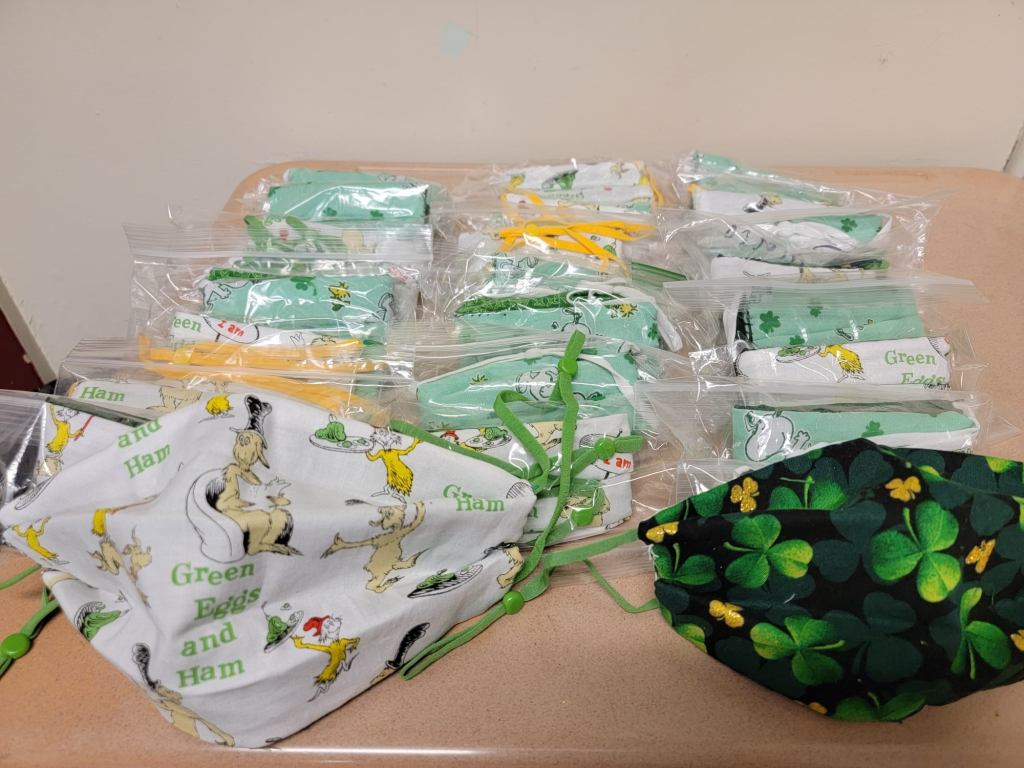
    District parents and other community members additionally stepped up to provide homemade face masks for teachers and staff. The district built up community trust and used a cautious, step-by-step reopening strategy to make it through the 2020-2021 school year with zero cases identified in school buildings.

    The Port Orford-Langlois School District is the subject of the fourth profile in the COVID-19 Data Dispatch’s “Opening” series. Alongside four other school communities, we selected it because the majority of the district’s students returned to in-person learning during the 2020-2021 school year — and officials identified COVID-19 cases in under 5% of the student population. (According to the CDC, about 5% of school-aged children in the U.S. contracted COVID-19 between the start of the pandemic and early August 2021.)

    Demographics for Port Orford, Oregon

    American Community Survey 2019 5-year estimates

    • Population: 1,000
    • Race: 94.7% white, 2.0% Native American, 3.4% two or more races, 1.5% Hispanic/Latino
    • Education: 92.8% have high school degree, 11.0% have associate’s degree, 21.5% have bachelor’s degree
    • Income: $27,500 is median household income, 27.5% in poverty
    • Computer: 87.6% have a computer, 77.0% have broadband internet1
    • Free lunch: 68.9% of students receive free or reduced-price lunch2

    COVID-19 stats for Port Orford-Langlois School District 2CJ

    • Total enrollment: 205 students3
    • In-person enrollment: Estimated 85%-90% at the start of the school year (K-3 students only), 95% at the end (all grades)3
    • Total cases, 2020-2021 school year: 0 cases reported4

    1Source: County-level statistic
    2Source: National Center for Education Statistics
    3Source: Interview with Principal Krista Nieraeth
    4Source: Reported by Oregon Health Authority


    Library partnership and community

    Both of the towns in this Oregon school district are tiny. Port Orford has a population of about 1,000, and Langlois has an even smaller population of 135. The district is made up of two schools: a high school and a K-8 school, where class sizes tend to be under 20 students. The two schools have a total enrollment of about 200 students combined. Staffers at the district wear multiple hats — Krista Nieraeth, for instance, serves as principal for both schools.

    In these two small towns, communication between school parents and administrators was direct — and personal. Nieraeth recalled how she often received information about students who needed to quarantine: “I would get a Facebook message [from a parent] at eight o’clock at night going, what do I do?” Some parents also called her personal cell number to ask questions or alert her to COVID-19 symptoms in their households, while district teachers had individual calls with parents before classes started. This level of direct communication reflected trust between the community and the district’s administration.

    One example of community partnership was the district’s connection to the Port Orford Public Library, which manages the school district’s library system. Starting in fall 2020, the library hosted IT specialists and teachers from the school in one of the library’s conference rooms. Students were able to come get technological support or a bit of face-to-face homework help. 

    The library later dedicated more spaces for after-school homework help, allowing families to come in and utilize the free wifi. Both the library and school buildings also kept their wifi turned on, so that families could sit in their parking lots and use it from their cars; the library’s wifi was on 24/7. Similarly to Garrett County in Maryland, the geography of this rural district makes broadband access inaccessible for many families.

    “The biggest feedback I had was a wish for longer hours,” Library Director Denise Willms said, when asked how district families responded to the library’s services. Due to low staffing, the library was unable to operate a full seven-days-a-week schedule. Willms additionally noted that the library does not have a great ventilation system or easily-openable windows — and unlike school districts across the country, she was unable to access a government grant for ventilation updates.

    Librarians and district staff ultimately brought services from the library directly to students. The school libraries were unavailable for browsing (because they were temporarily used as large classrooms), so library staff and teachers coordinated book delivery directly to classrooms. Kari Hansen, the K-8 school’s library coordinator, recalled using gloves to handle the books and reading out story descriptions to students, so that they could learn about their options at a distance before making a reading choice.

    The Port Orford youth services librarian, Cheryl Frances, and school staff also produced take-home activity kits for students. The library’s kits included literacy, dinosaurs, and other STEAM learning materials. Parents could pick these activity packs up at the library, and when extras were available, library staff took them over to the school. The kits served as a way to remind students that “the library is here,” Frances said.

    Social studies, history, and economics teacher Phoebe Skinner observed that these take-home activities were very popular with students and parents alike. Since the kits had “everything you need” right in the package, she said, overwhelmed parents didn’t need to hunt down extra supplies or do any other additional labor. The district additionally ran its own virtual events, such as a movie night and bingo games.

    Reflecting on the school-library partnership, Willms — the library director — said that her experience embodied: “students first, community first, ego second.” Principal Nieraeth similarly said that the library, along with churches and other community civic organizations, “really would help step up and ask us, ‘What do you need?’”

    Homemade facemasks donated to the school district by parents in March 2021. Photo via the district’s Facebook page.

    “Playing it safe”

    Similarly to other districts profiled in this project, Port Orford-Langlois prioritized getting students back in physical classrooms during the COVID-19 pandemic. To prepare for that reopening, Nieraeth said, she and other staffers focused on spacing and ventilation. After using tape to map out every classroom in seven-by-five-foot blocks, the staff put a desk in each space.

    The staff also prioritized ventilation: windows needed to be open in each classroom. In some cases, classroom assignments were shuffled around to allow proper social distancing. One class with over 20 students, for example, was moved into the library.

    In addition to these precise preparations, the district opted to delay its fall 2020 semester by two weeks for extra prep time. Then, age groups were brought back to classrooms in intervals to test out safety measures and build trust in the community.

    The first phase of this reopening was the youngest students, grades kindergarten through third grade. Those younger students “needed that stability” of in-person learning, Nieraeth said.

    After six weeks of the youngest children in classrooms, case numbers were low enough both in the school district itself and in surrounding Curry County to bring more students back: grades four through six. Administrators had planned to bring back middle and high school students six weeks after that, but by that point, the winter COVID-19 surge had hit Oregon, leading the district to opt for caution and continue virtual learning for older students.

    Nieraeth estimated that, at the start of the fall semester, 10% to 15% of the K-3 students chose all-remote learning. But, throughout the semester, more families decided to go back in person, as they saw that the district adhered to safety protocols while also letting kids play together. Parents also developed trust in the district by watching Nieraeth share district updates on social media and respond to parents’ questions.

    In addition to basic safety measures like social distancing and ventilation, the district barred visitors from the school buildings, conducted daily temperature and symptom checks, and encouraged lots of handwashing and sanitation.

    “My desk had never been cleaner in 20 years of teaching,” said Skinner, the social studies, history, and economics teacher.

    Masks were required for all students and staff as well. Nieraeth said she was “pleasantly surprised” to see that even the youngest children wore their masks responsibly. She credited this, in part, to the district’s parents, who modeled mask-wearing for their children — even though the community leans conservative, and parents may not have been overly enthusiastic about masking themselves.

    Precautions continue into fall 2021

    When the spring semester started in February, middle and high school students were finally able to return to classrooms. Skinner noted that a significant batch of students returned in March, after older family members in their households were able to get vaccinated. By the end of the year, she said, out of 60 to 70 students in her social studies classes, all but eight were attending class in person. Principal Nieraeth similarly estimated that about 95% of the district’s students were attending school in person by the end of the spring semester. 

    Overall, the safety measures and low community spread helped the Port Orford-Langlois schools avoid outbreaks. The Oregon Health Authority did not identify a single case in the district for the entire 2020-2021 school year; Principal Nieraeth confirmed this statistic.

    In fall 2021, the Port Orford-Langlois district is continuing similar safety measures to last year, including required masks. But this semester is less likely to proceed with zero outbreaks: the surrounding county, like much of Oregon, is now seeing some of its highest case rates of the pandemic. And, in mid-August, this county reported more cases per person than any other in the state. As of September 1, 51% of county residents are fully vaccinated, per Oregon state data; teachers and staff have until October 18 to comply with a state vaccine mandate.

    In a follow-up interview on Sept. 2 — four days into the new school year — Principal Nieraeth said her district was following all the protocols that worked well last year. “We’re working with our families and really reliant on them to help us ensure that we’re being safe at school,” she said.


    The COVID-19 Data Dispatch’s “Opening” series is available for other publications to republish, free of charge. If you or your outlet is interested in publishing any part of this series, please contact betsy@coviddatadispatch.com.
    Edit, Sept. 7, 2021: An earlier version of this story misrepresented the activity kits produced by the Port Orford Public Library; the story has been updated with accurate examples.

    More from the Opening series

  • National numbers, September 5

    National numbers, September 5

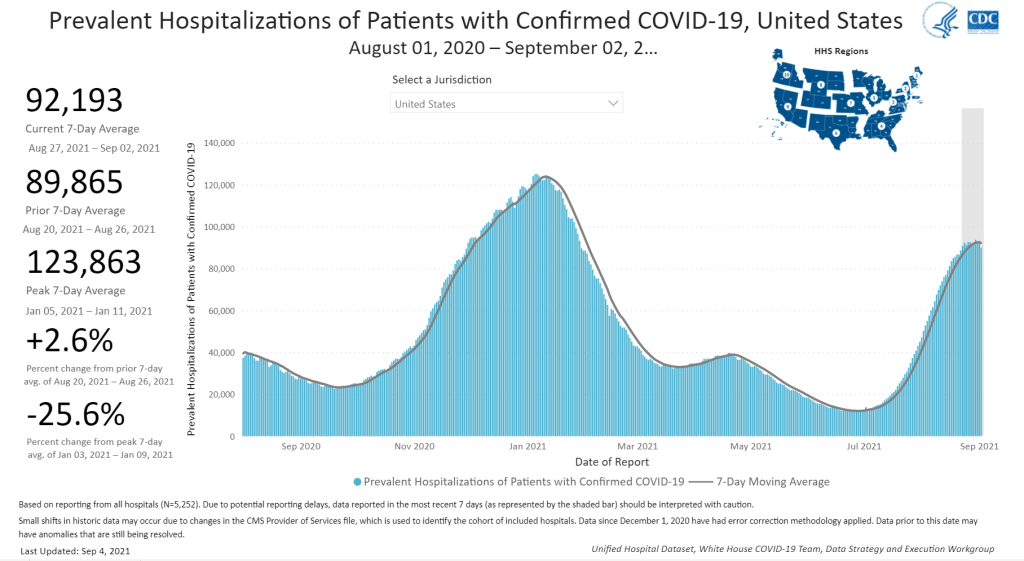
    About 90,000 Americans are currently in the hospital with COVID-19; this has been the daily average for the past two weeks. Chart via the CDC, screenshot taken on September 4.

    In the past week (August 28 through September 3), the U.S. reported about one million new cases, according to the CDC. This amounts to:

    • An average of 153,000 new cases each day
    • 327 total new cases for every 100,000 Americans
    • 5% more new cases than last week (August 21-27)

    Last week, America also saw:

    • 85,000 new COVID-19 patients admitted to hospitals (26 for every 100,000 people)
    • 7,300 new COVID-19 deaths (2.2 for every 100,000 people)
    • 99% of new cases now Delta-caused (as of August 28)
    • An average of one million vaccinations per day (per Bloomberg)

    Nationally, the current COVID-19 surge appears to be in a plateau. The number of new cases rose by just 5% this week, after a 3% rise last week. Hospitalizations are in a similar position: the number of patients in the hospital with COVID-19 has held steady at about 90,000 for the past two weeks.

    Among the COVID-19 experts I follow, I’ve seen some speculation that this could be the start of a Delta decline—similar to what we’ve seen in other countries, like India and the U.K. At the same time, others are noting that the U.K. saw a brief case decline followed by another rebound. If Delta does the same thing here, it would coincide with more schools starting their fall semesters and colder weather, neither of which bode well for transmission.

    And there are already a lot of children in hospitals right now. According to the COVID-NET surveillance system, there were about 14 children (under age 18) hospitalized with COVID-19 for every one million kids in the U.S. during the week ending August 28. For children under age 5, that number is 20 for every million—higher than at any other point in the pandemic.

    Thanks to COVID-19 and other diseases (like RSV, another virus that’s impacting many kids right now), pediatric intensive care units are overwhelmed, especially in the South. To understand what that means, I recommend this powerful op-ed by health equity expert Dr. Uché Blackstock. (Recent CDC research suggests that higher child hospitalization numbers are due to Delta’s high transmission, not because it impacts children more intensely. More on that later in the issue.)

    Meanwhile, high test positivity rates indicate that many COVID-19 cases are probably not being caught—especially those breakthrough cases in vaccinated people which may be mild, but can still spread the virus to others. At the national level, our test positivity rate is about 10% right now. In several states—South Dakota, Tennessee, Oklahoma, Alabama—positivity is over 20%, meaning we probably are not getting a clear picture of the surges in these locations.

    The U.S. is now seeing over 1,000 COVID-19 deaths a day, a level that we had not hit since the winter surge. Almost all of these deaths are preventable. This will continue, for as long as the Delta surge lasts.

  • Featured sources, August 29

    I was on vacation last week, unable to scour the internet for COVID-19 sources like I usually do. So, here are a couple of old favorites from the archives:

    • School Survey Dashboard from the Institute of Education Statistics (featured 3/28/21): As part of the Biden Administration’s commitment to reopening K-12 schools across the country, the federal government is now collecting data on how students are receiving education—and releasing those data on a monthly basis. This dashboard draws from surveys of a nationally represented sample including 7,000 rural, suburban, and urban schools, focusing on fourth-graders and eighth-graders. We (still!) don’t have data on COVID-19 cases, tests, or enrollment numbers, however.
    • Vaccine consent laws by state (featured on 5/23/21): As schools reopen, a lot of teenagers out there may want to know if they can get vaccinated without parental permission. The site VaxTeen provides these kids with information on the consent laws in every state, as well as a guide for talking to your parents about vaccines and other resources.
    • COVID-19 in ICE detention centers (featured on 11/1/20): Since March 2020, researchers from the Vera Institute of Justice have been compiling data from Immigration and Customs Enforcement (ICE) on COVID-19 cases and testing in immigrant detention centers. The researchers note that ICE replaces previously reported numbers whenever its dataset is updated, making it difficult to track COVID-19 in these facilities over time.
    • Rural hospital closures (featured on 6/20/21): The North Carolina Rural Health Research Program at the University of North Carolina tracks hospitals in rural areas that close or otherwise stop providing in-patient care. The database includes 181 hospitals that have closed between 2005 and 2021, available in both an interactive map and a downloadable Excel file.

  • Learn more about the Opening series via a live Q&A with Betsy

    Learn more about the Opening series via a live Q&A with Betsy

    Event description via SWINY’s website.

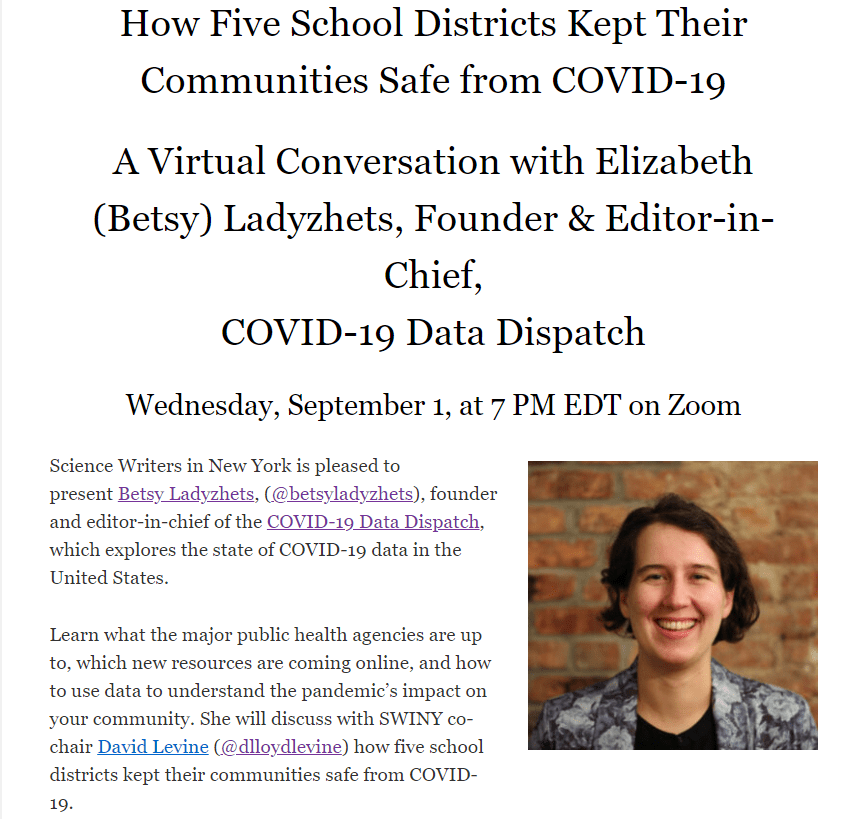
    I’m very excited to share that I’ll be discussing my “Opening” series at a virtual conversation this coming Wednesday, September 1 with David Levine, co-chair of Science Writers in New York (SWINY).

    The “Opening” series is a solutions journalism project, profiling school districts that successfully brought the majority of their students back to in-person learning during the 2020-2021 school year while keeping case numbers down. Catch up on the series here. At the event, I hope to talk about the motivations behind this project, lessons from the districts I’ve profiled, continued school data concerns, and how Delta heightens reopening challenges.

    SWINY has held numerous virtual Q&As throughout the pandemic, discussing the challenges of reporting on this crisis with science writers and experts including Carl Zimmer and Apoorva Mandavilli. It’s an honor to join that esteemed group of speakers. I look forward to answering questions from COVID-19 Data Dispatch readers and other science writing fans!

    Register for the event here. It’ll be held virtually this coming Wednesday, September 1 at 7 PM Eastern.

    Update, September 30: This event was recorded and is now available to watch on YouTube.

    Read the “Opening” series