
Back in May, Sarah Braner wrote that Japan was seeing a COVID-19 spike in the lead-up to the Tokyo Olympics, which are scheduled to start in late July. The situation has remained worrying since then.
True, cases have dropped significantly since the May outbreak—the nation is now seeing around 1,500 cases a day, compared to a peak of 6,500 on May 14. But many Japanese residents are concerned that the Olympic games could push numbers back up.
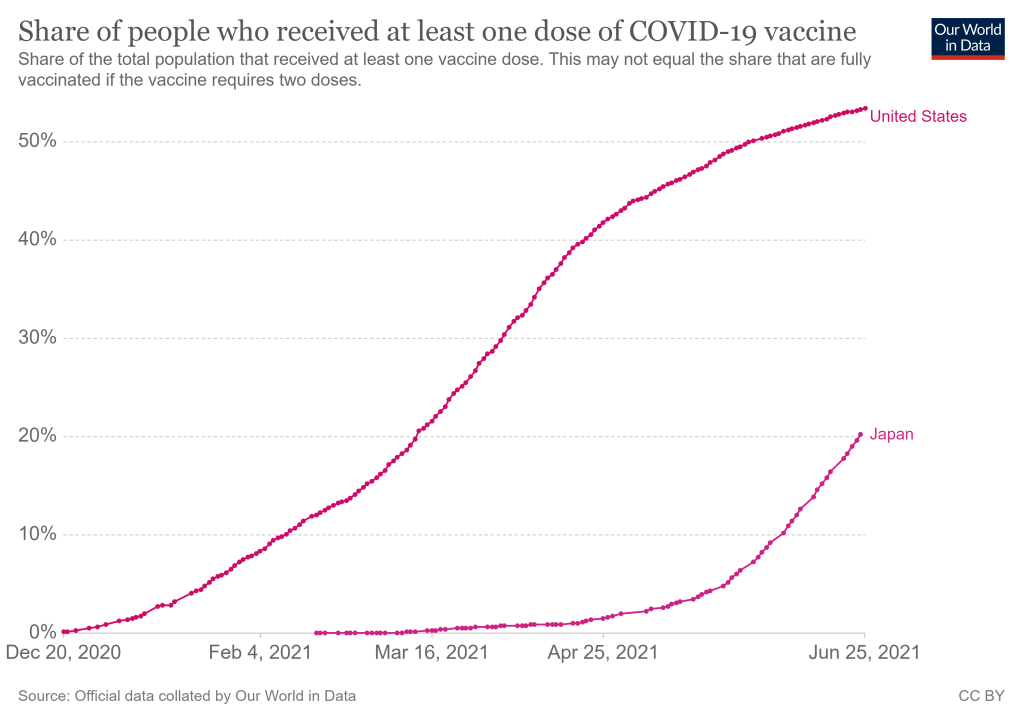
Despite a recent push towards vaccinations, Japan’s numbers remain low: just over 20% of the population has received at least one dose, as of June 24. On social media, Japanese residents have reported issues with getting their shots due to a voucher system implemented earlier this spring. A resident must receive a vaccine voucher from the government in order to get their shot; without that bureaucratic step, they may be turned away from a vaccine clinic, even if doses are available.
Meanwhile, rules around the Olympics have focused on protecting the athletes themselves. Over 80% of the athletes have been vaccinated and Japan will prioritize getting shots to Olympics staffers, journalists, and volunteers, according to the New York Times. Athletes will also be tested regularly.
The Olympics are not allowing international spectators, but officials announced this week that Japanese crowds will be permitted—up to 50% of a venue’s capacity. While masks will be required and other guidelines will be in place, the rules for attendees are not nearly so strict as those for athletes.
It only takes one unvaccinated person to set off a superspreading event. And with variants like Delta and Gamma spreading rapidly around the world, such events are more likely and more dangerous. In order to truly make the Olympics safe, Japan should ensure the coronavirus is locked out of Olympic events—not just for athletes, but for workers and spectators as well.


Leave a Reply