Tag: sequencing

  • Omicron variant: What we know, what we don’t, and why not to panic (yet)

    Omicron variant: What we know, what we don’t, and why not to panic (yet)

    On Thanksgiving, my Twitter feed was dominated not by food photos, but by news of a novel coronavirus variant identified in South Africa earlier this week. While the variant—now called Omicron, or B.1.1.529—likely didn’t originate in South Africa, data from the country’s comprehensive surveillance system provided enough evidence to suggest that this variant could be more contagious than Delta, as well as potentially more able to evade human immune systems.

    Note that the words suggest and could be are doing a lot of work here. There’s plenty we don’t know yet about this variant, and scientists are already working hard to understand it.

    But the early evidence is substantial enough that the World Health Organization (WHO) designated Omicron as a Variant of Concern on Friday. And, that same day, the Biden administration announced new travel restrictions on South Africa and several neighboring countries. (More on that later.)

    In today’s issue, I’ll explain what we know about the Omicron variant so far, as well as the many questions that scientists around the world are already investigating. Along the way, I’ll link to plenty of articles and Twitter threads where you can learn more. As always, if you have more questions: comment below, email me, (betsy@coviddatadispatch.com), or hit me up on Twitter.

    Where did the Omicron variant come from?

    This is one major unknown at the moment. South Africa was the first country to detect Omicron this past Monday, according to STAT News. But the variant likely didn’t originate in South Africa; rather, this country was more likely to pick up its worrying signal because it has a comprehensive variant surveillance system.

    Per The Conversation, this system includes: “a central repository of public sector laboratory results at the National Health Laboratory Service, good linkages to private laboratories, the Provincial Health Data Centre of the Western Cape Province, and state-of-the-art modeling expertise.”

    Researchers from South Africa and the other countries that have detected Omicron this week are already sharing genetic sequences on public platforms, driving much of the scientific discussion about this variant. So far, one interesting aspect of this variant is that, even though Delta has dominated the coronavirus landscape globally for months, Omicron did not evolve out of Delta.

    Instead, it may have evolved over the course of a long infection in a single, immunocompromised individual. It also may have flown under the radar in a country or region with poor genomic surveillance—which, as computational biologist Trevor Bedford pointed out on Twitter, is “certainly not South Africa”—and then was detected once it landed in that country.

    Why are scientists worried about Omicron?

    Omicron seems to be spreading very quickly in South Africa—potentially faster than the Delta variant. Based on publicly available sequence data, Bedford estimated that it’s doubling exponentially every 4.8 days.

    An important caveat here, however, is that South Africa had incredibly low case numbers before Omicron was detected—its lowest case numbers since spring 2020, in fact. So, we cannot currently say that Omicron is “outcompeting” Delta, since there wasn’t much Delta present for Omicron to compete with. The current rise in cases may be caused by Omicron, or it may be the product of a few superspreading events that happen to include Omicron; we need more data to say for sure.

    Still, as Financial Times data reporter John Burn-Murdoch pointed out: “There’s a clear upward trend. This may be a blip, but this is how waves start.”

    Another major cause for concern is that Omicron has over 30 mutations on its spike protein, an important piece of the coronavirus that our immune systems learn to recognize through vaccination. Some of these mutations may correlate to increased transmission—meaning, they help the virus spread more quickly—while other mutations may correlate to evading the immune system.

    Notably, a lot of the mutations on Omicron are mutations that we simply haven’t seen yet in other variants. On this diagram from genomics expert Jeffrey Barrett, the purple, yellow, and blue mutations are all those we haven’t seen on previous variants of concern, while the red mutations (there are nine) have been seen in previous variants of concern and are known to be bad. 

    Some of these new mutations could be terrible news, or they could be harmless. We need more study to figure that out. This recent article in Science provides more information on why scientists are worried about Omicron’s mutations, as well as what they’re doing to investigate.

    How many Omicron cases have been detected so far?

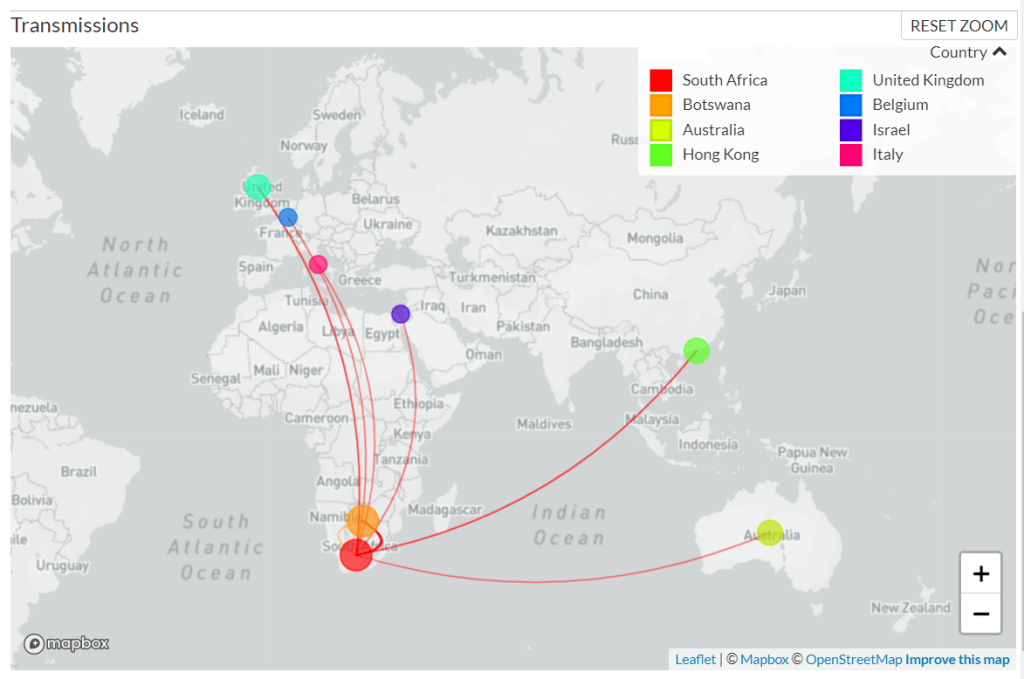
    As of Sunday morning, genetic sequences from 127 confirmed Omicron cases have been shared to GISAID, the international genome sharing platform. The majority of these cases (99) were identified in South Africa, while 19 were identified in nearby Botswana, two in Hong Kong, two in Australia, two in the U.K., one in Israel, one in Belgium, and one in Italy.

    According to BNO News, over 1,000 probable cases of the variant have already been identified in these countries. Cases have also been identified in the Netherlands, Germany, Denmark, the Czech Republic, and Austria. Many of the cases in the Netherlands are connected to a single flight from South Africa; the travelers on this flight were all tested upon their arrival, and 61 tested positive—though authorities are still working to determine how many of those cases are Omicron. 

    The U.K. Health Security Agency announced on Saturday that it had confirmed two Omicron cases in the country. Both of these cases, like those in Israel and Belgium, have been linked to travel—though the Belgium case had no travel history in South Africa. “This means that the virus is already circulating in communities,” Dr. Katelyn Jetelina writes in a Your Local Epidemiologist post about Omicron

    After South African scientists sounded the alarm about Omicron, cases were detected in Botswana, Australia, Hong Kong, Israel, the U.K., and other countries. Chart via GISAID, screenshot taken about 11:30 AM NYC time on November 28.

    Omicron hasn’t been detected in the U.S. yet. But the CDC is closely monitoring this variant, the agency announced in a rather sparse Friday press release.

    Luckily, Omicron is easy to identify because one of its spike protein mutations enables detection on a PCR test—no genomic sequencing necessary. Alpha, the variant that originated in the U.K. last winter, has a similar quality.

    How does Omicron compare to Delta?

    This is another major unknown right now. As I mentioned earlier, Omicron is spreading quickly in South Africa, at a rate faster than Delta spread when it arrived in the country a few months ago. But South Africa was seeing a very low COVID-19 case rate before Omicron arrived, making it difficult to evaluate whether this new variant is directly outcompeting Delta—or whether something else is going on.

    (Note that a couple of the tweets below refer to this variant as “Nu,” as they were posted prior to the WHO designating it Omicron.)

    We also don’t know if Omicron could potentially evade the human immune system, whether that means bypassing immunity from a past coronavirus infection or from vaccination. However, vaccine experts say that a variant that would entirely evade vaccines is pretty improbable.

    Every single coronavirus variant of concern that we’ve encountered so far has responded to the vaccines in some capacity. And the variants that have posed more of a danger to vaccine-induced immunity (Beta, Gamma) have not become dominant on a global scale, since they’ve been less transmissible than Delta. Our vaccines are very good—not only do they drive production of anti-COVID antibodies, they also push the immune system to remember the coronavirus for a long time.

    It’s also worth noting here that, so far, Omicron does not appear to be more likely to cause severe COVID-19 symptoms. Angelique Coetzee, chairwoman of the South African Medical Association, announced on Saturday that cases of the variant have been mild overall. Hospitals in South Africa are not (yet) facing a major burden from Omicron patients.

    What can scientists do to better understand Omicron?

    One thing I cannot overstate here is that scientists are learning about Omicron in real time, just as the rest of us are. Look at all the “We don’t know yet.”s in this thread from NYU epidemiologist Céline Gounder:

    Gounder wrote that we may have answers to some pressing questions within two weeks, while others may take months of investigation. To examine the vaccines’ ability to protect against Omicron, scientists are doing antibody studies: essentially testing antibodies that were produced from past vaccination or infection to see how well they can fight off the variant.

    At the same time, scientists are closely watching to see how fast the variant spreads in South Africa and in other countries. The variant’s performance in the U.K., where it was first identified on Saturday, may be a particularly useful source of information. This country is currently facing a Delta-induced COVID-19 wave (so we can see how well Omicron competes); and the U.K. has the world’s best genomic surveillance system, enabling epidemiologists to track the variant in detail.

    How does Omicron impact vaccine effectiveness?

    We don’t know this yet, as scientists are just starting to evaluate how well human antibodies from vaccination and past infection size up against the new variant. The scientists doing these antibody studies include those working at Pfizer, Moderna, and other major vaccine manufacturers. Pfizer’s partner BioNTech has said it expects to share lab data within two weeks, according to CNBC reporter Meg Tirrell:

    If BioNTech finds that Omicron is able to escape immunity from a Pfizer vaccination, the company will be able to update that vaccine within weeks. Moderna is similarly able to adjust its vaccine quickly, if lab studies show that an Omicron-specific vaccine is necessary.

    Even if we need an updated vaccine for this variant, though, people who are already vaccinated are not going back to zero protection. As microbiologist Florian Krammer put it in a Twitter thread: “And even if a variant vaccine becomes necessary, we would not start from scratch… since it is likely that one ‘variant-booster’ would do the job. Our B-cells can be retrained to recognize both, the old version and the variant, and it doesn’t take much to do that.”

    What can the U.S. do about Omicron?

    On Friday, the Biden administration announced travel restrictions from South Africa and neighboring countries. The restrictions take effect on Monday, but virus and public health experts alike are already criticizing the move—suggesting that banning travel from Africa is unlikely to significantly slow Omicron’s spread, as the variant is very likely already spreading in the U.S. and plenty of other countries.

    At the same time, travel restrictions stigmatize South Africa instead of thanking the country’s scientists for alerting the world to this variant. Such stigma may make other countries less likely to share similar variant news in the future, ultimately hurting the world’s ability to fight the pandemic.

    So what should the U.S. actually be doing? First of all, we need to step up our testing and genomic surveillance. As I mentioned above, Omicron can be identified from a PCR test; an uptick in PCR testing, especially as people return home from Thanksgiving travel, could help identify potential cases that are already here.

    We also need to increase genomic surveillance, which could help identify Omicron as well as other variants that may emerge from Delta. In a post about the Delta AY.4.2 variant last month, I wrote that the U.S. is really not prepared to face surges driven by coronavirus mutation:

    We’re doing more genomic sequencing than we were at the start of 2021, which helps with identifying potentially concerning variants, but sequencing still tends to be clustered in particular areas with high research budgets (NYC, Seattle, etc.). And even when our sequencing system picks up signals of a new variant, we do not have a clear playbook—or easily utilized resources—to act on the warning.

    We also need to get more people vaccinated, in the U.S. and—more importantly—in the low-income nations where the majority of people remain unprotected. In South Africa, under one-quarter of the population is fully vaccinated, according to Our World in Data.

    What can I do to protect myself, my family, and my community?

    In general, do all of the same things that you’ve already been doing. Most importantly, get vaccinated (including a booster shot, if you’re eligible).

    Also: Wear a mask in indoor spaces, ideally a good quality mask (N95, KN95, or double up on surgical and cloth masks). Avoid crowds if you’re able to do so. Monitor yourself for COVID-19 symptoms, including those that are less common. Utilize tests, including PCR and rapid tests—especially if you’re traveling, or if you work in a crowded in-person setting. 

    I’ve seen some questions on social media about whether people should consider canceling holiday plans, or other travel plans, because of Omicron. This is a very personal choice, I think, and I’m no medical expert, but I will offer a few thoughts.

    As I said in the title of this post, we don’t yet know enough about this variant for it to be worth seriously panicking over. All of the evidence—based on every single other variant of concern that has emerged—suggests that the vaccines will continue to work well against this variant, at least protecting against severe disease. And all of the other precautions that work well against other variants will work against this one, too.

    So, if you are vaccinated and capable of taking all the other standard COVID-19 precautions, Omicron is most likely not a huge risk to your personal safety right now. But keep an eye on the case numbers in your community, and on what we learn about this variant in the weeks to come. 

    What does Omicron mean for the pandemic’s trajectory?

    This variant could potentially lead to an adjustment in our vaccines, as well as to new surges in the U.S. and other parts of the world. It’s too early to say how likely either scenario may be; we’ll learn a lot more in the next couple of weeks.

    But one thing we can say right now, for sure, is that this variant provides a tangible argument for global vaccine equity. If the country where Omicron originated had a vaccination rate as high as that of the U.S. and other high-income nations, it may not have gained enough purchase to spread—into South Africa, and on the global path that it’s now taking. 

    As physician, virologist, and global health expert Boghuma Kabisen Titanji put it in a recent interview with The Atlantic:

    If we had ensured that everyone had equal access to vaccination and really pushed the agenda on getting global vaccination to a high level, then maybe we could have possibly delayed the emergence of new variants, such as the ones that we’re witnessing.

    I will end the post with this tweet from Amy Maxmen, global health reporter at Nature. The Omicron variant was a choice.
    More variant reporting

  • Unpacking Delta AY.4.2: Are we prepared for the next variant?

    Unpacking Delta AY.4.2: Are we prepared for the next variant?

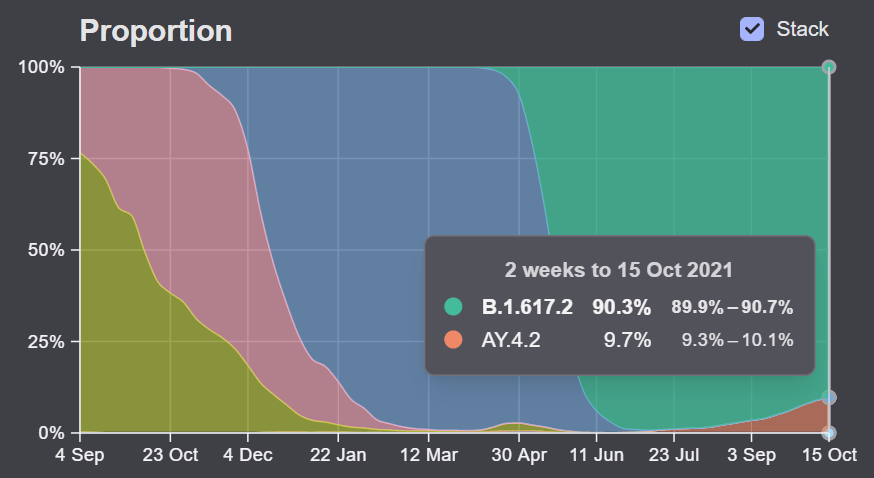
    AY.4.2, an offshoot of the Delta variant, now comprises about 10% of new COVID-19 cases in the U.K. Chart via U.K. COVID–19 Genomic Surveillance.

    Recently, a new offshoot of the Delta variant has been gaining ground in the U.K. It’s called AY.4.2, and it appears to be slightly more transmissible than Delta itself. While experts say this variant doesn’t differ enough from Delta to pose a serious concern, I think it’s worth exploring what we know about it so far—and what this means for the future of coronavirus mutation.

    How was AY.4.2 identified?

    The U.K. national health agency first found AY.4.2 in July 2021, and has watched it slowly spread through the country since then. The agency formally designated this variant as a Variant Under Investigation (VUI) on October 22; at this point, about 15,000 cases had been identified across the country.

    It’s worth noting here that the U.K.’s genomic surveillance system is incredibly comprehensive—considered to be the best in the world. The country sequences over 20,000 coronavirus samples a week; it’s consistently sequenced a large share of its COVID-19 cases since the beginning of 2021. And, since the country’s public health system integrates COVID-19 testing records with hospitalization records, primary care records, and other data, U.K. researchers are able to analyze other aspects of a variant’s performance, such as its ability to cause breakthrough cases or more severe disease.

    As STAT News’ Andrew Joseph explains in a recent story about this variant:

    It’s perhaps not a surprise that the U.K. noticed AY.4.2 so quickly. The country has an incredible sequencing system in place to monitor genetic changes in the virus, and researchers there have been among the global leaders in characterizing different mutations and forms of the virus. It’s possible that other Delta sublineages have similar growth rates to AY.4.2, but they’re in parts of the world where it will take longer for scientists to detect.

    How does AY.4.2 differ from OG Delta?

    AY.4.2 is transmissible enough that it is slowly pushing out the original Delta in some parts of the U.K. In late June, it comprised 0.1% of new U.K. COVID-19 cases; in late August, it was at 3.5%; and now it’s at 11.3%, as of the most recent data (the week ending October 24).

    “It’s a slow burner,” wrote U.K. epidemiologist Meaghan Kill in a Twitter thread last week. “But Delta is already *so* transmissible, it’s notable that AY.4.2 is increasing in that context.”

    Kill and other scientists estimate that AY.4.2 is between 10% and 15% more transmissible than Delta. That’s a small enough difference that scientists are not panicking about this variant, in the same way that epidemiologists sounded the alarm when Delta itself was first identified in India earlier in 2021. (For context: Delta is 60% to 80% more transmissible than the Alpha variant.)

    Still, AY.4.2 is worth watching as a signal of Delta’s continued ability to mutate and spread more readily. As Joseph points out in his STAT article, some experts hypothesized that Delta might be so contagious, the coronavirus basically could not mutate further in that direction. AY.4.2 suggests that we haven’t hit that upper limit yet.

    Is AY.4.2 more likely to cause breakthrough cases?

    This is one piece of good news that came out in the U.K. health agency’s most recent variant report, released this past Friday: AY.4.2 is not more likely to cause a breakthrough case than the original Delta variant. (Not thus far, anyway.) This is true for both symptomatic and asymptomatic infections, as well as different ages and vaccine types.

    The AY.4.2 data in this U.K. report are based on a relatively small sample size—about 13,000 people infected with AY.4.2, compared to over 350,000 people infected with the original Delta variant. Still, it’s good news that the variant appears to simply be more transmissible, not more able to break through vaccine-induced immunity or cause severe disease.

    “More likely (I believe) is a slightly increased biological transmissibility,” Meaghan Kill wrote in a Twitter thread about this news. “Growth rate & secondary attack rates are refreshed with new data and findings remain the same as last week.” She predicts that AY.4.2 may be able to replace the original Delta by summer 2022.

    How much is AY.4.2 spreading in the U.S.?

    AY.4.2 has been identified in over 30 countries, including the U.S. But here, OG Delta continues to dominate; this variant has been causing over 99% of new cases in the U.S. for well over a month, with a couple of other Delta sub-lineages (AY.1 and AY.2) briefly popping up without getting competitive. AY.4.2 is not yet accounted for on the CDC’s variant tracker, but other estimates indicate that it’s causing under 1% of new cases in the U.S.

    “We have on occasion identified the sublineage here in the United States, but not with recent increased frequency or clustering to date,” CDC Director Dr. Rochelle Walensky said at a recent COVID-19 briefing, according to STAT.

    Are we prepared for a surge of AY.4.2—or another coronavirus variant?

    The U.S. does not have a great track record for dealing with COVID-19 surges—whether that’s New York City in spring 2020 or Delta hotspots in the South this past summer. We’re doing more genomic sequencing than we were at the start of 2021, which helps with identifying potentially-concerning variants, but sequencing still tends to be clustered in particular areas with high research budgets (NYC, Seattle, etc.). And even when our sequencing system picks up signals of a new variant, we do not have a clear playbook—or easily-utilized resources—to act on the warning.  

    To illustrate this point, I’d like to share a major project of mine that was published this past week: an investigation of the Delta surge in Southwest Missouri this summer. This project was a collaboration between the Documenting COVID-19 project at the Brown Institute for Media Innovation and MuckRock (where I’ve been working part-time for a few weeks now), and the Missouri Independent, a nonprofit news outlet that covers Missouri state government, politics, and policy.

    Missouri Independent reporter Tessa Weinberg and I went through hundreds of emails, internal reports, and other documents obtained through public records requests. We found that, even though Missouri had ample warnings about Delta—wastewater surveillance picked up the variant in May, and hospitals noticed increasing breakthrough cases in June—the Springfield area was completely overwhelmed by the virus. Infighting and mistrust between state and local officials also hindered the region’s response to the Delta surge.

    Our major findings (copied from the article) include:

    Springfield hospital and health department leaders urged the state to take advantage of additional genomic sequencing assistance to address unanswered questions about the variant’s spread. The state declined, forcing Springfield officials to seek additional data on their own.

    After days of preparation for an overflow hospital for COVID patients requested by Springfield officials, local leaders decided to forego the plan after the window of need had passed — setting off dueling narratives over the reason why in public while state officials seethed in private.

    When local officials pleaded for more support in addressing the Delta surge, state officials questioned the value of directing more resources to the area and even wondered whether the overflow hospital request was fueled by motivations to “pay for an expansion of their private hospital.”

    You can read the full story here (at the Missouri Independent) or here (on MuckRock’s website). Find the documents that we used here.

    And read my Twitter thread with more highlights here:


    More variant reporting

  • Breakthrough cases: What we know right now

    Breakthrough cases: What we know right now

    Washington is one of the states reporting high levels of detail about breakthrough cases. Screenshot via June 23 report.

    For the past few months, we’ve been watching the vaccines and variants race in real time. With every new case, the coronavirus has the opportunity to mutate—and many scientists agree that it will inevitably mutate into a viral variant capable of outsmarting our current vaccines.

    How will we know when that happens? Through genomic surveillance, examining the structure of coronavirus lineages that arise in the U.S. and globally. While epidemiologists may consider any new outbreak a possible source of new variants, one key way to monitor the virus/variant race is by analyzing breakthrough cases—those infections that occur after someone has been fully vaccinated. 

    In May, the CDC changed how it tracks breakthrough cases: the agency now only investigates and reports those breakthrough cases that result in hospitalizations or deaths. I wrote about this in May, but a new analysis from COVID Tracking Project alums and the Rockefeller Foundation provides more detail on the situation.

    A couple of highlights from this new analysis:

    • 15 states regularly report some degree of information about vaccine breakthroughs, some including hospitalizations and deaths.
    • Six states report sequencing results identifying viral lineages of their breakthrough cases: Nebraska, Arkansas, Alaska, Montana, Oregon, and Washington.
    • Washington and Oregon are unique in providing limited demographic data about their breakthrough cases.
    • Several more states have reported breakthrough cases in isolated press briefings or media reports, rather than including this vital information in regular reports or on dashboards.
    • When the CDC stopped reporting breakthrough infections that did not result in severe disease, the number of breakthrough cases reported dropped dramatically.
    • We need more data collection and reporting about these cases, on both state and federal levels. Better coordination between healthcare facilities, laboratories, and public health agencies would help.

    Vaccine breakthrough cases are kind-of a data black box right now. We don’t know exactly how many are happening, where they are, or—most importantly—which variants they’re tied to. The Rockefeller Foundation is working to increase global collaboration for genomic sequencing and data sharing via a new Pandemic Prevention Institute.

    Luckily, there is a lot we do know from another side of the vaccine/variant race: vaccine studies have consistently brought good news about how well our current vaccines work against variants. The mRNA vaccines in particular are highly effective, especially after one has completed a two-dose regimen. If you’d like more details, watch Dr. Anthony Fauci in Thursday’s White House COVID-19 briefing, starting about 14 minutes in.

    New research, out this week, confirmed that even the one-shot Johnson & Johnson vaccine works well against the Delta variant. The company reported that, after a patient receives this vaccine, blood antibody levels are high enough to beat off an infection from Delta. In other words, people who got the J&J shot do not need to rush to get a booster shot from an mRNA vaccine (a recent debate topic among some experts).

    Again, we’ll need more genomic surveillance to carefully watch for the variant that inevitably does beat our vaccines. But for now, the vaccinated are safe from variants—and getting vaccinated remains the top protection for those who aren’t yet. 

    More variant reporting

    • It’s time to worry about the Delta variant

      It’s time to worry about the Delta variant

      The Delta variant (also known as B.1.617.2) was first identified in India earlier this spring. It’s now known to spread more easily than any other variant found so far and evade immunity from a prior COVID-19 infection. Scientists are also investigating the variant’s potential to more easily cause severe disease—as well as links to a “black fungus” that has become a secondary epidemic in India.

      Harvard epidemiologist William Hanage called the variant “really, really anxiety-inducing,” STAT’s Andrew Joseph reports. (If you’d like to read more on the biology of this variant, Joseph’s article provides a useful overview.)

      The Delta variant was first identified in the U.S. in April. It’s making up a small fraction of new cases at the moment, but is spreading rapidly: from an estimated 1.3% of cases on May 8, to 2.5% of cases on May 22, to 6.1% of cases on June 5. The June 5 estimate comes from CDC’s Nowcast predictions, which extrapolate from the most recent available sequencing data (typically reported with a lag of two weeks or more.)

      The share of cases caused by this variant appears to be doubling every two weeks, which means that Delta could become the dominant variant here this summer. Some data suggest that domination could happen within a month—a dashboard run by the testing company Helix puts Delta at 10% of new cases as of May 31, suggesting an even faster transmission rate for the variant.

      Helix scientist Alexandre Bolze wrote on Twitter that Delta could become dominant “next week or next 2 weeks” based on these trends.

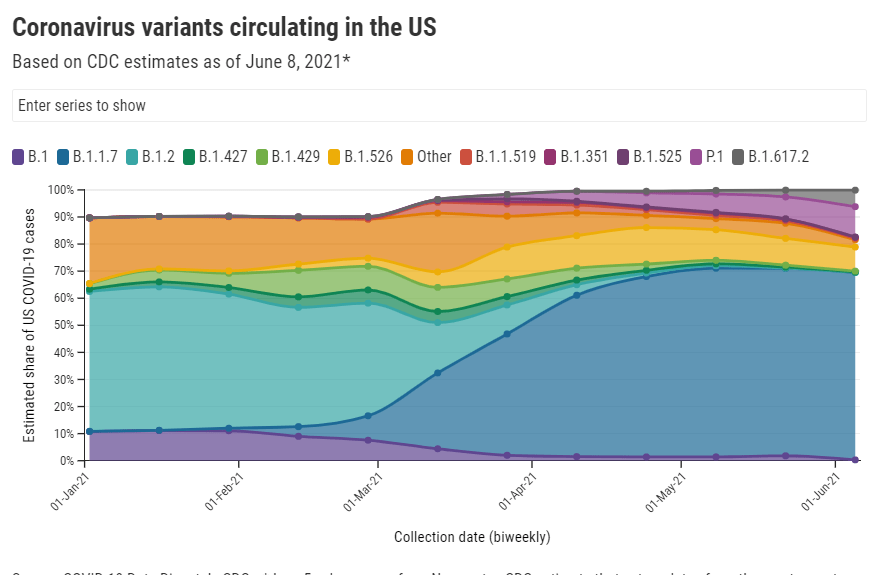
      Other variant trends also support Delta’s dominance. This variant, along with Gamma (or P.1, the variant first identified in Brazil), appears to be outcompeting other variants of concern in the U.S. Alpha (or B.1.1.7) has now plateaued at around 70% of U.S. cases, according to CDC data. The variants found in California and New York, both of which made up more than 10% of new cases earlier in the spring, are now declining.

      While the CDC is not yet publishing data on Delta’s prevalence in individual states, we can assume that state-by-state variant trends—especially in those states where Delta cases were first identified—are reflecting the variant’s rise on a national level.  

      Many experts are now looking at Delta’s spread in the U.K. as a portent for its spread here. The variant has become dominant in the U.K., thoroughly outcompeting Alpha, and is driving a new surge—even though over half of the British population has received at least one vaccine dose. In fact, the U.K. has delayed its full reopening plans by a month due to this case resurgence.

      The COVID-19 vaccines currently in use in both the U.K. and the U.S. do work well against Delta, especially the Pfizer and Moderna vaccines—and especially after a full two-dose regimen is complete. But anyone not yet vaccinated is highly vulnerable to this variant. In the U.K., the current case surge is driven by young adults and teenagers who aren’t yet eligible for vaccination.

      As physician and public health expert Vin Gupta put it: “Being unvaccinated on June 9, 2021 is much more risky to your own wellbeing than being unvaccinated on June 9, 2020.” And the longer one waits, the riskier this condition becomes.

      The Delta variant should serve both as an additional reason for those in wealthy nations who aren’t yet vaccinated to get their shots—and a reason for wealthy nations to share doses with the rest of the world.

      More variant data

      • CDC stepped up sequencing, but the data haven’t kept pace

        CDC stepped up sequencing, but the data haven’t kept pace

        If the U.S. does see a fourth surge this spring, one of the main culprits will be variants. Three months after the first B.1.1.7-caused case was detected in this country, that variant now causes about one third of new COVID-19 cases nationwide. The B.1.1.7 variant, first detected in the U.K., spreads more readily and may pose a higher risk of hospitalization and death.

        Meanwhile, other variants have taken root. There’s the variant that originated in California, B.1.427/B.1.429, which now accounts for over half of cases in the state. There’s the variant that originated in New York City, B.1.526, which is quickly spreading in New York and likely in neighboring states. And there’s the variant that originated in Brazil, P.1; this variant has only been identified about 200 times in the U.S. so far, but it’s wreaking havoc in Brazil and some worry that it may be only a matter of time before we see it spread here.

        The thing about viral variants—especially those more-transmissible variants—is, they’re like tribbles. They might seem innocuous at first, but if left to multiply, they’ll soon take over your starship, eat all your food, and bury you in the hallway. (If you didn’t get that reference, watch this clip and then get back to me.) The only way to stop the spread is to first, identify where they are, and then use the same tried-and-true COVID-19 prevention measures to cut off their lineages. Or, as Dr. McCoy puts it: “We quit feeding them, they stop breeding.”

        In the U.S., that first part—identify where the variants are—is tripping us up. The CDC has stepped up its sequencing efforts in a big way over the past few months, going from 3,000 a week in early January to 10,000 a week by the end of March. But data on the results of these efforts are scarce and uneven, with some states doing far more sequencing than others. New York City, for example, has numerous labs frantically “hunting down variants,” while many less-resourced states have sequenced less than half a percent of their cases. And the CDC itself publishes data with gaping holes and lags that make the numbers difficult to interpret.

        The CDC has three places you can find data on variants and genomic sequencing; each one poses its own challenges.

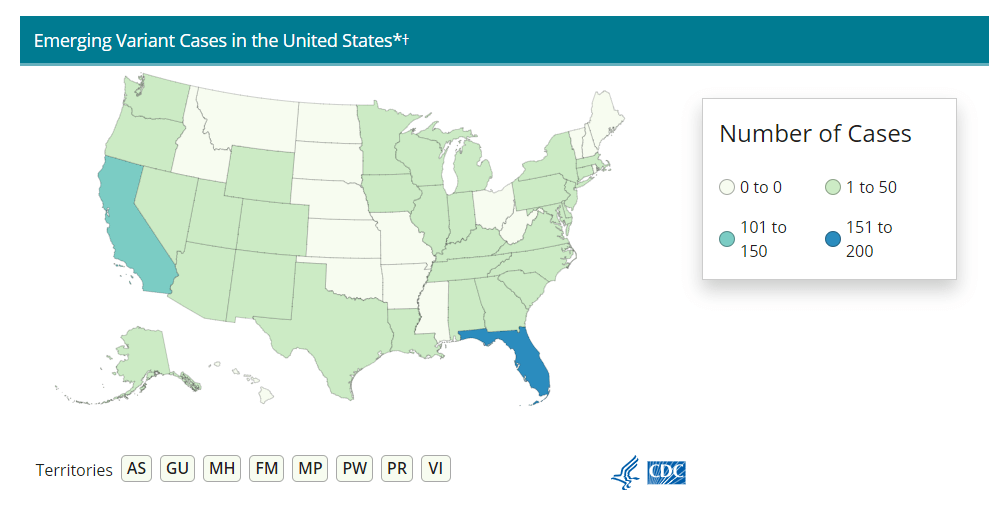
        First, there’s the original variant data tracker, “US COVID-19 Cases Caused by Variants.”  This page reports sheer numbers of cases caused by three variants of concern: B.1.1.7 (U.K. variant), B.1.351 (South Africa variant), and P.1 (Brazil variant). It’s updated three times a week, on Tuesdays, Thursdays, and Sundays—the most frequent schedule of any CDC variant data.

        But the sheer numbers of cases reported lack context. What does it mean to say, for example, the U.S. has about 12,500 B.1.1.7 cases, and 1,200 of them are in Michigan? It’s tricky to explain the significance of these numbers when we don’t know much sequencing Michigan is doing compared to other states.

        This dataset is also missing some pretty concerning variants: both the B.1.526 (New York) and B.1.427/B.1.429 (California) variants are absent from the map and state-by-state table. According to other sources, these variants are spreading pretty rapidly in their respective parts of the country, so there should be case numbers reported to the CDC—it’s unclear why the CDC hasn’t yet made those numbers public.

        (To the CDC’s credit, the California variant was recently reclassified as a “variant of concern,” and Dr. Walensky said at a press briefing this week that the New York variant is under serious investigation to get that same reclassification bump. But that seems to be a long process, as it hasn’t happened weeks after the variant emerged.)

        Second, there’s the variant proportions tracker, which reports what it sounds like: percentages, representing the share of COVID-19 cases that CDC researchers estimate are caused by different coronavirus variants. The page includes both national estimates and state-by-state estimates for a pretty limited number of states that have submitted enough sequences to pass the CDC’s threshold.

        I wrote about this page when it was posted two weeks ago, calling out the stale nature of these data and the lack of geographic diversity. There’s been one update since then, but only to the national variant proportions estimates; those numbers are now as of March 13 instead of February 27. The state numbers are still as of February 27, now over a month old.

        Note that Michigan—the one state everyone’s watching, the state that has reported over 1,000 B.1.1.7 cases alone—is not included in the table. How are we supposed to use these estimates when they so clearly do not reflect the current state of the pandemic?

        !function(){“use strict”;window.addEventListener(“message”,(function(a){if(void 0!==a.data[“datawrapper-height”])for(var e in a.data[“datawrapper-height”]){var t=document.getElementById(“datawrapper-chart-“+e)||document.querySelector(“iframe[src*=’”+e+”‘]”);t&&(t.style.height=a.data[“datawrapper-height”][e]+”px”)}}))}();

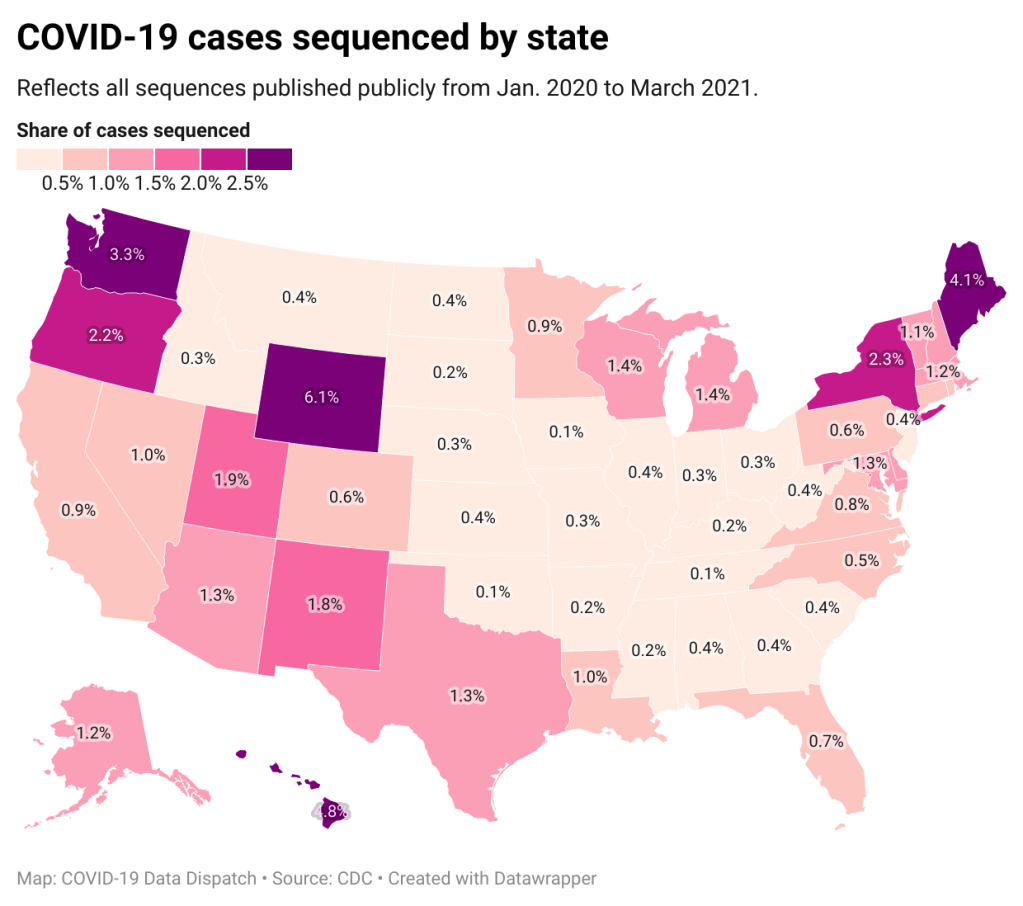
        A third variant-adjacent data page, added to the overall CDC COVID Data Tracker this past week, provides a bit more context. This page provides data on published SARS-CoV-2 sequences provided by the CDC, state and local public health departments, and other laboratory partners. You can see the sheer number of sequenced cases grow by week and compare state efforts.

        It’s pretty clear that some states are doing more sequencing than others. States with major scientific capacity—Washington, Oregon, New York, D.C.—are near the top. Some states with smaller populations are also on top of the sequencing game: Wyoming, Hawaii, Maine. But 32 states have sequenced fewer than 1% of their cases in total, and 21 have sequenced fewer than 0.5%. That’s definitely not enough sequences for the states to be able to find pockets of new variants, isolate those transmission chains, and stop the breeding.

        !function(){“use strict”;window.addEventListener(“message”,(function(a){if(void 0!==a.data[“datawrapper-height”])for(var e in a.data[“datawrapper-height”]){var t=document.getElementById(“datawrapper-chart-“+e)||document.querySelector(“iframe[src*=’”+e+”‘]”);t&&(t.style.height=a.data[“datawrapper-height”][e]+”px”)}}))}();

        Chart captions state that the state-by-state maps represent cases sequenced “from January 2020 to the present,” while a note at the bottom says, “Numbers will be updated every Sunday by 7 PM.” So are the charts up to date as of today, April 4, or are they up to date as of last Sunday, March 28? (Note, I put simply “March 2021” on my own chart with these data.)

        Obviously, the lack of date clarity is annoying. But it’s also problematic that these are cumulative numbers—reflecting all the cases sequenced during more than a year of the pandemic. Imagine trying to make analytical conclusions about COVID-19 spread based on cumulative case numbers! It would simply be irresponsible. But for sequencing, these data are all we have.

        So, if anyone from the CDC is reading this, here’s my wishlist for variant data:

        • One singular page, with all the relevant data. You have a COVID Data Tracker, why not simply make a “Variants” section and embed everything there?
        • Regular updates, coordinated between the different metrics. One month is way too much of a lag for state-by-state prevalence estimates.
        • Weekly numbers for states. Let us see how variants are spreading state-by-state, as well as how states are ramping up their sequencing efforts.
        • More clear, consistent labeling. Explain that the sheer case numbers are undercounts, explain where the prevalence estimates come from, and generally make these pages more readable for users who aren’t computational biologists.

        And if you’d like to see more variant case numbers, here are a couple of other sources I like:

        • Coronavirus Variant Tracker by Axios, providing estimated prevalence for four variants of concern and two variants of interest, along with a varants FAQ and other contextual writing.
        • CoVariants, a tracker by virologist Emma Hodcroft that shows variant spread around the world based on public sequencing data. Hodcroft posts regular updates on Twitter.
        • Nextstrain, an open-source genome data project. This repository was tracking pathogens long before COVID-19 hit, and it is a hub for sequence data and other related resources.

        The U.S. has blown past its current sequencing goal (7,000 cases per week), but is aiming to ramp up to 25,000—and has invested accordingly. I hope that, in addition to ramping up all the technology and internal communications needed for this effort, the CDC also improves its public data. The virus is multiplying; there’s no time to waste.

        Related posts

        • Some optimistic vaccine news but variants still pose a major threat

          Some optimistic vaccine news but variants still pose a major threat

          Last week, Janssen, a pharmaceutical division owned by megacorp Johnson & Johnson, released results for its phase 3 ENSEMBLE study. The Janssen vaccine uses an adenovirus vector (a modified common cold virus that delivers the DNA necessary to make the coronavirus spike protein), can be stored at normal fridge temperatures, and only requires one dose. Here’s a table of the raw numbers from Dr. Akiko Iwasaki of Yale:

          At first glance it does look like it’s “less effective” than the mRNA vaccines from Moderna and Pfizer. But, when you look at the severe disease, there’s a 100% decrease in deaths. No one who got the J&J vaccine died of coronavirus, no matter where they lived— including people who definitely were diagnosed with the South African B.1.351 variant. Here’s how that compares with the Moderna, AstraZeneca, Pfizer, and Novavax vaccines, per Dr. Ashish Jha of Brown:

          Nobody who got any of the vaccine candidates was hospitalized or died from COVID-19. That’s huge, especially as variants continue to spread across the U.S. (Here’s the updated CDC variant tracker.)

          J&J’s numbers are especially promising when it comes to variant strains. Moderna and Pfizer released their results before the B.1.1.7 (U.K.) or B.1.351. (S.A.) variants reached their current notoriety, which makes J&J’s overall efficacy numbers look worse by comparison. But the fact that no one who got the J&J vaccine was hospitalized no matter which variant they were infected with is a cause for optimism. (B.1.351 is the variant raising alarms for possibly being able to circumvent a vaccine’s protection due to a helpful mutation called E484K. A Brazilian variant, P1, also has this mutation, though there’s not a lot of research on vaccine efficacy for this particular mutant.)

          It also means that vaccination needs to step up. While it may seem counterintuitive to step up vaccinations against variants that can supposedly circumvent them, it’s important to note that there still was a significant decrease in COVID-19 cases in vaccinated patients from South Africa. A 57% drop compared with the 95% prevalence of the B.1.351 still suggests that vaccination can prevent these cases, and thus can seriously slow the spread of the variant.

          What does all of this mean for COVID-19 rates? We can infer a few things. For starters, when vaccines are distributed to the general public around April or May, we may see hospitalization rates and death rates drop more than positive test rates. Positive test rates should obviously drop too, but they’ll probably stay at least a little higher than hospitalizations and death rates for a while.

          Second, it means that we really need to ramp up sequencing efforts in the U.S.. We need more data to tell us just how well these vaccines can protect against the spreading variants, but we can’t collect that data if we don’t know which strain of SARS-CoV-2 someone gets. We here at the CDD have covered sequencing efforts – or lack thereof – before, but the rollout has still been painfully slow. CDC Director Rochelle Walensky stressed that “we should be treating every case as if it’s a variant during this pandemic right now,” during the January 29 White House coronavirus press briefing. But the 6,000 sequences per week she’s pushing for as of the February 1 briefing should have been the benchmark months ago. We’re still largely flying blind until we can get our act together.

          Some states in particular may be flying blinder than others. As Caroline Chen wrote in ProPublica yesterday, governors of New York, Michigan, Massachusetts, California, and Idaho are planning to relax more restrictions, including those on indoor dining. Such a plan is probably the perfect way to ensure these variants spread, so much that even Chen was surprised at how pessimistic the outlook was when she asked 10 scientists for the piece.

          The B.1.1.7 variant is expected to become the dominant strain in the U.S. by March, according to the CDC. And on top of that, the B.1.1.7 variant seems to have picked up that helpful E484K mutation in some cases as well. Per Angela Rasmussen of Georgetown University, if these governors don’t realize how much they’re about to screw everything up, “the worst could be yet to come.” God help us.