Tag: HIV/AIDS

  • Combatting pandemic fatigue with solidarity

    Combatting pandemic fatigue with solidarity

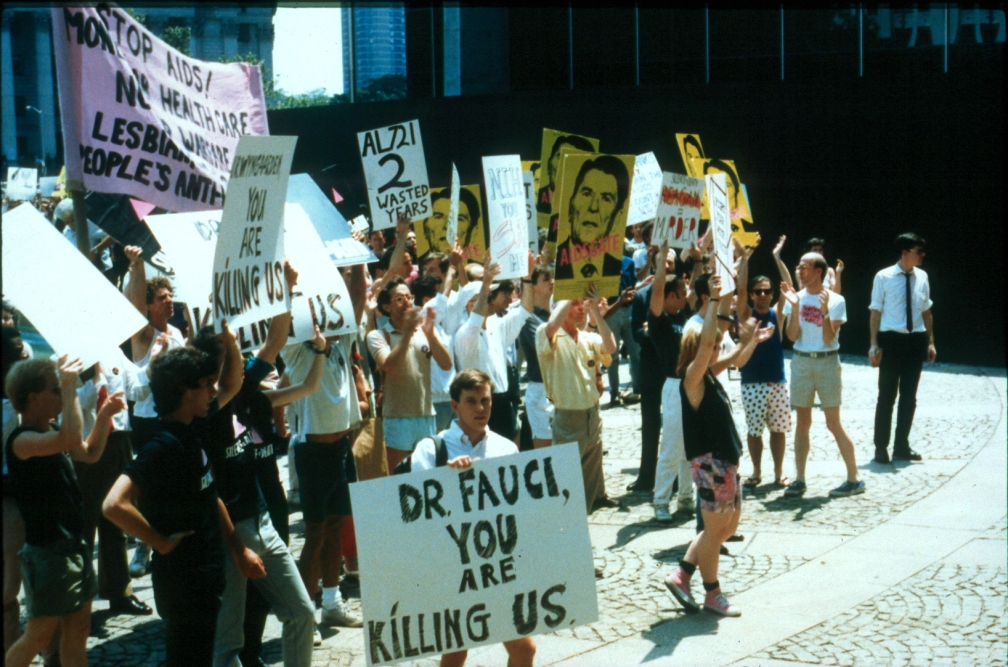
    The legacies of groups like ACT UP can offer lessons for COVID-19 advocacy. Image via the NIH History Office / Flickr.

    In the last few weeks, I’ve been thinking a lot about how to remain hopeful.

    COVID-19 continues to spread—in fact, the U.S. is likely in the second-largest surge of the entire pandemic right now—but we aren’t counting the majority of cases, much less taking collective health actions to prevent them. Leaders across the political spectrum have largely shrugged off any potential for new safety measures, instead focusing on business interests.

    It takes a lot of effort not to simply give up, in this environment. Sometimes, at a gathering or on the New York City subway, I feel a lot of peer pressure to just take off my mask and ignore the risks. But I think about people I’ve talked to in my reporting: Long COVID advocates, people with weakened immune systems, exhausted experts, school officials working to keep their students safe, and so many others. In solidarity with them, I keep the mask on.

    I thought about solidarity this week, when I read Ed Yong’s latest COVID-19 feature in The Atlantic. The story is headlined, “America is Sliding into the Long Pandemic Defeat.” But I like the subtitle better: “In the face of government inaction, the country’s best chance at keeping the crisis from spiraling relies on everyone to keep caring.”

    In this piece, Yong takes readers through a history of public health’s connections to other social movements, and introduces us to people across the U.S. who are making those connections now. He talks about community health work: “It creates a bedrock of trust and solidarity, without which public health cannot operate.” And he talks about the potential for new policies and health infrastructure that could save lives, even in our current COVID-ambivalent climate.

    Obviously, you should read the full story. I personally found it motivating to continue my own COVID-19 work. But, in reflection, I also wanted to share a few ideas for how to find hope and solidarity in this difficult period. This is a little outside my usual data wheelhouse, but it’s informed by my two years of reporting on (and living through) this pandemic.

    Here are eight suggestions.

    • Talk to people. To friends, family members, people you meet at the grocery store, and so on. Ask them, “Did you know, we’re in a surge right now?” “Have you received your booster shot?” “Do you know where to get free rapid tests in our community, and when to use them?” The simplest questions can spark valuable conversation, in my experience.
    • Educate specifically about Long COVID. Show people the recent statistics from the Household Pulse Survey, now the best estimates we have for how many Americans are currently dealing with this condition. Talk about potential symptoms and how the condition may impact someone’s life. There is still not enough awareness in the U.S. about how COVID-19 can cause more than short-term symptoms; individual conversations can help with this.
    • Ask for the extra safety measures. If your friend is hosting a party, for example, can you ask them to instruct the guests to rapid test beforehand? If you’re attending a large meeting, can you ask the organizers about recommending masks? Even if not everybody follows the guidance, people might think about safety in a way that they hadn’t before. And vulnerable people in the room will be grateful that they didn’t need to do all the asking themselves.
    • Make connections around health. How can you build trust in public health in your community? Who are the leaders who could help advocate for measures like free testing, or would continue to encourage vaccinations when we likely need a new round of booster shots in the fall? Think about who you know, and how they can help.
    • Advocate for federal measures. This means funding for more vaccines, tests, and treatments, of course. But it also means federal air quality standards for buildings. Protections for essential workers. Disability rights, which could include (as Yong’s story notes) requiring masks when a disabled person may be present. Call your representatives, and ask them what they’re doing in these areas.
    • Learn about public health history. There are actually a lot of precedents that we can draw on for COVID-19 advocacy, Yong explains in his story. These range from the Black Panthers serving breakfast at schools to ACT UP pushing for a new paradigm in clinical trials. Reading history like this can provide ideas for current actions.
    • Reframe language around safety measures. Nobody likes a “mandate” or a “requirement.” Americans hate following rules. For this reason, I often see health experts instead using words like “safety measures,” and explaining why they work. Connecting to the language of a particular community can also help; for example, in activist spaces, I remind people that “we keep us safe” also applies to COVID-19 protections.
    • Think about the long game. What can you do to maintain energy, avoid burnout, and share your resources with others? This is another lesson from history, I think: even if I feel discouraged about a lack of change in the short-term, I remember that true paradigm shifts take a long time. Hope is a long-term practice.
  • Lessons for COVID-19 from the HIV/AIDS pandemic

    Lessons for COVID-19 from the HIV/AIDS pandemic

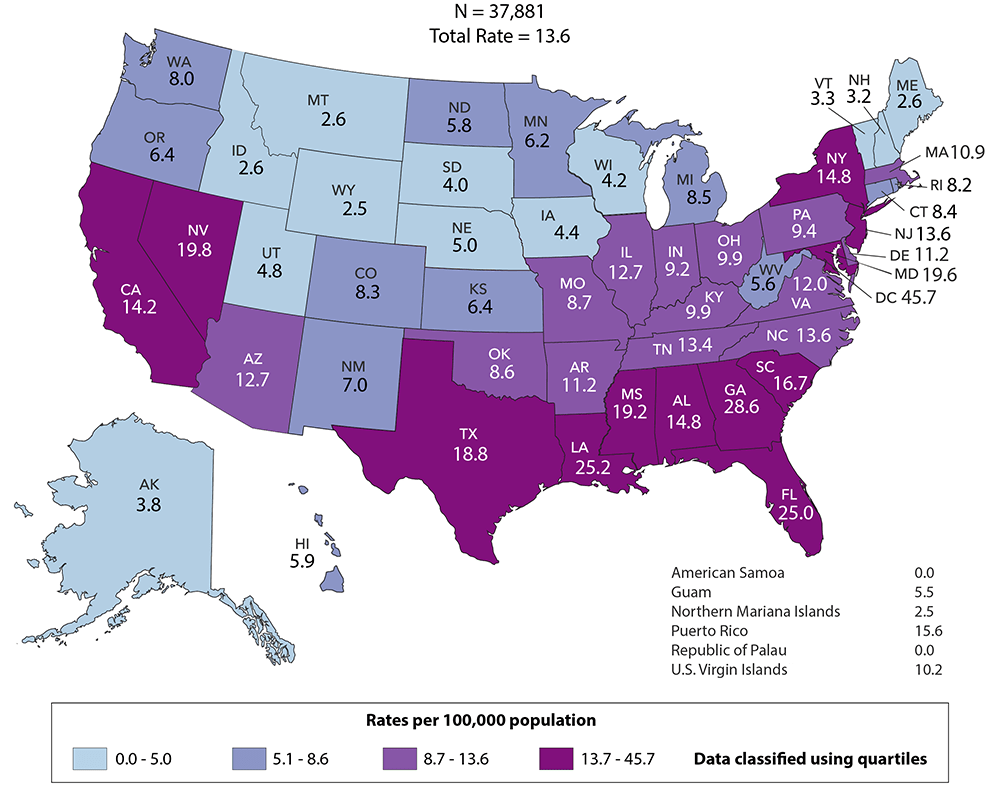
    In the U.S., southern states have the highest numbers of HIV-positive residents. Chart via the CDC.

    This is the last week of Pride Month for 2021, and it’s also officially Pride weekend in NYC, where I live. (As the newsletter goes out, I’ll likely be marching with the Stonewall Protests, a group that advocates for Black trans women.)

    So, it felt appropriate for me to take this issue to highlight a couple of lessons that the U.S. response to COVID-19 has taken from our response to another pandemic—one that is still ongoing.

    HIV, the virus that causes AIDS, infects over one million new people every year. The HHS estimates that there were about 38 million people living with this virus around the world in 2020, including 1.2 million in the U.S. While many of us might associate HIV/AIDS with American outbreaks in the 1980s and 90s, it continues to disproportionately impact people of color and queer people in the U.S. and globally.

    In the U.S., the South has higher HIV infection rates than any other part of the country. Black Americans are diagnosed with the virus at rates almost ten times higher than white Americans, according to CDC data from 2014 to 2018. At a global scale, the virus disproportionately impacts African nations; Swaziland has the highest infection rate, at 27%.

    Treatments do exist for HIV, a virus that attacks the body’s immune system, and AIDS, the immunodeficiency condition that this virus causes. The most common treatment is antiretroviral therapy (or ART), which allows people with HIV infections to live long, healthy lives and avoid transmitting the virus to sexual partners. The HHS estimates that about 16% of the global population with HIV (or about 6 million people) does not know they’re infected, and still needs access to tests and treatment.

    This is a pandemic that demands continued focus even after urgency around COVID-19 wanes. But the responses to HIV/AIDS—both scientific and political—can show us how an understanding of intersectionality and local community focus may contribute to pandemic response.

    Understanding disparities and comorbidities

    People living with HIV are more vulnerable to severe COVID-19. One study of HIV patients in New York state found that, if diagnosed with COVID-19, these patients were more likely to go to the hospital and more likely to die from the disease compared to non-HIV patients.

    An HIV diagnosis, like a case of diabetes or asthma, is a disease that hits people of color harder and may contribute to their worse COVID-19 rates. Public health efforts around COVID-19 can learn from clinicians focused on HIV/AIDS, who are already used to connecting with vulnerable communities and understanding the intersectional socioeconomic factors that contribute to their health.

    It takes a long time to learn disease origins

    This page on the evolution of HIV may give you an idea of the many steps that typically go into finding a disease’s source. When the page was first written, in 2008, scientists had found ties between the virus and chimpanzees in west-central Africa, but they didn’t know all the details of its first jump to humans. News updates in 2010, 2015, and 2020 provide more information, reflecting updates in scientific knowledge: newer research suggests that the virus spread to humans in the early 20th century and went undetected for decades.

    These updates remind us that scientists cannot pinpoint biological disease origins overnight. Scientists are still working to understand the evolution of HIV, decades after we first became aware of the disease. There are other outbreaks, not as old as HIV but older than COVID-19, that we still don’t understand:

    Regulatory pathways need to prioritize patients

    In the 1980s, AIDS activists led by the AIDS Coalition to Unleash Power (or ACTUP) protested the FDA and other public health officials. They saw the agency’s drug approval process as a barrier, keeping them from accessing potentially life-saving treatments; while small numbers of patients received new drugs in clinical trials, the vast majority of HIV-positive Americans had to wait for data to come out. Even Dr. Anthony Fauci was involved: AIDS activist Larry Kramer called him a killer and an idiot in a 1988 letter. Fauci later credited Kramer with pushing for change in the medical establishment.

    As a result, we can thank those AIDS activists who advocated for processes that allow faster drug development and patient treatment in times of crisis. This includes faster vaccine trials and the hundreds of Emergency Use Authorizations provided to COVID-19 tests and treatments over the past year.

    Neighborhood-level healthcare provides critical services

    People living with HIV in the U.S. often were not able to access support from the government or healthcare insurance, especially earlier in the 1980s. As a result, many queer communities organized locally to provide their own support. Neighborhoods like the Castro district in San Francisco and Greenwich Village in New York saw healthcare clinics, free testing, information-sharing about virus prevention, and more. These local institutions built trust in their communities.

    Such trust was also key in the COVID-19 pandemic, when government agencies from the federal to the county level weren’t ready to serve their residents. In an article for The Conversation, Daniel Baldwin Hess and Alex Bitterman describe how some of the same community groups that started to provide HIV testing decades ago added COVID-19 testing to their repertoire this year:

    For example, in New York, the Erie County Department of Health requested that Evergreen Health – an LGBTQ community group originally established in the 1980s as a volunteer effort to fight HIV – assume responsibility for HIV testing during the COVID-19 pandemic so that the county government could focus on COVID-19 testing. Evergreen also opened a drive-though COVID-19 testing center in the spring of 2020 – four decades after it had introduced HIV testing to the Buffalo region.

    These local institutions have also helped build vaccine trust and administer doses.

    Finally, there’s one lesson we may take from COVID-19 back to the continued fight against HIV/AIDS: mRNA vaccines! Moderna is currently partnering with International AIDS Vaccine Initiative to develop a potential mRNA vaccine for HIV.