Tag: CDC

  • Wastewater surveillance expands beyond COVID-19

    I have a new story up this week at Science News, describing how the field of wastewater surveillance exploded during the COVID-19 pandemic and is now looking toward other public health threats.

    As long-time readers know, wastewater surveillance has been one of my favorite topics to cover over the last couple of years. I’m fascinated by the potential to better understand our collective health through tracking our collective poop—and by all the challenges that this area of research faces, from navigating interdisciplinary collaborations to interpreting a very new type of data to obtaining funding for continued testing.

    My story for Science News builds on other reporting I’ve done on this topic and provides a comprehensive overview of the growing wastewater surveillance field, with a particular focus on how research is now going beyond COVID-19. There’s so much potential here that, as I point out in the story, many researchers are asking not, “What can we test for?” but “What should we test for?”

    Here’s the story’s introduction; go to Science News for the full article:

    The future of disease tracking is going down the drain — literally. Flushed with success over detecting coronavirus in wastewater, and even specific variants of SARS-CoV-2, the virus that causes COVID-19, researchers are now eyeing our collective poop to monitor a wide variety of health threats.

    Before the pandemic, wastewater surveillance was a smaller field, primarily focused on testing for drugs or mapping microbial ecosystems. But these researchers were tracking specific health threats in specific places — opioids in parts of Arizona, polio in Israel — and hadn’t quite realized the potential for national or global public health.

    Then COVID-19 hit.

    The pandemic triggered an “incredible acceleration” of wastewater science, says Adam Gushgari, an environmental engineer who before 2020 worked on testing wastewater for opioids. He now develops a range of wastewater surveillance projects for Eurofins Scientific, a global laboratory testing and research company headquartered in Luxembourg.

    A subfield that was once a few handfuls of specialists has grown into more than enough scientists to pack a stadium, he says. And they come from a wide variety of fields — environmental science, analytical chemistry, microbiology, epidemiology and more — all collaborating to track the coronavirus, interpret the data and communicate results to the public. With other methods of monitoring COVID-19 on the decline, wastewater surveillance has become one of health experts’ primary sources for spotting new surges.

    Hundreds of wastewater treatment plants across the United States are now part of COVID-19 testing programs, sending their data to the National Wastewater Surveillance System, or NWSS, a monitoring program launched in fall 2020 by the U.S. Centers for Disease Control and Prevention. Hundreds more such testing programs have launched globally, as tracked by the COVIDPoops19 dashboard run by researchers at the University of California, Merced.

    In the last year, wastewater scientists have started to consider what else could be tracked through this new infrastructure. They’re looking at seasonal diseases like the flu, recently emerging diseases like bird flu and mpox, formerly called monkeypox, as well as drug-resistant pathogens like the fungus Candida auris. The scientists are even considering how to identify entirely new threats.

    Wastewater surveillance will have health impacts “far broader than COVID,” predicts Amy Kirby, a health scientist at the CDC who leads NWSS.

    But there are challenges getting from promise to possible. So far, such sewage surveillance has been mostly a proof of concept, confirming data from other tracking systems. Experts are still determining how data from our poop can actually inform policy; that’s true even for COVID-19, now the poster child for this monitoring. And they face public officials wary of its value and questions over whether, now that COVID-19 health emergencies have ended, the pipeline of funding will be cut off.

    This monitoring will hopefully become “one of the technologies that really evolves post-pandemic to be here to stay,” says Mariana Matus, cofounder of Biobot Analytics, a company based in Cambridge, Mass., that has tested sewage for the CDC and many other health agencies. But for that to happen, the technology needs continued buy-in from governments, research institutions and the public, Matus and other scientists say.
  • Sources and updates, September 17

    • Public comments to the CDC about infection control measures: The People’s CDC, a public health communication and advocacy organization that seeks to fill gaps left by the federal CDC, has published a database of comments about the importance of infection control measures in healthcare settings. These comments were sent to the CDC’s Healthcare Infection Control Practices Advisory Committee (HICPAC), as the committee considers changing the agency’s guidance to be more lenient about preventing infections in healthcare settings. As the CDC has not published comments publicly itself, the People’s CDC “asked people to forward us their comments to HICPAC, and created the People’s Register.” For more details about HICPAC, see this post.
    • Recommendations for masks, nasal sprays, other tools: In response to last week’s post discussing how nasal sprays may be used to reduce COVID-19 risk, a reader shared this video from RTHM Health, a telehealth clinic focused on Long COVID and related complex chronic diseases. “This video has a section with a good overview of different sprays and the strength of evidence for each one,” the reader wrote. The video also includes recommendations for high-quality reusable masks and respirators, along with other COVID-19 safety tools.
    • Wastewater surveillance for flu, RSV: A new study, published this week in the CDC’s Morbidity and Mortality Weekly Report, discusses how wastewater surveillance can complement other methods of monitoring the flu and respiratory syncytial virus (RSV). Researchers at Wisconsin’s state health department, the CDC, and other collaborators tracked flu and RSV in three Wisconsin cities’ sewage during last winter’s respiratory virus season. They found that wastewater trends “often preceded a rise” in emergency department visits for these viruses. This study follows other research that has shown wastewater surveillance can be a predictive tool for many diseases, not just COVID-19.
    • Better understanding coronavirus interactions with human cells: Another recent study, published in the journal Viruses, discusses how SARS-CoV-2 interacts with the proteins in human cells as it replicates. The research team (based at the University of California Riverside) identified a specific cellular process that the virus’ N protein hijacks and uses to copy its genetic material, leading to more coronavirus in the body. These findings could be used to develop new antiviral treatments that target this cellular process, both for COVID-19 and other similar diseases, the researchers said in a press release.
    • Limitations of prior immunity to COVID-19: One more recent paper that caught my attention: researchers at the University of Geneva in Switzerland studied how prior infection and/or vaccination can impact COVID-19 risk, based on about 50,000 cases and associated contact tracing data from the city of Geneva. The researchers found that both a recent infection and vaccination reduced the risk of getting infected from a close contact sick with COVID-19. But both types of immunity faded within a few months, leading people to remain vulnerable in the long-term. This study suggests that vaccines alone are not sufficient to control the spread of COVID-19; masks, ventilation improvements, and other interventions are needed, the authors argue.
    • NIH tests universal flu vaccine: Speaking of vaccines: the National Institute of Allergy and Infectious Diseases (or NIAID, one of the National Institutes of Health) announced this week that it’s starting a new trial for a universal flu vaccine. This vaccine, developed by NIAID researchers, can prompt the body to make antibodies against a wide variety of flu strains rather than focusing on one variant. The vaccine has done well in animal studies and is now ready for a phase one clinical trial. NIAID plans to test the vaccine in 24 volunteers, and will follow them closely through immune system testing to see how the vaccine performs.

  • Sources and updates, September 3

    • CDC respiratory virus updates: The CDC has a new webpage dedicated to “updates on the respiratory illness season.” So far, it just includes summaries of the agency’s two reports on new variant BA.2.86. Going forward, the page will be updated weekly with further information on COVID-19, flu, RSV, and other viruses spreading this fall and winter.
    • Potential biomarker for Long COVID brain fog: A new paper, published this week in Nature by a coalition of researchers in the U.K., connects blood clot issues during acute COVID-19 to cognitive symptoms later on. The researchers found that some patients had low levels of two specific proteins connected to blood clots, based on blood samples taken early in their infections; the same patients were likely to experience brain fog and similar symptoms. If these results are replicated in other studies, the proteins could be used as biomarkers (i.e. medical indicators) of Long COVID symptoms, potentially a big step for research and treatments.
    • Long COVID research presented at Keystone Symposia event: Speaking of Long COVID research: scientists gathered to discuss this condition at a conference last week in New Mexico. The conference was hosted by Keystone Symposia, an organization that convenes meetings on important life sciences topics. Highlights from the event included a presentation showing changes to muscle tissue during post-exertional malaise, along with presentations from the Patient-Led Research Collaborative, the National Institutes of Health, Resia Pretorius from Stellenbosch University in South Africa, Akiko Iwasaki from Yale University, and more. I look forward to seeing papers expanding on the talks that occurred at this meeting.
    • COVID-19’s impact on Native Americans: Another notable paper from this week examined COVID-19’s disproportionate impacts on Native Americans in New Mexico. Researchers at the University of New Mexico Hospital analyzed patient outcomes in early pandemic waves, from spring 2020 through winter 2021. Compared to white and Hispanic patients, Native Americans were more likely to experience severe COVID-19 outcomes such as more time spent in the hospital and going on a ventilator. “Self-reported AI/AN race/ethnicity emerged as the highest risk factor for severe COVID-19,” the researchers reported, suggesting that this vulnerable group of people deserves additional safety resources.
    • COVID-19 burden for cancer patients: One more study to highlight: researchers at Massachusetts General Hospital examined COVID-19 mortality among cancer patients during the first two years of the pandemic, using data from the CDC. People with cancer were more likely to die of COVID-19 during the winter Omicron wave in 2021-2022, compared to the surge during the prior winter (with 18% higher deaths). Meanwhile, deaths among the general population went down from the first to the second winters. Like the study above, this paper suggests that greater protections are needed for vulnerable people during times of high COVID-19 spread. (For example: we could keep masks in healthcare settings!)

  • COVID source callout: CDC infection control committee may roll back protections

    A little-known CDC advisory committee is suddenly in the public spotlight, as it considers recommending fewer safety measures to reduce infection in hospitals and other healthcare settings. Despite major pushback at a recent meeting, it’s unclear whether this committee will actually live up to its infection control duties.

    The Healthcare Infection Control Practices Advisory Committee, or HICPAC, is a group of experts that advises the CDC on infectious disease safety measures in healthcare settings. It develops guidance that is rigorously followed across U.S. facilities, and the guidance is due for an update this year—for the first time since COVID-19 hit.

    In the last three years, healthcare and public health workers have learned a lot about the importance of masks and clean air for reducing respiratory disease risk. You might think that HICPAC would acknowledge this in its updated guidance, calling for hospitals to use high-quality masks and ventilation. Instead, however, HICPAC’s guidance disregards the last three years of airborne virus research, suggesting for example that N95s aren’t more protective than surgical masks and that masking is only needed when a disease is spreading very widely.

    These guidelines could have massive implications for the healthcare system. Many high-risk people are already hesitant to go to the doctor, in a time when mask requirements in these settings have largely been lifted. COVID-19 is spreading widely in these settings, limited data suggest. The new guidelines, if adopted, would extend the current COVID-19 “normal” to many other diseases, from seasonal flu to new viruses that may emerge.

    Naturally, a coalition of better-informed individuals and organizations (healthcare workers, scientists, patients, etc.) are pushing back against HICPAC. At a public meeting this past Tuesday, many attendees spoke against the guidance change, citing health research as well as their own experiences in the last three years. The committee failed to meaningfully acknowledge this criticism; in fact, it cut off the public comment period after just 40 minutes, leaving many attendees unable to share their feedback.

    Transparency concerns about HICPAC—which doesn’t usually share public updates or livestream its meetings—add to concerns about the committee’s guidance decisions. But the pressure is on for HICPAC to respond to its critics, improve its new guidance, and live up to its title.

    Further reading and how to get involved:

  • Sources and updates, August 20

    • New toolkit for estimating COVID-19 risk from wastewater: Researchers at Mathematica published a new, open-source toolkit for interpreting wastewater data. It includes an algorithm that scientists and health officials can use to identify when a new surge might be starting based on wastewater results, as well as a risk estimator tool that combines wastewater data with healthcare metrics. The researchers developed this toolkit using data from North Carolina during the Delta and Omicron surges; their paper in PNAS last month describes it further, as does a blog post by the Rockefeller Foundation (which funded the project). This tool doesn’t provide real-time updates, as it only includes wastewater data through December 2022, but it offers a helpful model for using this source to inform public health policies.
    • Vaccine delays for uninsured Americans: The CDC estimates that new COVID-19 boosters will become available in late September or early October, as I wrote last week. But Americans without health insurance may have to wait longer to get the shots or pay a hefty price tag, according to recent reporting from POLITICO. A federal government program with national pharmacy chains, which will provide the shots for free to uninsured people, is not slated to start until mid-October. Instead, uninsured people will need to pay out-of-pocket or find one of a small number of federal health centers to get vaccinated; this is likely to discourage vaccinations, POLITICO reports. And the number of uninsured people is only growing thanks to Medicaid redeterminations.
    • Budget cuts at the CDC could mean layoffs: A recent op-ed in STAT News, written by two researchers familiar with the CDC’s organizational structure, warns that budget cuts at the agency could lead to a significant reduction in public health workers. The CDC’s budget was cut as part of the federal government’s debt ceiling negotiations last month, the authors explain. It faces a cut of about 10%, or $1.5 million a year, which could lead to significant layoffs. The reduced jobs are particularly likely to impact staff at the state and local levels, the op-ed’s authors argue, rather than at the CDC’d headquarters in Atlanta. “Reductions there will cut public health services and will have their greatest impact on the most vulnerable populations,” they write.
    • Vaccine effectiveness for young children: Speaking of the CDC: the agency published a study this week in its Morbidity and Mortality Weekly Report describing COVID-19 vaccine effectiveness for the youngest children who are eligible (i.e. under five years old). Researchers at the CDC and partners at healthcare centers across the country tracked COVID-related emergency department and urgent care visits among young children, from July 2022 through July 2023. Effectiveness for the primary series was low: Moderna’s two-dose series scored just 29% effective at preventing ED and urgent care visits, while Pfizer’s three-dose series was 43% effective. Children who received a bivalent (Omicron-specific) follow-up dose were much more protected, however: this regimen was 80% effective. Bivalent boosers should be a priority for young kids along with adults, the study suggests.
    • Immune system changes following COVID-19: Another notable study from this week, from scientists at Weill Cornell Medicine and other institutions, describes how severe COVID-19 cases may damage patients’ immune systems. The researchers analyzed how specific genes were expressed in immune system cells taken from people who had severe cases of COVID-19. They found expression changes as long as a year after patients’ initial infections, and connected those changes to inflammation, organ damage, and other long-term issues. These genetic changes may point to one cause for Long COVID symptoms, though the study is somewhat limited by its focus on patients who had severe symptoms early on (as most people with Long COVID have initially milder cases).
    • Smell and taste loss following COVID-19: While smell loss has long been considered a classic COVID-19 symptom, a new study shows that taste loss is also common, even among people who don’t lose their sense of smell. Researchers at the Monell Chemical Senses Center (a nonprofit center in Philadelphia) studied these symptoms through an online survey, which included about 10,000 participants between June 2020 and March 2021. COVID-positive participants were more likely to report smell issues, taste issues, and both together, compared to people who didn’t get sick, the researchers found. Their survey methodology—which included asking people to self-assess their senses by smelling common household objects—could be used for further large-scale studies of these symptoms, the researchers write.

  • COVID source call-out: When will we get fall boosters?

    The CDC expects that our next round of COVID-19 booster shots will be available in early fall, likely late September or early October. But this limited information has been distributed not through formal reports or press releases—rather, through the new CDC director’s media appearances.

    These booster shots will be targeted to Omicron XBB.1.5, one of the most recently-circulating subvariants. It’ll be an important immunity upgrade, especially for seniors and other higher-risk people, as the last round of updated vaccines came almost a year ago. Plus, these new boosters are basically the federal government’s one initiative to combat COVID-19 as we head into another inevitable fall and winter of respiratory illness.

    Considering the shots’ importance, we have surprisingly little information about when they’ll be available or how they will be distributed. During one media appearance (on NPR’s All Things Considered in early August), CDC Director Dr. Mandy Cohen said that the boosters would be available “probably in the early October time frame.” Then, a week later (on former federal official Andy Slavitt’s podcast), she said boosters would come “by the third or fourth week of September.”

    In both interviews, Cohen shared few details beyond this vague timeline. I would love to see more details from the federal government about their plans—for producing the shots, and also for distributing them in our post-federal emergency landscape. It also seems unclear how the CDC and other agencies will promote the boosters, considering how most officials are now pretending COVID-19 is no longer a concern. (Case in point: Cohen’s many mask-less appearances since she started as CDC director.)

  • National numbers, June 25

    National numbers, June 25

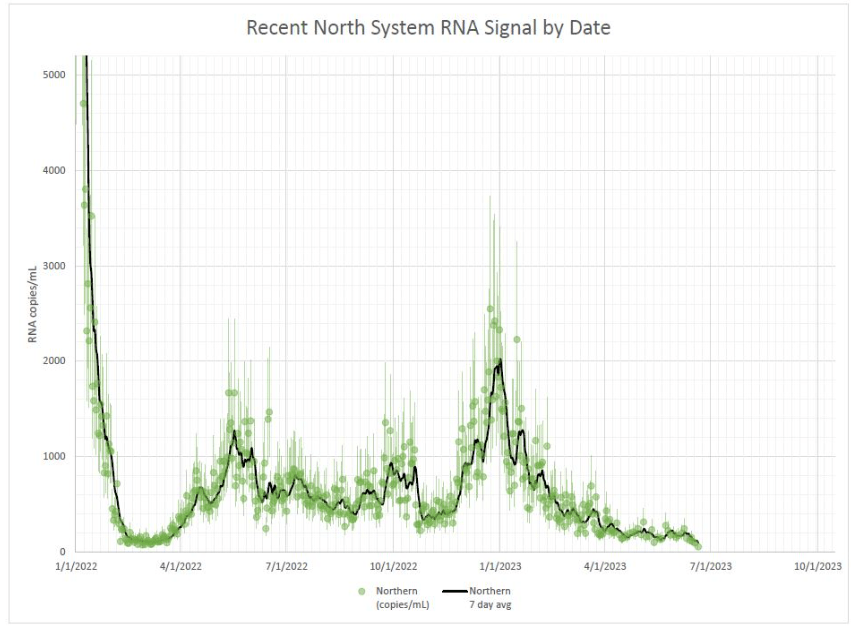
    Wastewater data from Boston show some small increases and decreases in transmission this spring, reflecting our uncertain baseline.

    In the past week (June 11 through 17), the CDC did not update COVID-19 hospitalization data due to changes in its reporting process.

    During the most recent week of data available (June 4 through 10), the U.S. reported about 6,600 new COVID-19 patients admitted to hospitals, according to the CDC. This amounts to:

    • An average of 950 new admissions each day
    • 2.0 total admissions for every 100,000 Americans
    • 8% fewer new admissions than the prior week (May 28-June 3)

    Additionally, the U.S. reported:

    • 4.0% of tests in the CDC’s surveillance network came back positive
    • A 16% lower concentration of SARS-CoV-2 in wastewater than last week (as of June 21, per Biobot’s dashboard)
    • 30% of new cases are caused by Omicron XBB.1.6; 24% by XBB.1.9; 11% by XBB.2.3 (as of June 24)

    The CDC failed to update its primary COVID-19 metrics this week, so I have no national updates to share about hospital admissions, deaths, or test positivity. The most recent available data from the agency and wastewater surveillance sources suggest that the U.S. is still experiencing a transmission plateau.

    According to the CDC’s dashboard, the agency didn’t update its hospitalization data “due to a change in required reporting cadence from daily to weekly,” following the end of the public health emergency in May. The dashboard note is a bit unclear, but I’m assuming this refers to a change in requirements for state public health departments reporting to the CDC, as the national agency lost its authority to require daily data reporting when the PHE ended.

    Still, it’s confusing to me that the CDC’s dashboard note only refers to hospitalization data, because deaths, test positivity, and other metrics also weren’t updated this week. These data points don’t rely on state reporting systems, so they shouldn’t be impacted by the reporting change.

    Either the note is incomplete, or the CDC staff in charge of this dashboard took an issue with one metric as an excuse not to update several metrics. I don’t love the outcome either way. Like, do they think nobody is checking this dashboard? Because we still are.

    Anyway, the CDC’s most recent data (from the week of June 10, now about three weeks ago), suggested that the U.S. was in a continued COVID-19 plateau, with hospital admissions and test positivity from the CDC’s surveillance network declining very slightly. 

    Wastewater data from Biobot Analytics indicates a similar plateau at the national level. Regionally, the Northeast and West coast experienced slight upticks in COVID-19 spread in the last few weeks, but the coronavirus levels in their wastewater now appear to be trending back down. (These are small changes, though, compared to what we’ve seen in past surges.)

    The sewage in Boston and New York City, two large Northeast cities that are often bellwethers for larger COVID-19 trends, similarly slow slight viral increases in May followed by downturns in June. NYC data are delayed by up to two weeks, though, so take this with a grain of salt.

    The CDC did update its variant estimates this week, showing that XBB.1.5 is now causing less than one-third of cases nationwide. XBB.1.6 and its relatives are now the most popular lineages in the U.S., causing a combined 30% of new cases in the two weeks ending June 24. Other XBB variants, including XBB.1.6 and XBB.2.3, are also on the rise.

    As health agencies put fewer and fewer resources into tracking COVID-19, the data we still have show continued severe ramifications for this disease’s unchecked spread. This disease still kills over 100 people per day.

  • Sources and updates, June 18

    • New York Times COVID-19 tracker is back: After shutting down ahead of the ending federal public health emergency, the New York Times COVID-19 tracker has now resumed updates. Since the tracker is based on CDC data, case numbers and other major metrics are no longer available; but readers can find hospital admissions, deaths, and vaccinations nationally and by state, along with some local data based on hospital service areas. The NYT website doesn’t give much information about why they resumed updates—if anyone reading this can share what happened, please let me know! (And thank you to reader Robin Lloyd who flagged the renewed updates.)
    • CDC Director calls for more data authority: CDC Director Rochelle Walensky appeared in front of Congress this week, speaking to Republican lawmakers for a hearing about her time leading the agency before she steps down at the end of June. One notable trend from the hearing, according to reporting by Rachel Cohrs at STAT News: Walensky acknowledged that the CDC wasn’t able to collect some key COVID-19 data points, such as vaccination rates for COVID-19 patients in hospitals. Walensky called for Congress to give the CDC more authority in collecting data from state and local health departments.
    • CDC expanding its wastewater testing targets: Another CDC update for this week: the agency’s National Wastewater Surveillance System is expanding the pathogens that it will look for in sewage, Genome Web reports. NWSS plans to test for several respiratory viruses (COVID-19, flu, RSV), foodborne infections such as E. coli and norovirus, antimicrobial resistance genes, mpox, and other pathogens that may warrant concern. CDC scientists are working with the company GT Molecular to develop and test new assays. Other wastewater research groups are similarly developing tests to expand the health data that we get from sewage, I’ve learned in reporting for an upcoming story (which will be out later this summer).
    • Genomic surveillance to keep tabs on Omicron’s evolution: CDC researchers invovled with tracking coronavirus variants shared some updates in a study published this week by the agency’s Morbidity and Mortality Weekly Report. As fewer people are getting PCR tests across the U.S., the CDC has access to fewer samples for sequencing than it did at prior points in the pandemic. As a result, scientists have had to update their analytical procedures for using available data to estimate how much different variants are spreading. According to the CDC, Omicron has dominated the U.S. since early 2022, with earlier BA lineages giving way to XBB.
    • Fungal infections increased during the pandemic: In recent years, hospital patients have become increasingly at risk of infection with fungi, which can spread widely in healthcare settings. A new paper from the CDC adds evidence to this trend: fungal infections in hospitals have increased steadily from 2019 through 2021, the researchers found. The researchers also found that patients hospitalized with COVID-19 and a fungal infection had high mortality rates, with almost half of these patients dying in 2020-2021. COVID-19 can disrupt patients’ immune systems and make them more vulnerable to fungi, the researchers suggested. This is a major threat that’s likely to continue in coming years.

  • The CDC’s new COVID-19 dashboard hides transmission risk

    The CDC’s new COVID-19 dashboard hides transmission risk

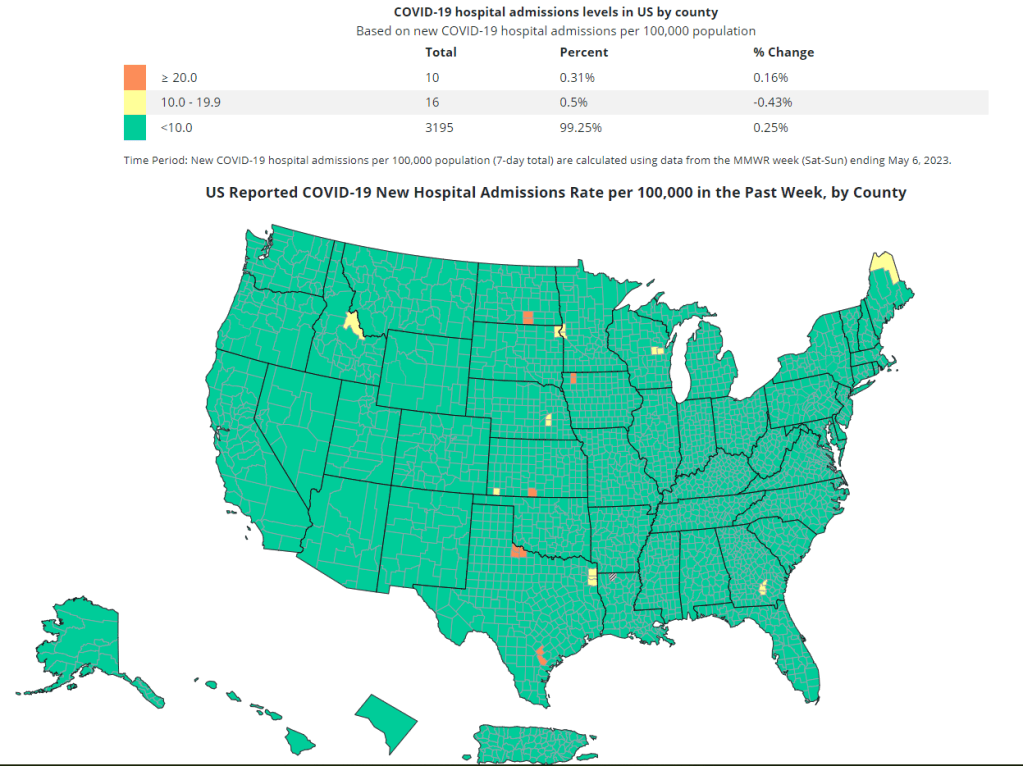
    The CDC’s new COVID-19 dashboard suggests that the national situation is totally fine, because hospitalizations are low. But is that correct?

    On Thursday, the CDC revamped its COVID-19 dashboard in response to changing data availability with the end of the federal public health emergency. (For more details on the data changes, see my post from last week.) The new dashboard downplays continued COVID-19 risk across the U.S.

    Overall, the new dashboard makes it clear that case counts are no longer available, since testing labs and state/local heath agencies aren’t sending those results to the CDC anymore. You can’t find case counts or trends on the homepage, at the top of the dashboard, or in a county-level map.

    Instead, the CDC is now displaying data that shows some of COVID-19’s severe impacts— hospitalizations and deaths—without making it clear how widely the virus is still spreading. Its key metrics are new hospital admissions, currently-hospitalized patients, emergency room visits, and the percentage of recent deaths attributed to COVID-19. You can find these numbers at national and state levels in a revamped “trends” page, and at county levels in a “maps” page.

    The “maps” page with county-level data has essentially replaced the CDC’s prior Community Level and Transmission Level page, where users were previously able to find COVID-19 case rates and test positivity rates by county. In fact, as of May 13, the URL to this maps page is still labeled as “cases” when you click into it from the main dashboard.

    While these changes might be logical (given that case numbers are no longer available), I think the CDC’s design choices here are worth highlighting. By prioritizing hospitalizations and deaths, the CDC implicitly tells users of this dashboard that the virus should no longer be a concern for you unless you’re part of a fairly small minority of Americans at high risk of those severe outcomes.

    But is that actually true, that COVID-19 is no longer a concern unless you’re going to go to the hospital? I personally wouldn’t agree. I’d prefer not to be out sick for a week or two, if I can avoid it. And I’d definitely like to avoid any long-term symptoms—or the long-term risks of heart problems, lung problems, diabetes, etc. that may come after a coronavirus infection.

    These outcomes still persist after a mild COVID-19 case. But the current CDC data presentation makes it hard to see those potential outcomes, or your risk of getting that mild COVID-19 case. The agency still has some data that can help answer these questions (wastewater surveillance, variant surveillance, Long COVID survey results, etc.) but those numbers aren’t prioritized to the same degree as hospitalizations and deaths.

    I’m sure the CDC data scientists behind this new dashboard are doing the best they can with the information they have available. Still, in this one journalist’s opinion, they could’ve done more to make it clear how dangerous—and how widely prevalent—COVID-19 still is.

    For other dashboards that continue to provide updates, see my list from a few weeks ago. I also recommend looking at your state and local public health agencies to see what they’re doing in response to the PHE’s end.

    More federal data

  • COVID source callout: Outbreak at a CDC conference

    Last week, we learned that a CDC conference—a gathering of experts in the agency’s epidemic intelligence service, no less—led to some COVID-19 cases, thanks to reporting by the Washington Post.

    Well, this past Tuesday, the Post published a follow-up story: more than 30 people got sick following the conference, and the CDC is working with the Georgia Department of Health to investigate. The case count was 35 as of Tuesday, and is surely higher now; about 2,000 people attended the conference.

    It’s now safe to say that this conference led to an outbreak. And that isn’t a surprising outcome, considering that it didn’t require masks or other COVID-19 safety measures. As I wrote last week, this outbreak basically signifies that the CDC considers ongoing COVID-19 spread at large events normal and unavoidable.

    Even though this situation is, in fact, disappointing and could have been avoided with basic safety measures. 🙃