Blog

  • WHO ends the global health emergency for COVID-19

    As the U.S. gears up to end its federal public health emergency for COVID-19, the World Health Organization just declared an end to the global health emergency. WHO Director-General Tedros Adhanom Ghebreyesus announced the declaration on Friday, following a meeting of the organization’s COVID-19 emergency committee the day before.

    Here’s what this declaration means, pulling from Helen Branswell’s article in STAT News and Katelyn Jetelina’s Your Local Epidemiologist post:

    • The world is at a point of transition from considering COVID-19 an unexpected emergency to considering it a part of our daily lives, a disease that we’ll be dealing with in the long term.
    • The WHO will have fewer resources for an international response to COVID-19, such as coordinating between countries and sharing data at a global scale.
    • The WHO will also have less authority when it comes to issuing international guidance to control COVID-19 spread.
    • There will be fewer incentives for countries to accelerate vaccines, treatments, and tests for COVID-19.

    The declaration does not mean that COVID-19 is “over.” We have plenty of long-term issues to deal with here: millions suffering from Long COVID, continued COVID-19 waves around the world, potential new variants, healthcare worker shortages, and declines in childhood vaccination rates, to name a few. Tedros may set up a new committee to make recommendations on long-term COVID-19 management, according to Branswell’s article.

    In fact, the WHO recently publicized the impacts of Long COVID: Tedros delivered a PSA explaining that one in ten coronavirus infections leads to some form of Long COVID, and suggesting that “hundreds of millions of people will need longer-term care.” Shifting out of the emergency phase of our global COVID-19 response should be a call to action for scientists and health experts to now focus on Long COVID needs.

    Still, a lot of people might interpret the WHO’s declaration as an announcement that they no longer need to worry about COVID-19. Some mainstream publications that have covered the change haven’t done a great job of conveying the nuances here, and I’ve already seen some misinterpretation on social media.

    COVID-19 may not be an emergency at this point. But we’re probably going to be living with it for the rest of our lives, and there’s a lot of work left to do.
    More on international data

  • The federal public health emergency ends next week: What you should know

    The federal public health emergency ends next week: What you should know

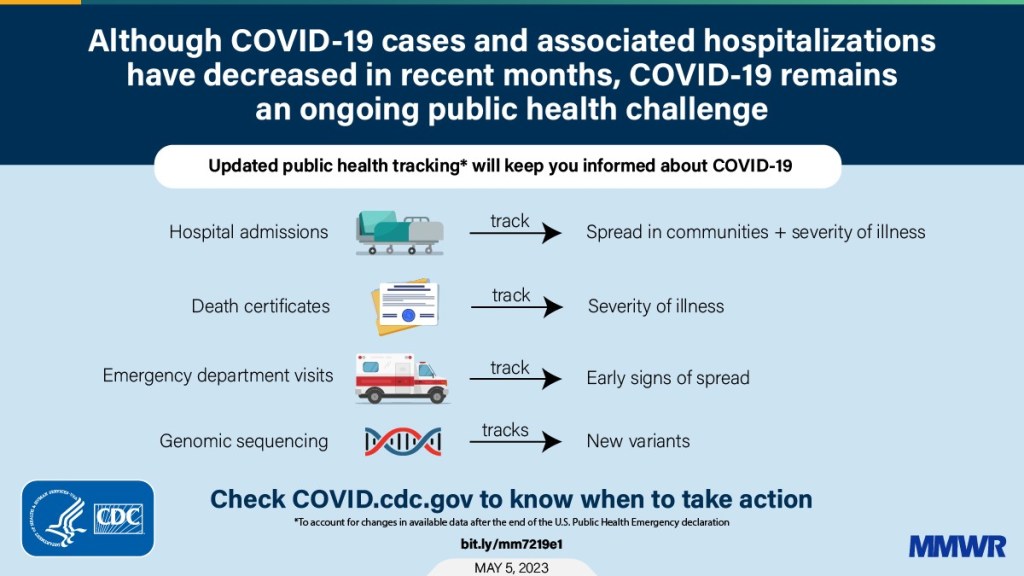
    A chart from the CDC’s recent report on surveillance changes tied to the end of the federal public health emergency.

    We’re now less than one week out from May 11, when the federal public health emergency (or PHE) for COVID-19 will end. While this change doesn’t actually signify that COVID-19 is no longer worth worrying about, it marks a major shift in how U.S. governments will respond to the ongoing pandemic, including how the disease is tracked and what public services are available.

    I’ve been writing about this a lot in the last couple of months, cataloging different aspects of the federal emergency’s end. But I thought it might be helpful for readers if I compiled all the key information in one place. This post also includes a few new insights about how COVID-19 surveillance will change after May 11, citing the latest CDC reports.

    What will change overall when the PHE ends?

    The ending of the PHE will lead to COVID-19 tests, treatments, vaccines, and data becoming less widely available across the U.S. It may also have broader implications for healthcare, with telehealth policies shifting, people getting kicked off of Medicaid, and other changes.

    Last week, I attended a webinar about these changes hosted by the New York City Pandemic Response Institute. The webinar’s moderator, City University of New York professor Bruce Y. Lee, kicked it off with a succinct list of direct and indirect impacts of the PHE’s end. These were his main points:

    • Free COVID-19 vaccines, tests, and treatments will run out after the federal government’s supplies are exhausted. (Health experts project that this will likely happen sometime in fall 2023.) At that point, these services will get more expensive and harder to access as they transition to private healthcare markets.
    • We will have fewer COVID-19 metrics (and less complete data) to rely on as the CDC and other public health agencies change their surveillance practices. More on this below.
    • Many vaccination requirements are being lifted. This applies to federal government mandates as well as many from state/local governments and individual businesses.
    • The FDA will phase out its Emergency Use Authorizations (EUAs) for COVID-19 products, encouraging manufacturers to apply for full approval. (This doesn’t mean we’ll suddenly stop being able to buy at-home tests—there’s going to be a long transition process.)
    • Healthcare worker shortages may get worse. During the pandemic emergency, some shifts to work requirements allowed facilities to hire more people, more easily; as these policies are phased out, some places may lose those workers.
    • Millions of people will lose access to Medicaid. A federal rule tied to the PHE forbade states from kicking people off this public insurance program during the pandemic, leading to record coverage. Now, states are reevaluating who is eligible. (This process actually started in April, before the official PHE end.)
    • Telehealth options may become less available. As with healthcare hiring, policies during the PHE made it easier for doctors to provide virtual care options, like video-call appointments and remote prescriptions. Some of these COVID-era rules will be rolled back, while others may become permanent.
    • People with Long COVID will be further left behind, as the PHE’s end leads many people to distance themselves even more from the pandemic—even though long-haulers desperately need support. This will also affect people who are at high risk for COVID-19 and continue to take safety precautions.
    • Pandemic research and response efforts may be neglected. Lee referenced the “panic and neglect” cycle for public health funding: a pattern in which governments provide resources when a crisis happens, but then fail to follow through during less dire periods. The PHE’s end will likely lead us (further) into the “neglect” part of this cycle.

    How will COVID-19 data reporting change?

    The CDC published two reports this week that summarize how national COVID-19 data reporting will change after May 11. One goes over the surveillance systems that the CDC will use after the PHE ends, while the other discusses how different COVID-19 metrics correlate with each other.

    A lot of the information isn’t new, such as the phasing out of Community Level metrics for counties (which I covered last week). But it’s helpful to have all the details in one place. Here are a few things that stuck out to me:

    • Hospital admissions will be the CDC’s primary metric for tracking trends in COVID-19 spread rather than cases. While more reliable than case counts, hospitalizations are a lagging metric—it takes typically days (or weeks) after infections go up for the increase to show up at hospitals, since people don’t seek medical care immediately. The CDC will recieve reports from hospitals at a weekly cadence, rather than daily, after May 11, likely increasing this lag and making it harder for health officials to spot new surges.
    • National case counts will no longer be available as PCR labs will no longer be required to report their data to the CDC. PCR test totals and test positivity rates will also disappear for the same reason, as will the Community Levels that were determined partially by cases. The CDC will also stop reporting real(ish)-time counts of COVID-associated deaths, relying instead on death certificates.
    • Deaths will be the primary metric for tracking how hard COVID-19 is hitting the U.S. The CDC will get this information from death certificates via the National Vital Statistics System. While deaths are reported with a significant lag (at least two weeks), the agency has made a lot of progress on modernizing this reporting system during the pandemic. (See this December 2021 post for more details.)
    • The CDC will utilize sentinel networks and electronic health records to gain more information about COVID-19 spread. This includes the National Respiratory and Enteric Virus Surveillance System, a network of about 450 laboratories that submit testing data to the CDC (previously established for other endemic diseases like RSV and norovirus). It also includes the National Syndromic Surveillance Program, a network of 6,300 hospitals that submit patient data to the agency.
    • Variant surveillance will continue, using a combination of PCR samples and wastewater data. The CDC’s access to PCR swab samples will be seriously diminished after May 11, so it will have to work with public health labs to develop national estimates from the available samples. Wastewater will help fill in these gaps; a few wastewater testing sites already send the CDC variant data. And the CDC will continue offering tests to international travelers entering the country, for a window into global variant patterns.
    • The CDC will continue tracking vaccinations, vaccine effectiveness, and vaccine safety. Vaccinations are generally tracked at the state level (every state health agency, and several large cities, have their own immunization data systems), but state agencies have established data sharing agreements with the CDC that are set to continue past May 11. The CDC will keep using its established systems for evaluating how well the vaccines work and tracking potential safety issues as well.
    • Long COVID notably is not mentioned in the CDC’s reports. The agency hasn’t put much focus on tracking long-term symptoms during the first three years of the pandemic, and it appears this will continue—even though Long COVID is a severe outcome of COVID-19, just like hospitalization or death. A lack of focus on tracking Long COVID will make it easier for the CDC and other institutions to keep minimizing this condition.

    On May 11, the CDC plans to relaunch its COVID-19 tracker to incorporate all of these changes. The MMWR on surveillance changes includes a list of major pages that will shift or be discontinued at this time.

    Overall, the CDC will start tracking COVID-19 similar to the way it tracks other endemic diseases. Rather than attempting to count every case, it will focus on certain severe outcomes (i.e., hospitalizations and deaths) and extrapolate national patterns from a subset of healthcare facilities with easier-to-manage data practices. The main exception, I think, will be a focus on tracking potential new variants, since the coronavirus is mutating faster and more aggressively than other viruses like the flu.

    What should I do to prepare for May 11?

    If you’ve read this far, you’re probably concerned about how all these shifts will impact your ability to stay safe from COVID-19. Unfortunately, the CDC, like many other public agencies, is basically leaving Americans to fend for themselves with relatively little information or guidance.

    But a lot of information sources (like this publication) are going to continue. Here are a few things I recommend doing this week as the PHE ends:

    • Look at your state and local public health agencies to see how they’re responding to the federal shift. Some COVID-19 dashboards are getting discontinued, but many are sticking around; your local agency will likely have information that’s more tailored to you than what the CDC can offer.
    • Find your nearest wastewater data source. With case counts basically going away, wastewater surveillance will be our best source for early warnings about surges. You can check the COVID-19 Data Dispatch list of wastewater dashboards and/or the COVIDPoops dashboard for sources near you.
    • Stock up on at-home tests and masks. This is your last week to order free at-home/rapid tests from your insurance company if you have private insurance. It’s also a good time to buy tests and masks; many distributors are having sales right now.
    • Figure out where you might get a PCR test and/or Paxlovid if needed. These services will be harder to access after May 11; if you do some logistical legwork now, you may be more prepared for when you or someone close to you gets sick. The People’s CDC has some information and links about this.
    • Contact your insurance company to find out how their COVID-19 coverage policies are changing, if you have private insurance. Folks on Medicare and Medicaid: this Kaiser Family Foundation article has more details about changes for you.
    • Ask people in your community how you can help. This is a confusing and isolating time for many Americans, especially people at higher risk for COVID-19. Reaching out to others and offering some info or resources (maybe even sharing this post!) could potentially go a long way.

    That was a lot of information packed into one post. If you have questions about the ending PHE (or if I missed any important details), please email me or leave a comment below—and I’ll try to answer in next week’s issue.

    More about federal data

  • National numbers, May 7

    National numbers, May 7

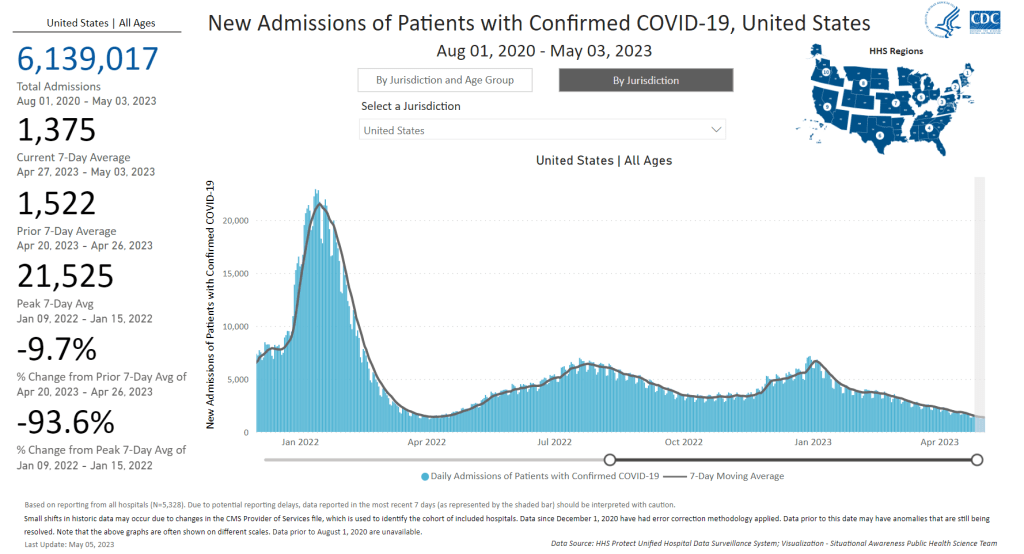
    New hospital admission for COVID-19 continue to drop, though they are at higher levels than we’ve seen in past lulls. Chart from the CDC dashboard.

    In the past week (April 27 through May 3), the U.S. officially reported about 77,000 new COVID-19 cases, according to the CDC. This amounts to:

    • An average of 11,000 new cases each day
    • 14% fewer new cases than last week (April 20-26)

    In the past week, the U.S. also reported about 10,000 new COVID-19 patients admitted to hospitals. This amounts to:

    • An average of 1,400 new admissions each day
    • 2.9 total admissions for every 100,000 Americans
    • 10% fewer new admissions than last week

    Additionally, the U.S. reported:

    • 1,100 new COVID-19 deaths (150 per day)
    • 67% of new cases are caused by Omicron XBB.1.5; 13% by XBB.1.9; 13% by XBB.1.16 (as of May 6)
    • An average of 60,000 vaccinations per day

    The national COVID-19 plateau persists. Cases, new hospitalizations, and wastewater surveillance all indicate slight declines (but persistent disease spread) across the country. New variants are on the rise, but have yet to noticeably change these trends.

    New COVID-19 cases declined by about 14% last week compared to the week prior, while hospital admissions declined by 10%. While the case numbers might seem low (just 11,000 reported each day), they are a drastic undercount of true infections, as we can see by comparing total new cases to new hospitalizations.

    This week, the CDC’s reported cases were about eight times the number of new hospital admissions reported by the agency. While this time last year, new cases were 30 times new hospital admissions. In other words, as case reporting gets less accurate, we are still tracking cases with severe sypmtoms (i.e. those that require hospitalization), but missing many of the mild or asymptomatic cases—that could still lead to detrimental outcomes, like Long COVID.

    Wastewater surveillance—which provides population-level data regardless of how many people are getting PCR tests or otherwise seeking healthcare—suggests that the U.S. has been at an overall plateau of COVID-19 spread, but a higher one than we’ve experienced in past lulls (such as in spring 2021, when people were receiving their first vaccine doses).

    Biobot’s national wastewater data shows fairly steady transmission for the last month. The company’s regional data shows a similar picture; the West Coast has slightly higher coronavirus levels than the other three major regions, but is on a decline. A few counties in California and other West states have seen increases recently, but it’s not a sustained pattern across the board.

    Newer versions of the Omicron variant are competing with XBB.1.5, but the transition is happening slowly. XBB.1.5 still caused about two-thirds of new cases in the U.S. last week, according to CDC estimates, while XBB.1.16 and XBB.1.9 both caused about 13% of new cases.

    It’s currently hard to say if the country will face a real surge from XBB.1.16 and XBB.1.9. XBB.1.16 has wreaked some havoc internationally, but it may be similar enough to the variants now circulating in the U.S. that it won’t make a huge dent. Or, if we do see an increase in cases, it could be more like a “mini-wave” of largely-mild infections than a surge that really strains the healthcare system.

    This “mini-wave” idea has been covered by a few news outlets recently, including Nature and the Atlantic. It’s certainly promising that the U.S. hasn’t had a real surge since the winter holidays, now almost six months ago—but we have to remember that any new cases, no matter how low the numbers are, can lead to potential severe symptoms and long-term illness. I, for one, am not letting up my guard on safety.

  • COVID source callout: Spread at a CDC conference

    This past week, the CDC hosted a conference of about 2,000 people in the agency’s epidemic intelligence service. It was the first time this conference was held in-person since the pandemic started, and it appeared to take place with fairly limited (if any) COVID-19 precautions.

    And at least a few of the conference’s attendees tested positive for COVID-19 afterward, according to reporting by Dan Diamond at the Washington Post. While a CDC spokesperson told Diamond that the cases are “reflective of general spread in the community” and “should not be referred to as an outbreak,” it’s obviously not a great look for the agency to have virus spread at a conference intended to celebrate progress over COVID-19.

    These cases—and the CDC’s communication around them—add to a growing pattern of downplaying continued coronavirus transmission. The CDC is essentially saying it’s normal to risk COVID-19 at any large event going forward, even if that event is run by people who should, theoretically, have a good understanding of how to keep its attendees safe.

    Epidemiologist Ellie Murray elaborates on this idea in a Twitter thread about the situation:

  • Sources and updates, April 30

    • Local COVID-19 resources from the People’s CDC: In advance of the federal public health emergency’s end, advocacy and communications organization the People’s CDC has compiled a list of COVID-19 resources for people still seeking to stay safe during the ongoing pandemic. The list includes testing and treatments, food support, mutual aid, advocacy organizations, and links to other People’s CDC resources.
    • Premature deaths during the pandemic: A new analysis from the Peterson-KFF Health System Tracker examines the impact of COVID-19 on premature deaths, or deaths that occurred before the person reached age 75. This analysis included all excess deaths (so, not just those deaths officially reported as COVID-19, but also deaths from other diseases, drug overdoses, violence, etc.). All demographic groups experienced an increase in premature mortality during the pandemic, the researchers found, but deaths increased more for people of color than for white people. Hispanic and Native Americans had the highest impact, with premature all-cause mortality rising 33% betweeen 2019 and 2022.
    • Youth risk behaviors during COVID-19: This week, the CDC published a wealth of data and analysis from its 2021 Youth Risk Behavior Surveillance System, a regular survey examining health-related behaviors among U.S. high school students. The survey asks questions about gun violence, unstable housing, mental health, sexual behaviors, dietary behavior, drug use, and more. As this survey is conducted every two years, the 2021 iteration was the first to capture youth behavior during the COVID-19 pandemic, and it included some questions specifically designed to look at COVID-19’s impacts.
    • Lessons from COVID-19 report: A new book, published this week, explores what went wrong (and right) from the U.S.’s COVID-19 response. 34 leading experts from a variety of backgrounds collaborated on the book; the group originally convened in anticipation of a 9/11 Commission-style inquiry into the federal government’s COVID-19 response, and continued to investigate what went wrong even though that commission did not actually come into being. For highlights from the book, see this Q&A between two of the authors and STAT’s Helen Branswell.
    • Long-term financial issues after COVID-19: A new paper, published this week in the Journal of Hospital Medicine, finds that a COVID-19 diagnosis may lead to financial challenges. Researchers at the University of Michigan and Johns Hopkins studied this issue by linking healthcare records from a large Michigan-based insurance network with financial records from the credit company Experian. The study included over 132,000 Michigan residents. People who had COVID-19 were more likely to see their credit score drop following that infection, the researchers found; those who were hospitalized with severe symptoms had the highest risk of this financial impact.

  • The case for mask mandates in healthcare settings

    The case for mask mandates in healthcare settings

    A lot of healthcare organizations have ended mask mandates in recent months, many of them citing guidance changes at state or local levels to no longer require this level of precaution. Some of this stems back to a CDC policy change last fall; the agency recommended that healthcare settings only need universal masking when COVID-19 spread is high.

    Now, this is likely another case of the CDC—and potentially quite a few other health agencies—making recommendations that are, in fact, very dangerous. There’s plenty of evidence to support that mask mandates should continue in healthcare settings, to protect vulnerable patients from COVID-19 and many other illnesses.

    Let’s go over some key points:

    • Hospital-acquired COVID-19 infections: Since the start of the pandemic, people who go to the hospital for issues other than COVID-19 have contracted the virus while there. The HHS tracks these cases, and their data show that this is a continued problem: even as new COVID-19 admissions in hospitals have declined in 2023, hospital-acquired infections have continued to be an issue, with hundreds of these cases reported each day in recent months. Universal masking reduces these infections.
    • Wastewater surveillance in hospitals: Another way to track COVID-19 in healthcare settings is through targeted wastewater surveillance, taking samples from a particular facility’s sewage. A few hospital systems are doing this, such as NYC’s public system (Health + Hospitals). While there are limited public data from these programs, researchers who run them have said that the results show consistent COVID-19 spread; masks help mitigate this transmission.
    • Healthcare facility outbreaks: After lifting a mask mandate, hospitals and other healthcare facilities may have COVID-19 outbreaks among patients and staff—both putting vulnerable patients at risk and exacerbating staffing shortages. One hospital in the Bay Area recently reinstated a mask mandate after such an outbreak, according to local paper the San Francisco Chronicle.
    • Patients hesitant to visit: Many patients at higher risk for severe COVID-19 may become wary of routine doctors’ visits or procedures if their clinics stop requiring masks. This is a sentiment I’ve seen frequently on social media over the last few months, as higher-risk people push for healthcare organizations to keep their mask mandates.
    • Harming long-term outcomes: Any already-vulnerable person who gets COVID-19 at a healthcare facility is likely to face long-term symptoms from the virus, potentially complicating their existing chronic conditions. This fact contributes to individual patients’ wariness, and it can also lead to complications for potential treatments or research studies. For example, a Stanford study testing Paxlovid for Long COVID has recently stopped requiring its staff to mask, according to patient reports; participants have pointed out that this could harm the study’s results.

    If you’re interested in getting involved with advocacy in this area, I recommend checking out Mandate Masks US and connected organizations. These groups are pushing for masks to remain in healthcare through social media campaigns, petitions, contacting politicians, and even some in-person protests.

  • CDC shifts away from COVID-19 Community Levels with the federal emergency’s end

    CDC shifts away from COVID-19 Community Levels with the federal emergency’s end

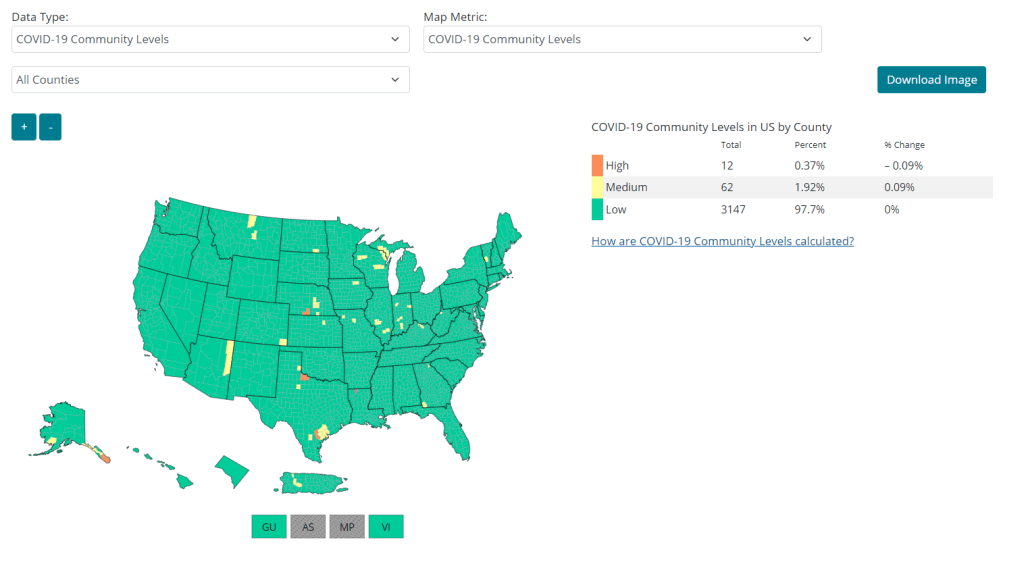
    The CDC’s Community Levels suggest (perhaps inaccurately!) that the U.S. has little to worry about from COVID-19 right now. The agency is set to stop calculating these metrics next month.

    As we’ve gotten closer to May 11, the official ending of the federal public health emergency for COVID-19, I’ve tried to collect news on how this change will impact COVID-19 data availability. We know, for example, that the CDC will lose some of its authority to collect data from state and local health agencies, and that PCR testing numbers will become even less accurate.

    This week, another key change became public: the CDC will stop reporting COVID-19 Community Levels, according to reporting by Brenda Goodman at CNN. The agency is overall planning to shift from using case data to hospitalizations and wastewater surveillance.

    The CDC’s Community Levels are county-level metrics based on cases and hospitalizations. In February 2022, the agency switched to these metrics from its prior Transmission Levels (which were based on cases and test positivity), and essentially changed its national COVID-19 map from bright red to pastel green-yellow-orange overnight.

    Community Levels have generally made the U.S.’s COVID-19 situation look better than it really is over the last year, since these metrics relied on hospitalizations, a lagging indicator, and were set to high thresholds for recommending safety measures. Even so, the metrics gave Americans an easy way to look at the COVID-19 situation in their county or region.

    On May 11, that county-level information will no longer be available, according to Goodman’s reporting. When the public health emergency ends, the CDC will no longer be able to require COVID-19 testing labs to report their results—so this already-spotty information will become even less accurate. While test results at the national level might still be helpful for following general trends, it will be harder to interpret more local data.

    “We’re not going to lose complete surveillance, but we will lose that hyperlocal sensitivity to it perhaps,” an anonymous source at the CDC told Goodman. These more local metrics “simply cannot be sustained” due to reporting changes, the source said.

    In absence of county-level case data, the CDC plans on utilizing hospitalizations and wastewater surveillance to track COVID-19, according to the CNN report. The agency might focus on tracking COVID-19 at specific healthcare settings in a reporting network, similar to its surveillance for endemic diseases like flu and RSV, rather than trying to count every single severe COVID-19 case.

    Hospitalization data tend to lag behind cases, so wastewater surveillance will be important to provide early warnings about potential new coronavirus variants or surges. However, the country’s wastewater surveillance network is still patchy: some states have a sewage testing site in every county, while others only have a handful. Our data will be biased, based on which health departments have invested in this technology.

    It’s unsurprising to see the CDC plan this COVID-19 reporting change, given the powers it will lose on May 11. But I’m still disappointed. I’ve followed the U.S.’s incomplete surveillance for endemic diseases, and I hoped that continued COVID-19 tracking would provide an opportunity for improvement. Instead, it looks like we’re going to revert to something like our flu tracking, with wastewater surveillance unevenly tacked on.

    The May 11 changes will inevitably have a huge impact on the Americans who are still trying to stay safe from COVID-19, especially those with health conditions that make them more vulnerable to severe symptoms. Without reliable data, people will be unable to identify when spread is high or low in their community. I expect some will simply shrug off the risks (but may regret that choice later), while others will anticipate that COVID-19 is everywhere, all the time, and retreat from public activities.

    And from the public health perspective, less data will make it harder to identify concerning new variants or potential surges. For more on these challenges, I recommend this article by KFF Health News reporter Sam Whitehead, published in CNN and other outlets.

    “We’re all less safe when there’s not the national amassing of this information in a timely and coherent way,” Anne Schuchat, former principal deputy director of the Centers for Disease Control and Prevention, told Whitehead.

    More on federal data

  • National numbers, April 30

    National numbers, April 30

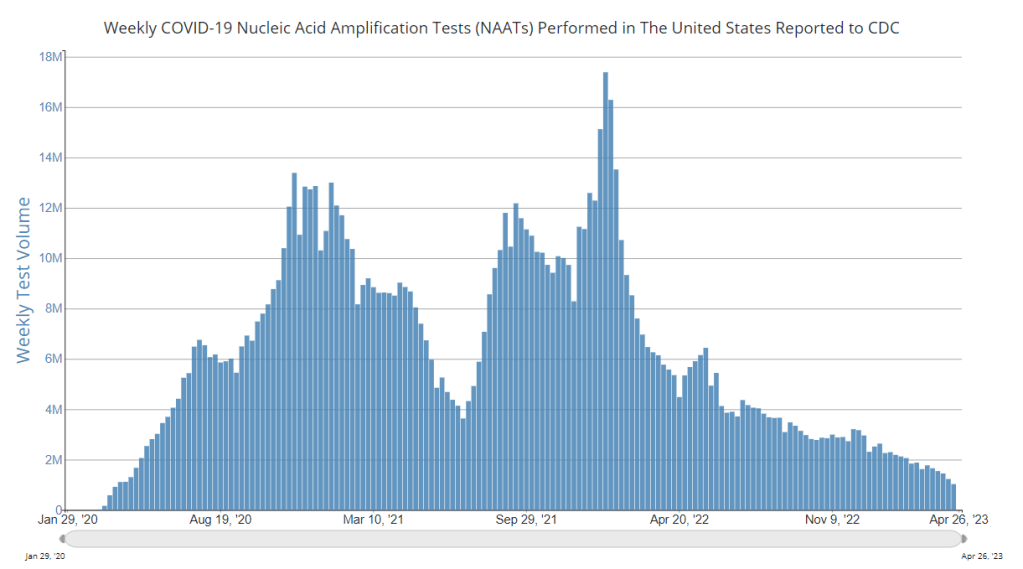
    The number of COVID-19 tests reported to the CDC has declined precipitously since peak COVID-19 surges, even though COVID-19 spread has not. Chart from the CDC.

    In the past week (April 20 through 26), the U.S. officially reported about 88,000 new COVID-19 cases, according to the CDC. This amounts to:

    • An average of 13,000 new cases each day
    • 10% fewer new cases than last week (April 13-19)

    In the past week, the U.S. also reported about 11,000 new COVID-19 patients admitted to hospitals. This amounts to:

    • An average of 1,500 new admissions each day
    • 3.2 total admissions for every 100,000 Americans
    • 16% fewer new admissions than last week

    Additionally, the U.S. reported:

    • 1,100 new COVID-19 deaths (150 per day)
    • 69% of new cases are caused by Omicron XBB.1.5; 13% by XBB.1.9; 12% by XBB.1.16 (as of April 29)
    • An average of 40,000 vaccinations per day

    Major COVID-19 metrics continue to suggest an ongoing (though slight) decline in the virus’ spread nationally, despite the rise of newer and more contagious variants. The moderate plateau persists.

    Officially-reported cases and new hospital admissions declined by 10% and 16% respectively last week, compared to the week prior. According to the CDC’s data notes, three states (Florida, Iowa, and Pennsylvania) did not report cases last week, while two states (Louisiana and Indiana) reported extra cases from their historical backlogs.

    In addition to the ongoing reporting issues from state health departments, it’s important to remember that PCR testing continues to decline across the country. About one million PCR and similar lab test results were reported to the CDC last week, compared to peaks over 10 million per week during major surges.

    Still, the hospitalization numbers and wastewater surveillance data lead me to suggest that we really are in a transmission plateau. Wastewater data from Biobot show a slight decline in national coronavirus concentrations over the last month.

    All four regions of the country are also experiencing COVID-19 plateaus, according to Biobot’s data. The West Coast and Midwest have slightly higher coronavirus levels than the Northeast and South, but there aren’t huge differences between the regions.

    The West and Midwest are also hotspots for XBB.1.16 and XBB.1.9, the two Omicron subvariants that have started competing with XBB.1.5 over the last few weeks. This competition is happening slowly; XBB.1.5 declined from an estimated 84% of new cases during the last week of March to 69% of new cases this past week, according to the CDC’s estimates.

    At this point, it’s hard to tell how much of an impact the latest variants will have on overall COVID-19 spread. And these connections likely will only get more difficult to parse out, as PCR testing continues to decline and reporting gets less reliable. The CDC itself is currently evaluating how to adjust its data-sharing practices when the federal public health emergency ends on May 11.

  • Sources and updates, April 23

    • External review of the CDC: The People’s CDC, a group of public health experts, scientists, and educators dedicated to advocating for increased COVID-19 precautions, released a new report reviewing the federal CDC’s actins during the pandemic. The report incorporates feedback from a survey of almost 500 experts and from over 200 reports. Overall, the People’s CDC “found that the CDC has prioritized individual choice and short-term business interests over sharing accurate scientific evidence with the public and protecting population health.” (Disclaimer: I was one of the experts surveyed for this report!)
    • Use of COVIDTests.gov: This new paper, published in the CDC’s Morbidity and Mortality Weekly Report (MMWR), reports on how Americans used COVIDTests.gov, the USPS/HHS effort to distribute free at-home tests. Since the site’s launch in January 2022, about one in three U.S. households received a test kit from this program, the research team found. They also found that this program may have helped improve equity in COVID-19 test access, as Black and white Americans utilized the free tests at similar rates. Of course, the program has been discontinued as of this spring.
    • Impact of racial discrimination on vaccination: Speaking of health equity: another report published in MMWR this week shares a correlation between discrimination and vaccination status. Researchers at the CDC and their collaborators analyzed data from the CDC’s National Immunization Survey, including about 1.2 million survey results from April 2021 through November 2022. Among the respondents, people who reported experiencing racial or ethnic discrimination in a healthcare setting were less likely to be vaccinated for COVID-19. The findings confirm many health experts’ equity concerns from early in the vaccine rollout.
    • Declining childhood vaccinations worldwide: Vaccine equity is a concern on the global scale, too. A new report from UNICEF shows that 67 million children worldwide missed at least one vaccination between 2019 and 2021, as healthcare systems were strained. The report also presents new data on global confidence in childhood vaccines: in some countries, this confidence has dropped by up to 44 percentage points. Vaccine confidence only improved in three countries (China, India, and Mexico). “The threat of vaccine hesitancy may be growing,” UNICEF warns.
    • Healthcare workers present while sick: One more paper that caught my attention this week: researchers at the Veterans Affairs healthcare system in Boston tracked a cohort of about 4,000 healthcare workers between December 2020 and September 2021. In addition to PCR testing, the workers conducted daily COVID-19 symptom reviews, and received guidance to stay home or leave work if they didn’t feel well. But the researchers found that many workers didn’t actually stay home: among 255 workers who had symptomatic COVID-19 during the study period, almost half reported that they were present, at work, at the time they received a positive test result. The paper indicates why it’s important to keep masks in healthcare settings, even when community cases are lower.

  • FDA and CDC simplify COVID-19 vaccine guidance

    This week, the FDA made some adjustments to the U.S.’s COVID-19 vaccine guidance in order to standardize all new mRNA shots to bivalent (or Omicron-specific) vaccines, and to allow adults at higher risk to receive additional boosters. The CDC’s vaccine advisory committee and Director Rochelle Walensky both endorsed these changes.

    Here are the main updates you should know. For more details, I recommend reading Helen Branswell’s reporting in STAT News and/or Katelyn Jetelina’s coverage in Your Local Epidemiologist.

    • Adults are now considered “up to date” on their COVID-19 vaccines if they have received at least one dose of a bivalent/Omicron-specific vaccine. These are the vaccines manufactured by Pfizer and Moderna that became available last fall.
    • Any unvaccinated adult should receive one dose of a bivalent vaccine, rather than the former primary series (which was based on the original coronavirus strain). The prior vaccines will essentially go out of use in the U.S.
    • Seniors (65 or older) and immunocompromised adults may receive an additional bivalent vaccine dose, starting at four months after their prior dose. Recent research has demonstrated that protection from these shots wanes over a couple of months, so there’s a good case for seeking out a new booster if you fall into one of these high-risk categories.
    • Immunocompromised adults may receive more bivalent doses going forward, in consultation with their doctors. This guidance intends to provide more protection to people who are severely immunocompromised, such as those undergoing cancer treatment.
    • A new version of the bivalent booster will likely be available in the fall, designed to protect against more recent coronavirus variants. We don’t know much about this yet, but prior FDA and CDC meetings have suggested it will roll out on a similar schedule to the annual flu shot.

    These recommendations mostly apply to adults. While the FDA and CDC are also working on simplifying their guidance for children (to similarly prioritize vaccines aligned to current variants), that’s still a more complicated situation right now. See the YLE post for more details.

    Another open question, at the moment, is what non-mRNA vaccines may be available, for people who may be allergic to those vaccines or who had severe reactions to earlier doses. Novavax is reportedly working on a bivalent/Omicron-specific option, which people might be able to get this fall. The Johnson & Johnson vaccine is no longer widely used at all.

    It makes sense for the FDA and CDC to shift towards bivalent vaccines. Numerous studies have demonstrated that these vaccines perform better against Omicron variants, and this move simplifies the immunization process for everyone involved (doctors, pharmacies, patients, etc.).

    However, this shift reveals how poorly the bivalent booster rollout has gone in the U.S. so far. Only 17% of the population has received one, compared to 81% who’s received at least one dose overall, according to the CDC. Even among seniors, only 42% have received a bivalent booster. It would be a massive task for the country to move towards “up-to-date” coverage among all adults.

    And the federal government doesn’t appear to be pushing for this in any meaningful way. I’ve already seen several reports on social media of people trying to get an additional booster, and failing—whether because of an insurance issue or because pharmacies have simply stopped offering the shots. This process will only get more challenging when the federal public health emergency ends next month. While the Biden administration has announced funding to cover vaccines for uninsured Americans, that’s just one hurdle among a growing number.

    More vaccine coverage