Author: Betsy Ladyzhets

  • New pandemic preparedness office at the White House

    The White House has launched a new office focused on high-level pandemic preparedness, about six months after Congress requested this. The new Office of Pandemic Preparedness and Response Policy will be a permanent office in the executive branch, according to a fact sheet from the Biden administration.

    This announcement is good news; it’s a small step towards improving the U.S.’s infrastructure for responding to future disease threats. But we shouldn’t just be focusing on pandemic preparedness—the U.S. also needs better infrastructure for many health issues impacting the country now, including the continued impacts of COVID-19.

    According to the White House, the new office’s responsibilities include:

    • Coordinating the executive branch’s “domestic response to public health threats that  have pandemic potential or may cause significant disruption.” Current notable threats include COVID-19, mpox, polio, flu, and RSV.
    • Coordinating federal science and technology efforts related to pandemic preparedness, such as developing next-generation vaccines and treatments. A current focus here is next-gen vaccines for COVID-19, though it’s unclear how this new office will coordinate with other federal agencies on that initiative, per reporting by Sarah Owermohle at STAT.
    • Develop pandemic preparedness reports for Congress, including a shorter review every two years and more in-depth reports every five years.

    The Biden administration has appointed retired Major General Paul Friedrich (MD), currently the senior director for global health security at the National Security Council, to lead the new office. Friedrich has decades of experience leading global health initiatives in the military and for the federal government; he advised the Pentagon in the early months of COVID-19.

    Between this new office and Congress’ work on reauthorizing the Pandemic and All-Hazards Preparedness Act, there’s been a lot of discussion on preventing future pandemics in the last couple of weeks. This is obviously good news; COVID-19 has taught U.S. officials at all levels that they will need more resources for the next big health threat.

    But at the same time, the focus on pandemic preparedness can potentially distract us from the many current health threats that we face now. That includes COVID-19 and Long COVID, along with many common diseases, chronic conditions, and other health issues that could be managed better. For example, our seasonal flu surveillance could use an upgrade! 

    The U.S. has plenty of resources to devote to present and future health threats; we could be doing much more on both fronts.

  • Tips for using a portable HEPA filter

    Tips for using a portable HEPA filter

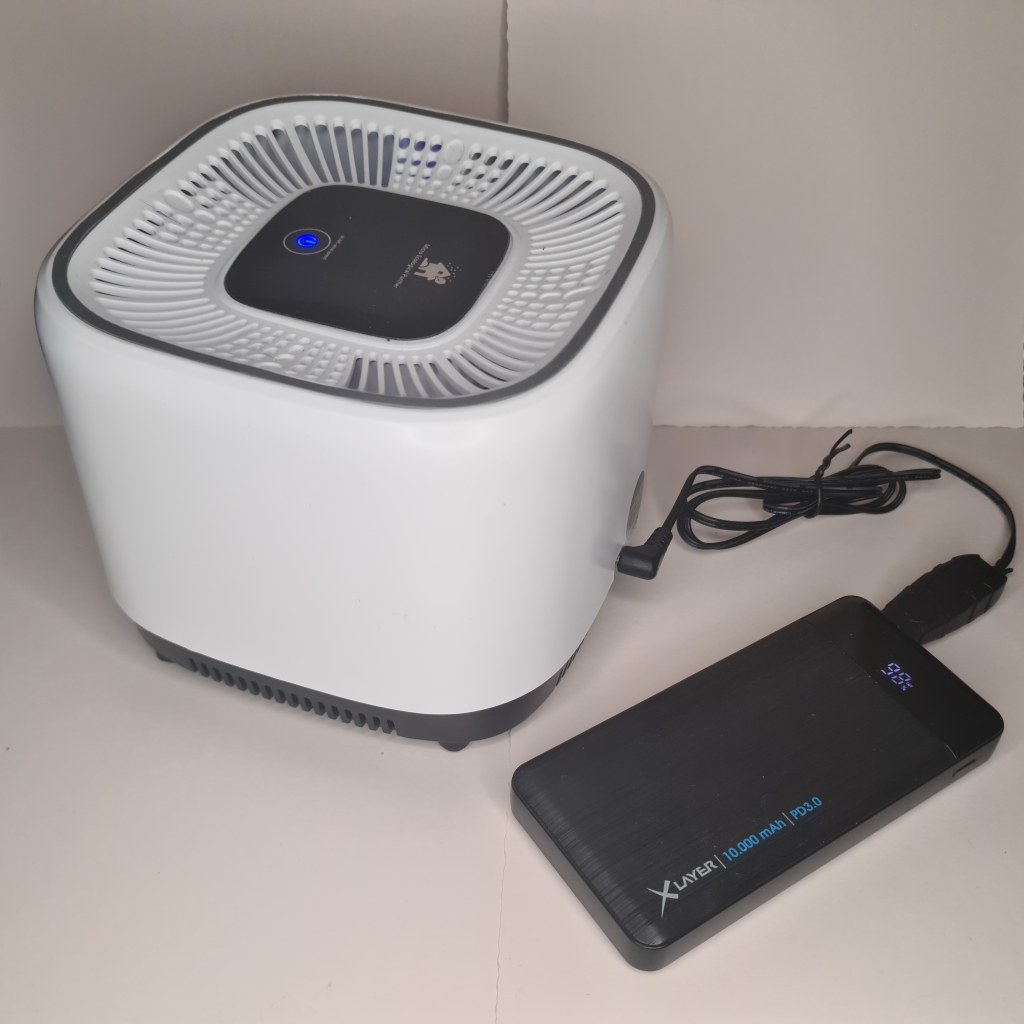
    Portable HEPA filter, connected to a battery for a longer charge. Photo by: C.Suthorn / cc-by-sa-4.0 / commons.wikimedia.org

    After I shared my travel experience last week, a couple of readers reached out asking for more details on using a portable HEPA filter, essentially a small air filter that can be moved from one place to another.

    Scientific research has shown that air filters can be valuable tools for reducing the risk of COVID-19, along with other respiratory viruses and pollution concerns, such as wildfire smoke. These filters essentially remove dangerous particles from the air, making indoor spaces safer.

    These air filters can be costly (prices range from $50 to $1,000), but may prove to be a helpful long-term investment if used often. My partner and I used ours while traveling, as well as in our apartment when we have guests over and during periods of intense wildfire smoke pollution in New York City.

    Here are a few tips and resources about using HEPA filters:

    • This spreadsheet, compiled by the air quality recommendations site Clean Air Stars, lists hundreds of portable air filters. For each filter, the spreadsheet includes information about their performance, cost, whether you need to purchase filters separately, and other details.
    • Clean Air Stars also offers a recommendation tool that will suggest how many air cleaner models and at what fan speed might be needed for a room of a given size.
    • This is the portable filter that I use: the QT3 Portable Air Purifier from Smart Air. It’s fairly small and lightweight, and filters 40 cubic meters per hour.
    • You might see filter options boasting their clean air delivery rate, or CADR. This is a measurement of an air purifier’s effectiveness, telling you how much filtered air the machine can provide in a given timespan (cubic meters per hour, cubic feet per minute, etc). For more details, see this blog post from Air Conditioner Lab.
    • Understanding your air filter’s CADR is important because it tells you the range in which your device works. For example, a smaller filter with a lower rating might clean the space immediately in front of you on a train, but would not clean the entire car. Smaller filters might also need to run for a longer time to clean an enclosed space (such as a hotel room).
    • If you’re traveling with an air filter, a portable battery can be helpful to extend the device’s runtime. My filter runs for a couple of hours on its own battery power, but will last for much longer if plugged into a portable battery.
    • Research and recommendations from air filter providers recommend placing your filter close to you and facing you, to get the clean air delivered as close to you as possible. 
    • If you’re also using a CO2 monitor, it’s important to note that the monitor’s reading likely won’t change due to a HEPA filter. CO2 monitors measure clean outdoor air in a space, so they do not register when existing air is filtered. A monitor that measures particle pollution would be needed to see the difference your filter is making.
    • Know when to change your device’s air filter! Many devices have built-in indicators telling you to do this (i.e. a light that flicks on when the filter needs replacement), while others will come with instructions recommending a filter change after a given period of time.
    • Air filter use is not an exact science. While you can find answers to some questions in scientific literature, others might require crowdsourcing on social media or trial and error on your own to find what works best for you. Overall, though, remember that any use of an air filter will be better than taking no steps to clean your air.

    I hope this is helpful. If you have more questions (or would like to share your own recommendations), please reach out!

  • National numbers, July 23

    National numbers, July 23

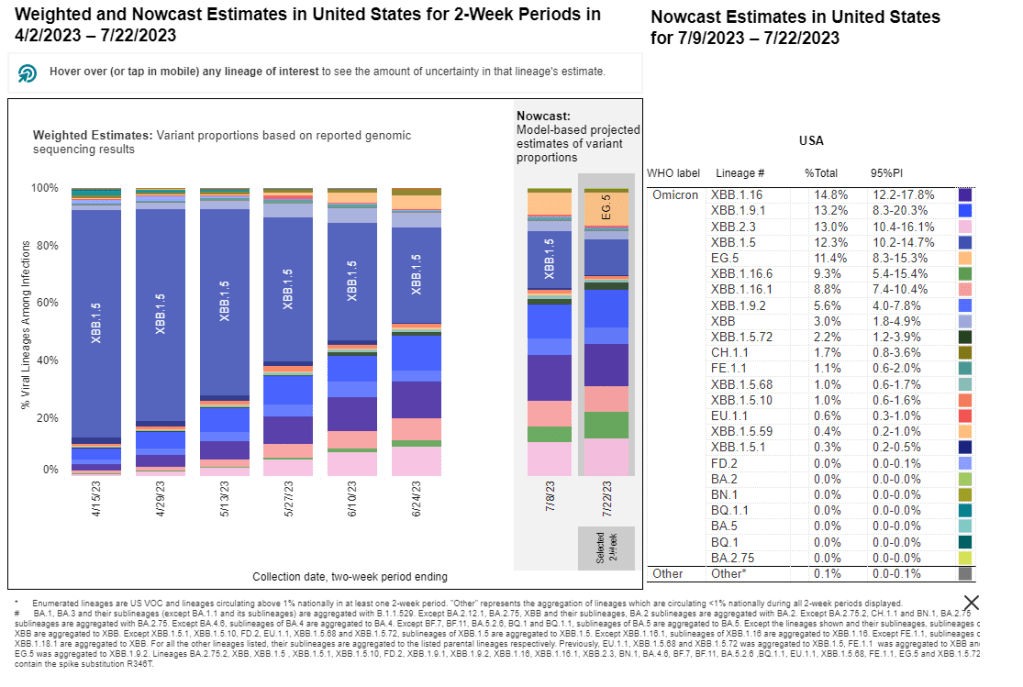
    A wide variety of XBB-related Omicron variants are competing across the U.S. Data from the CDC, as of July 22.

    During the most recent week of data available (July 2 through 8), the U.S. reported about 6,200 new COVID-19 patients admitted to hospitals, according to the CDC. This amounts to:

    • An average of 900 new admissions each day
    • 1.9 total admissions for every 100,000 Americans
    • 1% fewer new admissions than the prior week (June 25-July 1)

    Additionally, the U.S. reported:

    • 6.3% of tests in the CDC’s surveillance network came back positive
    • A 9% higher concentration of SARS-CoV-2 in wastewater than last week (as of July 19, per Biobot’s dashboard)
    • 24% of new cases are caused by Omicron XBB.1.6; 19% by XBB.1.9; 13% by XBB.2.3 (as of July 22)

    COVID-19 data in the U.S. is showing increasingly clear signs of a summer surge, with infections rising across the country. However, thanks to the federal public health emergency’s end, we have less and less data to track this trend.

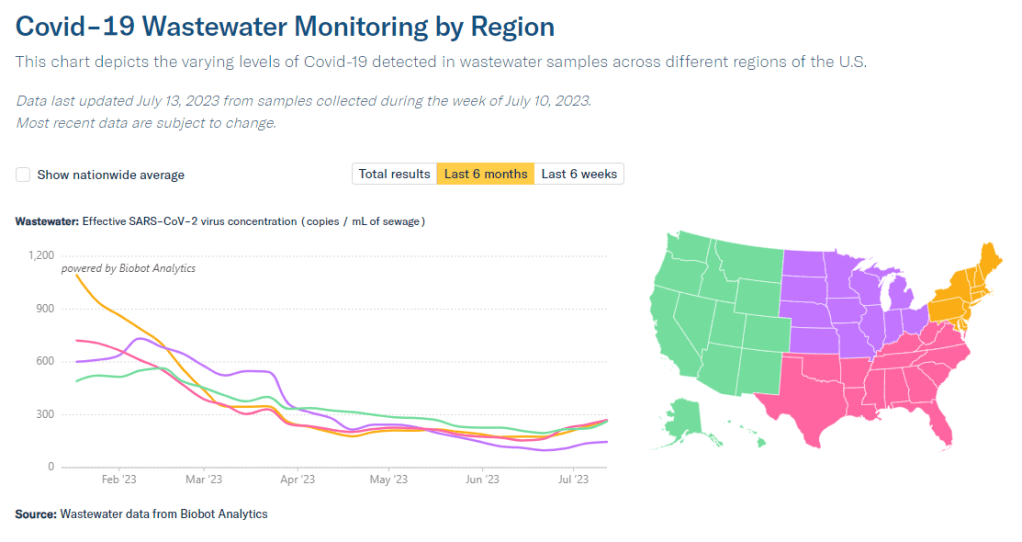
    Wastewater data from Biobot Analytics show that national coronavirus levels have gone up by about 68% in the last month. Current levels are far below this time last year (when the Omicron BA.4/BA.5 surge was in full swing), but still at their highest in several months.

    Biobot’s regional data suggest that the COVID-19 uptick is hitting all major regions. But the increases have been most pronounced in the Northeast and South; coronavirus levels have doubled in both regions in the last month, per Biobot.

    The CDC’s wastewater surveillance network has picked up these increases as well, with more than half of testing sites in this network (with recent data) reporting coronavirus upticks in the last two weeks. Some major cities, such as Boston and Los Angeles, are also reflecting the increase.

    Test positivity data from the CDC also show the increasing COVID-19 spread: nationally, test positivity from the labs in the agency’s surveillance network has gone up from 4.3% one month ago to 6.3% in the most recent week of data. The most prominent increases for this metric are similarly in the Northeast and South, and in the health region including Oregon, Washington, Idaho, and Alaska.

    One metric not yet showing an increase is the CDC’s hospital admissions data. But the agency has continued to report these data with a lag: as of today, the most recent hospitalization numbers are as of July 8, two weeks ago. The CDC has yet to provide a clear explanation for this reporting lag.

    Either way, the data we do have give us sufficient warnings about this summer’s uptick in COVID-19 spread. One likely culprit is the continued evolution of Omicron XBB: about 15 different subvariants are currently competing, according to the CDC’s latest data. No variant seems to be a clear winner yet.

    Regardless of which variant comes to dominate next, the same safety measures continue to work against COVID-19.

  • COVID source shout-out: Free PCR tests from Walgreens

    In May 2023, the Department of Health and Human Services (HHS), Walgreens, and Labcorp started offering free PCR tests at select pharmacy locations. The program appears to still be available following the end of the federal public health emergency.

    Through the program, Americans can pick up a free kit to take a PCR test at home, then ship their sample to Labcorp for analysis. No insurance information is required. Results should be available within two days of the lab receiving the patient’s sample, according to Walgreens. About 1,000 Walgreens locations across the country are stocking these free tests, but they need to be picked up in person.

    I learned about this Walgreens program from the People’s CDC, which included it in their Weather Report newsletter on July 10. The newsletter suggests this program is recent, though I haven’t been able to find any other news about it besides a press release from May 2022. So, either tests are still available from the original iteration of the program or Walgreens revamped it recently.

    Either way, this Walgreens program is a helpful option for anyone looking to get a free PCR test—though it’s obviously far below the extensive, accessible PCR testing network that the U.S. continues to need. If any readers try this out, I would be curious to learn about your experience!

  • Sources and updates, July 16

    • Real-time detection of coronavirus in the air: A new study, published this week in Nature Communications, describes a tool to detect airborne SARS-CoV-2 particles. Researchers at Washington University in St. Louis developed this tool; it works by collecting aerosols in a container and screening them for chemical properties matching the coronavirus spike protein. In the researcher’s proof-of-concept study, the detector tool was able to detect coronavirus particles with 77% to 83% accuracy, and could detect the virus when it was present at relatively small volumes. If the tool holds up to further tests, it could be valuable for monitoring healthcare settings and other public places.
    • Routine respiratory virus testing at K-12 schools: Another study about testing, published in the CDC’s Morbidity and Mortality Weekly Report: researchers in Kansas City, Missouri regularly tested students and staff members at the public school district for SARS-CoV-2, the flu, RSV, and several other common respiratory viruses. About 900 participants opted into monthly testing for the 2022-23 school year, for a total of 3,200 tests conducted. Overall, about one in four tests were positive for at least one respiratory virus. Pre-K students had the highest positivity rate (40%), while rhinovirus/enterovirus was most commonly detected. The study shows how many viruses are going around in school settings, as well as the potential value of testing for reducing spread.
    • Predicting COVID-19 activity with Google searches: COVID-19 data commentators have long suspected that online trends indicating people were losing their sense of smell or taste in large numbers could predict an upcoming surge. (Remember the Yankee Candle Index?) Well, a new study in the CDC’s Emerging Infectious Diseases journal provides some evidence for this pattern. Researchers at Yale and Columbia Universities compared Google search trends for “loss of smell” and “loss of taste” to COVID-19 hospitalization and death numbers in five countries. They found a strong correlation between these searches and COVID-19 increases for major COVID-19 waves. So, even as official data become less available, online trends may still be a good indicator.
    • Estimating infection rates from mortality data: COVID-19 mortality data can be used to work backward and estimate true infection rates, according to a new paper in Science by researchers at the University of California Davis and the University of the Basque Country (in Spain). The scientists used a machine learning model to analyze death reports from several European countries, essentially predicting infection rates in reverse. Their analysis found that lockdowns and mask requirements, among other COVID-19 safety measures, had a major impact on transmission, one of the authors said in a press release. Mortality data continues to present a useful tool for tracking COVID-19’s full impact.
    • Long COVID cohort study suggests full recovery may be rare: One more notable new study, shared by The Lancet as a preprint: researchers at a hospital in Barcelona shared the results of a study following Long COVID patients for two years. The study followed 548 people, including 341 with Long COVID and 207 who did not have long-term symptoms after acute COVID-19. Only 26 (7.6%) of the Long COVID patients recovered during the two-year follow-up period, according to symptom surveys and diagnostic testing. Hannah Davis, a patient-researcher at the Patient-Led Research Collaborative, shared additional highlights and takeaways from the study in a Twitter thread.
    • New bill to strengthen wastewater surveillance: Finally, a bit of hopeful news: three U.S. senators just introduced a bipartisan bill that would strengthen the CDC’s National Wastewater Surveillance System (NWSS). The bill would specifically expand NWSS to include surveillance for other public health threats, and would enable it to provide more funding to state and local health agencies. Cory Booker from New Jersey, Angus King from Maine, and Mitt Romney from Utah are the three sponsors. I’m not a political reporter, so I won’t pretend to know how likely this bill’s chances are of passing, but I hope it’s a step toward making the U.S.’s wastewater surveillance infrastructure permanent.

    Editor’s note, July 23, 2023: An earlier version of this post misstated the virus most commonly detected in the Kansas City schools study. (It was rhinovirus/enterovirus, not RSV.)

  • How my partner and I stayed safe during summer travel

    How my partner and I stayed safe during summer travel

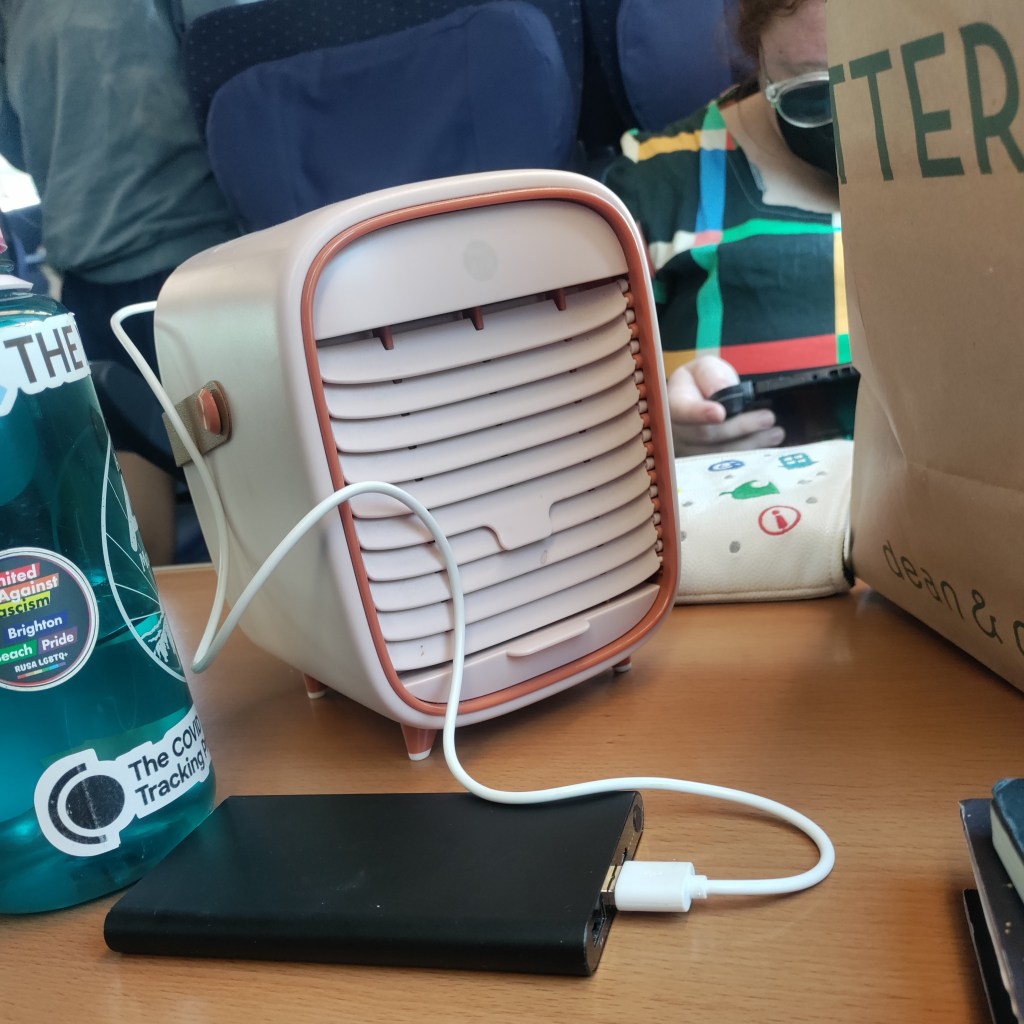
    Betsy and her partner’s portable HEPA filter, pictured on the train from Berlin to Brussels. Her partner (in an N95 mask) is visible in the background.

    A few days ago, my partner and I returned home from a two-week vacation to several cities in Europe. It was our first time traveling internationally since before the COVID-19 pandemic, and the trip required a lot of time on planes, on public transportation, and in crowded spaces.

    I’m sharing what we did to reduce our risk of COVID-19 (and other common pathogens!) during the trip, in the hope that this will be helpful for readers traveling this summer. While taking these sorts of precautions may be increasingly unpopular in many places, these measures still reduce the risk of illness for individual travelers and the people around them.

    Here’s what we did:

    • Reduced potential exposure and tested before we traveled: It’s pretty typical for me to avoid crowds and indoor events prior to traveling. In this case, my partner and I did attend Pride marches in New York City the weekend before our trip, but we only attended outdoor events and wore masks in the crowds to reduce our risk. We also both got PCR tests the day before leaving (we’re lucky to live near one of the few public testing sites in the city that are still open).
    • Masked indoors, with high-quality masks: I consistently wore N95 masks on the trip, including my reusable respirator on planes. (I wrote more about my respirator in this post last summer.) My partner also wore an N95 or KN95 throughout the trip. We have different preferences for which masks fit us well, so we had a few masks of different brands packed to accommodate that.
    • Avoided indoor dining (as much as possible): All of our meals were outdoors. My partner is vegan, so any restaurant where we ate had to fit into a Venn diagram of “vegan options” plus “outdoor seating”; this might sound challenging to find, but with a bit of planning—and with thanks to the Happy Cow app—it was actually quite doable. We had to eat briefly on planes at a couple of points, but we minimized that time as much as possible (eg. masking in between bites) and did so only when plane air filtration systems were going.
    • Took advantage of smoking sections: European cities tend to have a more prominent smoking culture than the U.S., so many restaurants and bars have outdoor smoking sections. This can be a tricky situation for COVID-cautious travelers; yes, you’re outside, but you’re also breathing in a lot of second-hand smoke. Still, my partner and I found these sections to be a helpful option. We even had lunch in an outdoor smoking zone at the Keflavik Airport (in Iceland) during a layover on our way home to NYC.
    • Used a CO2 monitor to gauge ventilation in some spaces: I am a proud owner of an Aranet CO2 monitor, which I mostly use to track ventilation at my apartment and public spaces in NYC. I brought the monitor on the trip, and used it to identify which public buildings had better air quality. For example, train platforms at Berlin Hauptbahnhof (the city’s central train station) are open to outdoor air and have frequent airflow, as evidenced by a CO2 reading I took of 611 ppm—well within the Aranet monitor’s “green zone.” So, I felt comfortable taking off my mask there for a few minutes to drink coffee.
    • Used a HEPA filter on trains, hotel rooms: My partner and I have a personal, portable HEPA filter that runs on a battery and fits easily in my duffel bag. I brought it along on the trip and used it a few times, mostly on crowded trains and in hotel rooms that did not have great airflow. It also doubled as an extra fan in our Airbnb in Amsterdam (which was not air-conditioned).
    • Rapid-tested every two days: Over the two weeks of traveling, my partner and I took a rapid test every two days to check for any developing illness. We also requested testing from friends and family members with whom we spent time indoors, such as a friend whom we stayed with in Berlin.
    • Testing and symptom monitoring after getting home: Since arriving home in NYC on Wednesday evening, my partner and I have each gotten PCR tests. I also rapid-tested once, as an extra check before attending an event on Thursday. We’re planning to do another round of PCR testing next week and monitor for any symptoms; so far, we haven’t seen any signs of illness.

    I acknowledge that these safety measures may sound like a lot of effort. Certainly, tools like rapid tests and a personal HEPA filter cost money, and may not be accessible to many people. And in an ideal world, everyone would be able to travel in a world where these tools are free and commonplace, rather than a reason for extra advanced planning.

    There are also increasing social pressures to not take precautions, especially in some of the places that we visited. I had a few conversations with strangers who insisted I was strange for wearing an N95, that COVID-19 was “over”; I was even patted down and pulled into a security screening at the Amsterdam airport by guards who decided my respirator was suspicious.

    I am the kind of person who doesn’t back down to this pressure, especially when I have the research and reporting to back up my convictions. But I don’t want to be an isolated person taking precautions in a sea of others who aren’t acting to protect public health.

    Broader change is really needed; in the meantime, though, I hope my experience is informative for others.
    If you are also traveling this summer and you have other tips you’d like to share with the COVID-19 Data Dispatch community, please send them to me! You can email me or comment on this post.

  • National numbers, July 16

    National numbers, July 16

    Wastewater surveillance data from Biobot indicate that three out of four major U.S. regions are experiencing increased COVID-19 spread.

    In the past week (July 2 through 8), the CDC did not update COVID-19 hospitalization data for unclear reasons. During the most recent week of data available (June 25 through July 1), the U.S. reported about 6,200 new COVID-19 patients admitted to hospitals, according to the CDC. This amounts to:

    • An average of 900 new admissions each day
    • 1.9 total admissions for every 100,000 Americans
    • 1% fewer new admissions than the prior week (June 18-24)

    Additionally, the U.S. reported:

    • 5.5% of tests in the CDC’s surveillance network came back positive
    • A 13% higher concentration of SARS-CoV-2 in wastewater than last week (as of July 12, per Biobot’s dashboard)
    • 32% of new cases are caused by Omicron XBB.1.6; 15% by XBB.1.9; 13% by XBB.2.3 (as of July 8)

    National COVID-19 data are showing signs of a summer uptick in infections across multiple regions. Newer variants, summer travel, and holidays are likely contributing to this increase, though it’s hard to say if we will see a real surge or a continued shifting of the U.S.’s high COVID-19 baseline.

    Wastewater surveillance data from Biobot Analytics show a significant uptick in coronavirus levels over the last month, with an increase of about 50% from June 14 to July 12. Three out of four major U.S. regions (the Northeast, South, and West Coast) report notable increases, while the Midwest reports a slower uptick.

    The CDC’s National Wastewater Surveillance System (NWSS) is not yet showing a pronounced increase. Of the testing sites in this network that reported data in the last two weeks, about half reported upticks while the others reported declines or plateaus. However, NWSS data tend to be updated on a more delayed schedule than Biobot’s dashboard, since the CDC compiles information from a number of state and local health agencies.

    As epidemiologist Caitlin Rivers points out in her Substack post describing the wastewater trend, COVID-19 summer waves in the U.S. tend to start in the South. Some experts attribute this to more indoor summer activities in the region, but there’s little data to back this up, Rivers writes. Plus, this year, the summer uptick has appeared to start in multiple regions of the country at the same time.

    In addition to the wastewater data, test positivity data from the CDCs National Respiratory and Enteric Virus Surveillance System (NREVSS) show a similar uptick in the last month: from 4.1% of COVID-19 tests returning positive results in the week ending June 10 to 5.5% in the week ending July 8. Remember, this NREVSS doesn’t share data from all PCR tests done in the U.S. (as the CDC no longer has authority to collect this information); but it is set up to provide national and regional estimates.

    According to NREVSS, COVID-19 test positivity is going up in several major regions, including New York and New Jersey, the Mid-Atlantic, the South, the Gulf Coast, and the Northwest. All of these regions are dealing with the Omicron XBB variant’s continued evolution; in the CDC’s most recent variant update on July 8, the agency listed 12 different XBB subvariants competing for hosts.

    The CDC failed to update its COVID-19 hospitalization data this week, so the most recent available data are from the week ending July 1. Typically, the agency’s data scientists will add notes to their dashboard explaining update delays or errors, but this week, I couldn’t find anything.

    As I wrote on June 25: sometimes, I wonder if the CDC doesn’t think anyone is checking their dashboard anymore. But we are! COVID-19 data may be more limited than ever, but we still have enough information to know when cases are ticking up again—and we know the measures needed to protect ourselves and our communities.

  • COVID source shout-out: excess deaths estimates

    This week, a team of demography researchers published a paper sharing excess death estimates by county, for the first two years of the COVID-19 pandemic. The team, led by Andrew Stokes at Boston University, has been analyzing excess death data for years in order to understand the true toll of COVID-19 on the U.S.

    To measure excess deaths, researchers compare the number of deaths that they’d expect to occur in a given place, over a given timeframe—based on modeling from historical data—to the number of deaths that actually happened. This metric is a helpful one for COVID-19 research, because official COVID-19 deaths are undercounted for a variety of reasons. (To name a few: lack of standards for death certificates, politicization of the pandemic, health equity issues.)

    Especially now that official COVID-19 data are becoming less and less reliable, I see excess deaths as a useful avenue for continued reporting on the pandemic. And for any journalists or researchers interested in looking into this issue, Stokes and his team’s work is a great starting point. I collaborated with them for MuckRock’s Uncounted project, using a preprint iteration of the paper published this week.

    For more info on this topic, see the Uncounted project and this 2021 post about excess death data from the CDC.

  • Sources & updates, June 25

    • Commonwealth Fund releases 2023 state health scorecard: This week, health research organization the Commonwealth Fund published its 2023 rankings of state health systems. These rankings are an extensive data source for anyone seeking to better understand the decentralized health system in the U.S., and may be particularly useful for local reporters looking for data on how their state compares to others. In the 2023 rankings, the researchers have added new metrics related to care and health outcomes for women, mothers, and infants. This year’s data also highlight preventable deaths from COVID-19 and other causes, and state efforts to take people off of Medicaid following the pandemic emergency’s end.
    • New advisory about Long COVID and mental health: The U.S. Substance Abuse and Mental Health Services Administration (SAMHSA), a federal health agency under the overall Department of Health and Human Services (HHS), published a detailed advisory explaining the mental health implications of Long COVID. This advisory is directed at primary care doctors who may be seeing Long COVID among their patients, as well as others in the medical community who may benefit from the information. SAMHSA highlights that mental health symptoms may result from a coronavirus infection itself as well as from the stress and social isolation that long-haulers experience. For more on this topic, check out this article I wrote last year.
    • Rapid test accuracy can vary widely: A common question that I’ve received from readers in the last few months has been, “How accurate are rapid tests with newer variants?” A new study, published last week in the journal Microbiology Spectrum, offers some insight. The researchers (a team at CalTech) found that rapid tests still work to detect the coronavirus, but their accuracy varies based on viral load and specimen type. Tests that involved swabbing the patient’s throat (along with their nose) were significantly more accurate than nose swabs alone. Tests conducted later in the course of a patients’ infection, when they had higher viral loads, were also more accurate, though some patients never tested positive on rapid tests despite testing positive on PCR. My takeaway here: swabbing your throat and testing multiple times help improve accuracy, but the best option is always to get a PCR if you can.
    • CDC and state agencies track reinfections: Another new study, published this week in the CDC’s Morbidity and Mortality Weekly Report, examines coronavirus reinfections in the era of Omicron. Researchers at the CDC and 18 state and local health departments collaborated to track reinfections from September 2021 through December 2022, finding that these infections went up significantly when Omicron arrived in late 2021. The median time between infections ranged from 269 to 411 days, the researchers found, suggesting that Americans may expect to be sick with COVID-19 once or twice a year while our Omicron baseline persists. 
    • COVID-19 risk and air pollution exposure: One more study I wanted to highlight this week: researchers at Hasselt University in Belgium tracked the air pollution exposures of about 330 COVID-19 patients at hospitals in Belgium. Patients who were exposed to worse air pollution prior to their admission experienced more severe COVID-19 outcomes, including longer hospitalization and admission to the ICU. This paper provides further confirmation that poor air quality and COVID-19 can be compounding health problems for many people.
    • Data problems persist with non-COVID vaccines: The CDC’s vaccine advisory committee met this week to discuss two new RSV vaccine candidates, recently approved by the FDA for seniors. While the CDC committee did vote to recommend these vaccines, I was struck by discussion (in Helen Branswell’s coverage for STAT) that the experts said they did not have sufficient data to make a truly informed decision. I’ve written a lot about data issues for COVID-19 vaccines; the same decentralized health system problems that make it hard to track COVID-19 vaccine effectiveness also apply to products for other diseases.

  • COVID-19 safety and solidarity at Pride: A reflection

    COVID-19 safety and solidarity at Pride: A reflection

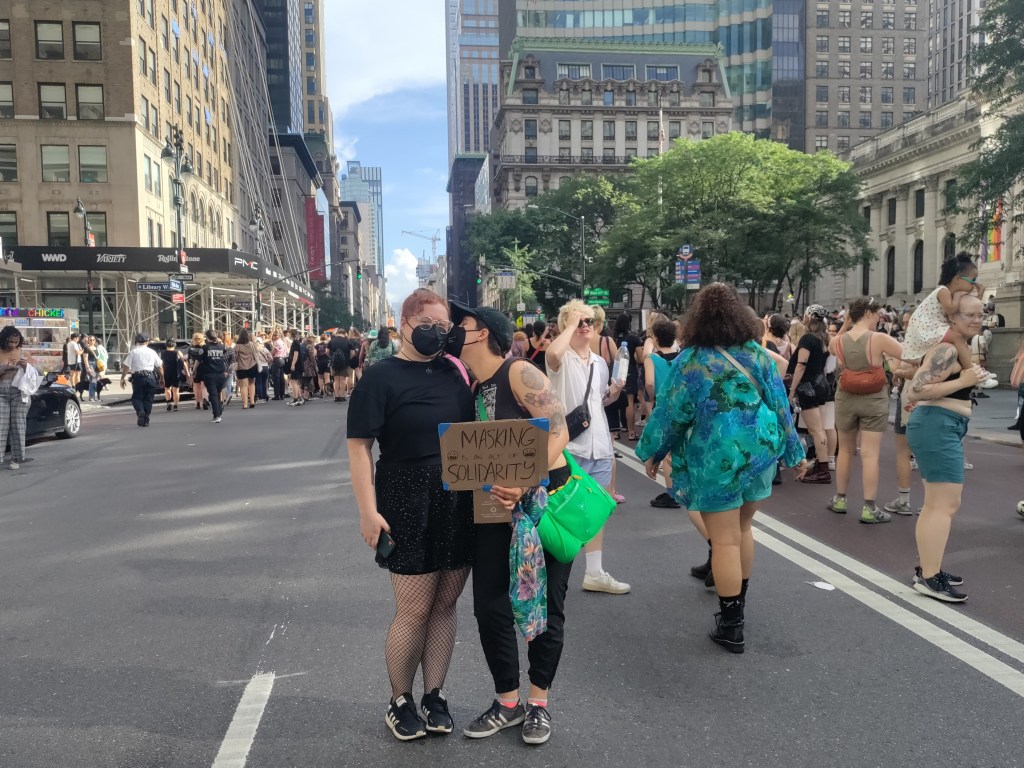
    Betsy (center, right) and her partner Laura (left) at the NYC Dyke March, masked up in KN95s.

    For years, Pride has been my favorite holiday. I love the crowds, the parties, the marches (not the parades with corporate floats, but the people-led marches), the explosions of anger and joy, the connections with my community.

    COVID-era Pride has been more complicated than past years, as we layer safety measures onto the celebration. For me and many others I know in the LGBTQ+ community, Pride has become an opportunity to reflect on the importance of connecting this community and those calling for COVID-19 safety—disabled and immunocompromised people, those with Long COVID, and others at higher risk. This practice can be challenging, as others push for a return to the Pride we knew before the pandemic. But it’s not impossible, especially when we remember our values of inclusion and solidarity.

    This year, one of the biggest Pride marches in New York City became emblematic of the tension between safety and a desire to party like it’s 2019. Called Queer Liberation March, this march originated in local organizers’ desires to protest on Pride, honoring the legacy of the original Stonewall protest. (Official NYC Pride, also called “Corporate Pride” by many, has become sanitized over time, to the point that you’re more likely to see corporate floats and politicians than community leaders.) So, Queer Liberation March offers an alternative; I’ve attended it since the first iteration in 2019, which commemorated 50 years since Stonewall.

    A few weeks ago, Queer Liberation March garnered negative attention on social media due to an apparent disregard for COVID-19 safety. When a commenter on the march’s Instagram asked whether masks would be required at the march, an organizer with access to that Instagram account responded with a tirade dismissing the idea of any mask requirement, even suggesting that people who wanted to mask would not be welcome at the march. Obviously, many LGBTQ+ New Yorkers pushed back, expressing anger and disappointment that a Pride protest would exclude our community’s higher-risk members.

    The march’s organizers listened and deliberated. Queer Liberation March has not had explicit COVID-19 safety protocols in 2020, 2021, or 2022, though the march partnered with local health organizations to offer easy vaccine access for people at Pride. (This year, organizations are offering sexual health resources, such as HIV testing and mpox vaccines.) But the community response suggested that, this year, the march had to do more to prioritize COVID-19 safety.

    I actually reached out myself to Queer Liberation March’s organizers; I wasn’t acting as a journalist, but as a member of the Rude Mechanical Orchestra, a band that plays regularly at marches and rallies around the city, including past iterations of this march. Through conversations with a couple of the organizers, I shared resources on COVID-19 safety and walked through how my band approaches this topic. (You can read more about that on our website, though note that our data protocols are due for an update, and in this Science News article I wrote in 2021.)

    Eventually, Queer Liberation March announced a safety policy. The march recommends that attendees mask up, along with testing before and after the event. Organizers are also coordinating mask-required sections at the front and back of the march, which will be protected by marshals equipped with extra masks to hand out. This policy is far from perfect; the “masking section” strategy in particular has garnered some criticism for essentially segregating higher-risk marchers from those who see COVID-19 safety as less of a priority.

    Though it’s not perfect, I was personally glad to see these safety steps at one of NYC’s biggest Pride events. Another large march, the Dyke March (which took place yesterday), adopted similar strategies. When my partner and I attended the Dyke March, we masked up in KN95s and saw quite a few other attendees doing the same. One marshall offered to direct us to that march’s mask-required section. I also saw marshalls pushing wheelchairs for marchers who weren’t able to walk the full 40 blocks—another important step towards accessibility.

    The Queer Liberation March is happening this afternoon. Around the time you read this post, I’ll probably be at the starting point, lining up with my band. So I can’t say yet how successful their COVID-19 safety policies will be. But I still wanted to highlight this march as an example, to show that 2023 is not too late to change course and adopt some safety measures. If NYC’s biggest (non-corporate) Pride marches can do it, no other organizers should have an excuse not to.

    Solidarity is a wide tent. Pride is for all LGBTQ+ people, including those who are disabled, chronically ill, or simply can’t afford to miss work for two weeks. If a Pride event doesn’t include these groups, it isn’t a true Pride event. And inclusion is easier than you think. Many people will test if you ask them, or will mask for a few hours if you ask them—especially if you explain why it’s important, using the terms of their community: “We keep us safe.”