Tag: XBB.1.5

  • HV.1, JN.1: Variants to watch this fall and how we’re tracking them

    HV.1, JN.1: Variants to watch this fall and how we’re tracking them

    HV.1, a relative of the XBB.1.5 variant family, is the most prevalent variant in the U.S. right now, according to CDC estimates.

    As winter approaches, pretty much every public health expert I follow is anticipating a COVID-19 surge. Experts anticipate that indoor gatherings and travel for the holiday season—with fewer COVID-19 precautions than we had earlier in the pandemic—will lead to more disease spread, just as these behaviors have historically contributed to more spread of flu and other common pathogens this time of year.

    While it seems a surge is likely, the size and severity of that surge may depend in part on SARS-CoV-2 variants. Variants can evolve to more efficiently reinfect people who got COVID-19 recently or to evade our vaccines. These explosive variants can add fuel to the fire when people are already spending a lot of time indoors together with relatively few precautions, as we saw with the original Omicron in winter 2021-22. 

    As a result, experts are closely watching a few current variants that might lead to faster COVID-19 spread this winter. Here’s a review of what’s circulating right now, what to watch for in the coming weeks, and how our public health system is tracking the variants.

    XBB.1.5 and relatives

    Omicron XBB emerged in late 2022 when two different versions of BA.2, one of the first Omicron lineages, merged together in an evolutionary process called recombination. While the original XBB didn’t really take off globally, it started to mutate as it spread in the U.S., leading to XBB.1.5 in early 2023. See my FAQ post from January for more details.

    XBB.1.5 has remained a dominant lineage in the U.S. and globally for much of this year. Scientists tracking variants have mostly identified new variants that descend from XBB.1.5, though you might not guess it from the naming schemes which often shorten names for convenience (for example, XBB.1.9.2.5 became EG.5). As a result, the FDA advised vaccine manufacturers to base their COVID-19 shots for this year on XBB.1.5.

    EG.5 and FL.5.1

    EG.5 and FL.5.1 are two of those XBB.1.5 relatives, descended from the XBB recombinant variant with enough evolutionary steps that virologists gave them these shorthand titles. These two variants are notable because they share a specific mutation, dubbed “FLip,” which helped the variants reinfect people more easily after prior infection or vaccination.

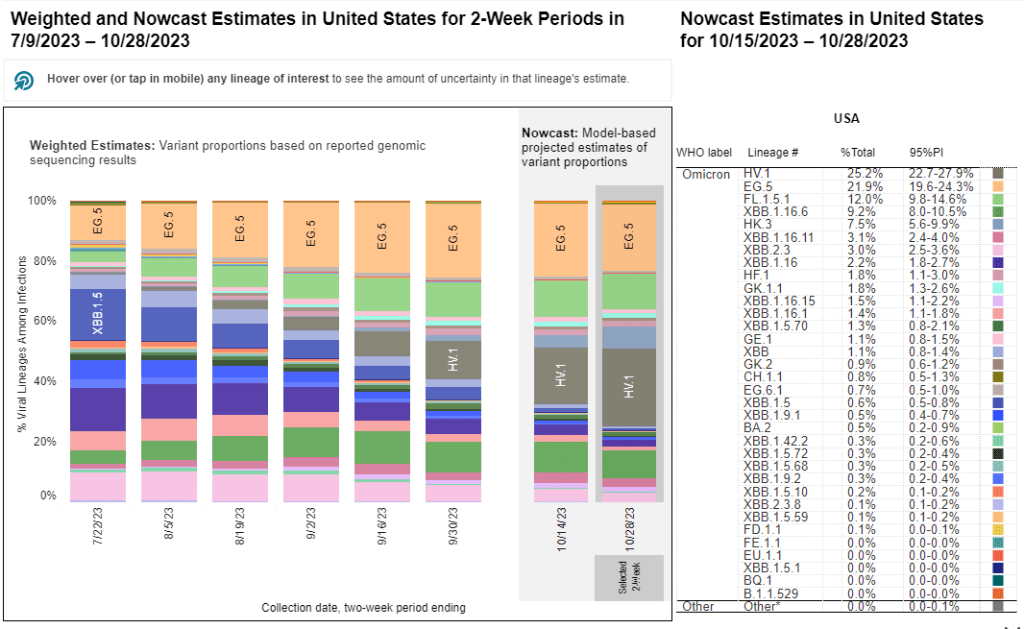
    The CDC’s variant surveillance estimates suggest that EG.5 and FL.5.1 have been prominent—but not really dominant—variants in the U.S. this fall. In the CDC’s most recent update, the agency estimates that these variants caused 22% and 12% of cases respectively during the two weeks ending October 28. They don’t appear different enough from other XBB.1.5 relatives to really break through and cause a surge.

    HV.1, descendant of EG.5

    HV.1 evolved from EG.5, making it another XBB.1.5 relative. It’s the most common variant in the U.S. right now, with the CDC’s latest update estimating that it caused about one in four COVID-19 cases during the last two weeks. Like the other variants discussed above, HV.1 has a slight evolutionary advantage over its relatives; but it’s not significantly different enough to cause a huge surge right now.

    BA.2.86

    BA.2.86 got some attention when it emerged in August. This variant, unlike the others that have circulated in 2023, is not related to XBB.1.5. Instead, it takes us back in the coronavirus’ evolution, as it evolved directly from BA.2—a version of Omicron that spread widely back in early 2022. Scientists expressed concern about some worrying mutations in BA.2.86 and wondered if our vaccines, matched to XBB.1.5, might not work well against it.

    Two months later, BA.2.86 hasn’t spread widely around the world as scientists worried that it might. It doesn’t appear to have a huge advantage over the XBB.1.5 descendants. While CDC surveillance has identified BA.2.86 across the U.S., it’s caused less than 1% of cases, according to the agency’s estimates.

    JN.1, descendant of BA.2.86

    But BA.2.86 could still indirectly cause some problems: this variant, like all the others, has been mutating. In the last couple of weeks, scientists have started to closely watch one BA.2.86 descendant called JN.1. JN.1 has picked up mutations that make it better at evading immunity from past infections or vaccinations, leading, of course, to faster spread.

    Eric Topol describes the global rise of JN.1 in a recent Substack post:

    JN.1 has shown up in many countries now, besides France and the UK, including the US, Iceland, Portugal, Belgium, Israel, Spain, Netherlands, Canada Germany, and Singapore. Other derivatives of BA.2.86 such as JN.2 and JN.3 are also being identified in multiple countries.

    We won’t know for a few weeks as to whether JN.1 will be linked with a significant rise in COVID or how well our immune response from prior vaccinations, infection(s) and the XBB.1.5 new booster will keep us protected.

    So, while BA.2.86 itself may be more benign than expected, JN.1 and its relatives are worth watching. Sequence data shared in the global repository GISAID suggest that this variant is spreading quickly globally, and may be contributing to increased spread in France in particular.

    How we’re tracking variants

    As I described in my post about BA.2.86, the U.S. has a few ways of tracking variants. The CDC recently highlighted four key surveillance systems in a report about monitoring BA.2.86, published in the agency’s Morbidity and Mortality Weekly Report:

    • The national SARS-CoV-2 genomic surveillance program, in which the CDC and commercial partners anonymously select and sequence samples from people who had positive COVID-19 PCR tests;
    • The Traveler-based Genomic Surveillance program, in which international travelers returning to U.S. airports can voluntarily get PCR-tested in groups;
    • The National Wastewater Surveillance System, in which some public health labs sequence sewage samples that are part of the CDC’s wastewater surveillance program (with about 400 sewersheds participating in sequencing);
    • Digital public health surveillance, using coronavirus sequences that are shared on public, open-source platforms like GISAID.

    CDC scientists use all four of these systems to keep track of variants circulating in the U.S. Sequencing wastewater samples is particularly important these days with fewer PCR tests available, I argued in a post last month.

    Variants don’t happen in isolation

    Sometimes, news reports about coronavirus variants cover the virus’ evolution as though it happens in isolation. Like the virus is just mutating in a vacuum, and would do so forever regardless of our human behavior.

    But this isn’t accurate. The coronavirus mutates because we keep spreading it, with each infection creating an opportunity for new mutations to arise. If our public institutions really took measures to stop COVID-19 from spreading, it would also be much harder for the virus to keep evolving and evading us.

    As variant expert J.P. Weiland pointed out on Twitter: “Timing is so important for impact.  If it [JN.1] becomes dominant before the holidays, the wave will be quite a lot bigger than dominance in Jan.”

    So, in case you need another motivator to keep up the COVID-19 precautions this holiday season: consider it doing your part to reduce viral evolution.
    More variant data

  • New COVID-19 vaccines are now available: 10 key facts and statistics about these shots

    New COVID-19 vaccines are now available: 10 key facts and statistics about these shots

    Data from a CDC presentation suggest that people of all ages, including children, receive a benefit from updated COVID-19 vaccines.

    We now have two new COVID-19 vaccines available for this year’s respiratory virus season, one from Pfizer and one from Moderna, which are expected to perform well against current variants. The FDA approved both vaccines this week, and the CDC recommended them for almost all Americans.  A third option, from Novavax, may become available in the coming weeks as well.

    The federal government aims to present this fall’s shots as the next iteration in routine, annual COVID-19 vaccines—similar to the routine we’re all used to for flu shots. In fact, I’ve seen some news suggesting that the federal health agencies don’t want us to call these shots “boosters,” instead calling them “updated” shots or annual shots.

    But this fall’s vaccine rollout is likely to be anything but routine, as it’s the first rollout following the end of the federal COVID-19 public health emergencies. The government is no longer purchasing shots and distributing them for free; now, insurance companies will have to cover the shots.

    As a result, many Americans—especially those without health insurance—will have a harder time accessing these vaccines than they have for previous shots. Plus, the federal emergency’s end will make it harder for us to track how the vaccines are performing, as the coronavirus continues to evolve into new variants.

    With all of these complications in mind, here are ten key facts and statistics that you should know about this fall’s COVID-19 vaccines.

    Pfizer and Moderna’s shots have been approved and recommended for all Americans, ages six months and older.

    Despite some debates among scientists about whether younger people really need updated COVID-19 shots, the FDA has approved these vaccines—and the CDC has recommended them— for all age groups. This is important because CDC recommendations are often the basis for insurance coverage, as experts explained at a webinar hosted by the National Press Foundation on Tuesday.

    The shots exclusively target XBB.1.5, a coronavirus lineage that is common in the U.S. and globally right now.

    According to the CDC’s genomic surveillance program, almost all cases in the U.S. in recent weeks have been caused by XBB.1.5 or related variants from the XBB lineage. Variants like EG.5 and FL.1.5.1 are also XBB descendants, which have been given nicknames to make it a bit easier for scientists to keep track of them.

    It’s also important to note that, unlike last year’s boosters, this fall’s shots are monovalent vaccines—meaning they only target XBB.1.5. The shots no longer target the original strain of SARS-CoV-2 that first circulated in 2020. Scientists generally approve of this choice, as the virus has mutated so much since that time.

    Moderna’s booster led to a 17-fold increase in antibodies against XBB.1.5 and XBB.1.6.

    The vaccine companies presented data to the CDC’s vaccine advisory committee on Tuesday. Moderna’s presentation included results from a study testing its new vaccine against several different variants, using blood samples from people who received the booster.

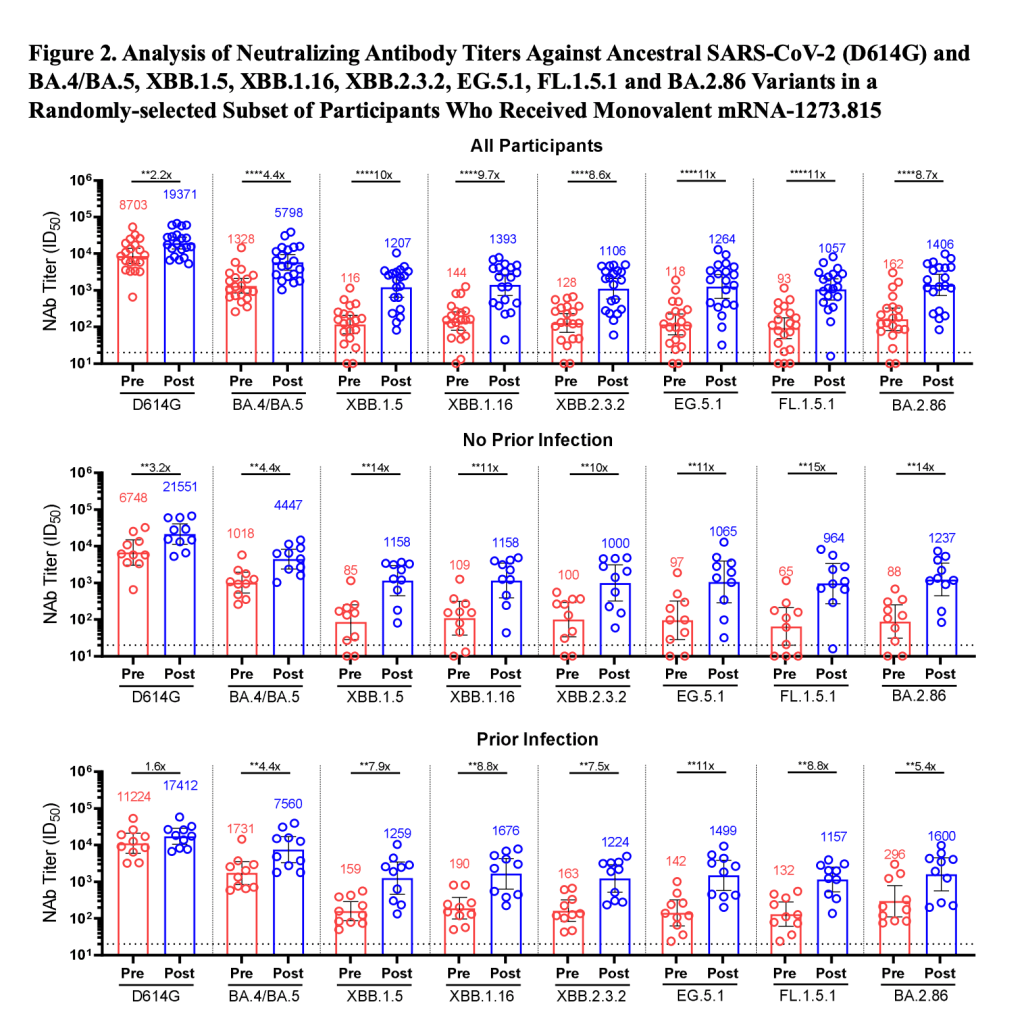
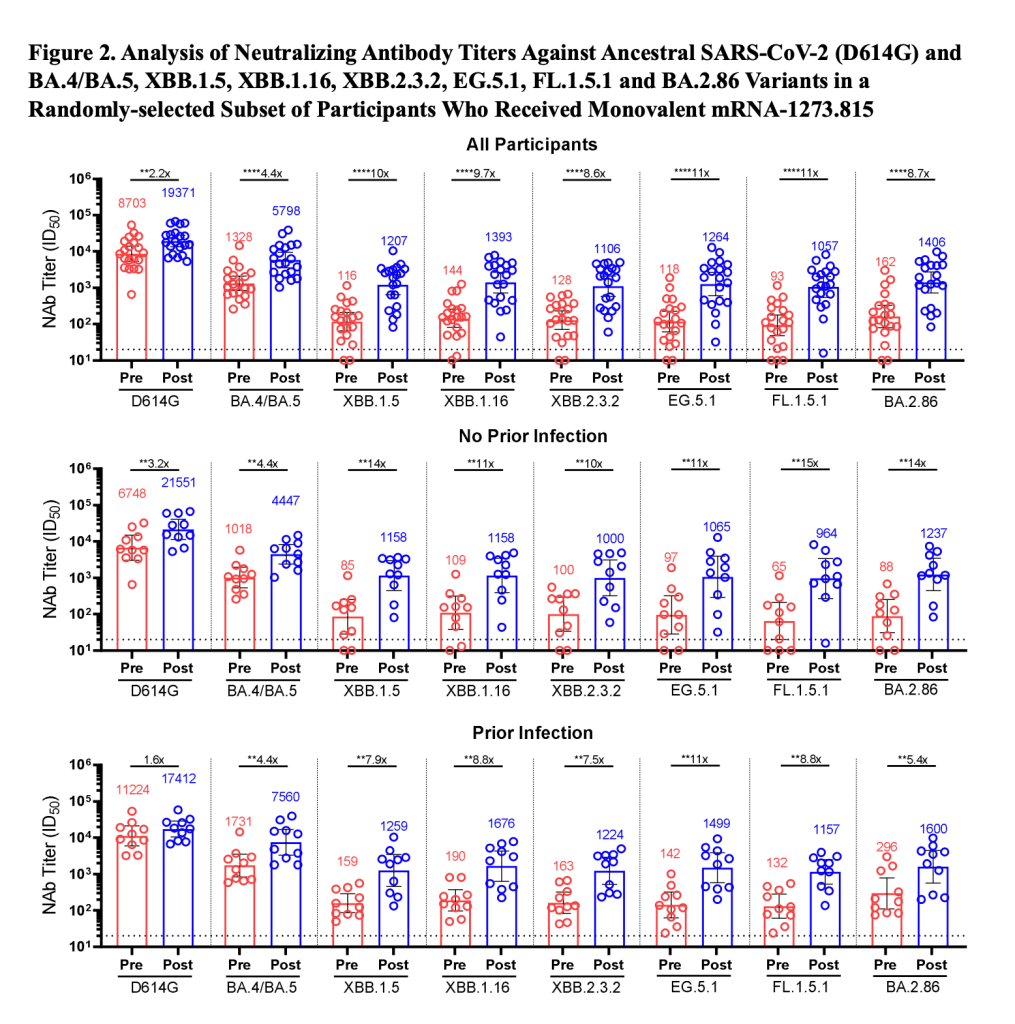
    About one month after vaccination with Moderna’s booster, the participants had about 17.5 times more neutralizing antibodies against XBB.1.5, 16.7 times more against XBB.1.6, 14 times more against EG.5.1, and 10 times more against BA.2.86. Pfizer also presented data, suggesting that their vaccine should similarly perform well against current variants.

    The new vaccines should lead to similar side effects as we’re used to from past mRNA shots.

    Based on data that the vaccine companies presented to the CDC’s committee, this fall’s Pfizer and Moderna vaccines should lead to similar side effects—headache, fatigue, muscle pain, etc.—as many of us have expected from past rounds of COVID-19 shots. The companies, along with the CDC and FDA, will continue to monitor these vaccines for any safety issues that may emerge as people start to get them.

    Young, unvaccinated children are at higher risk for COVID-19.

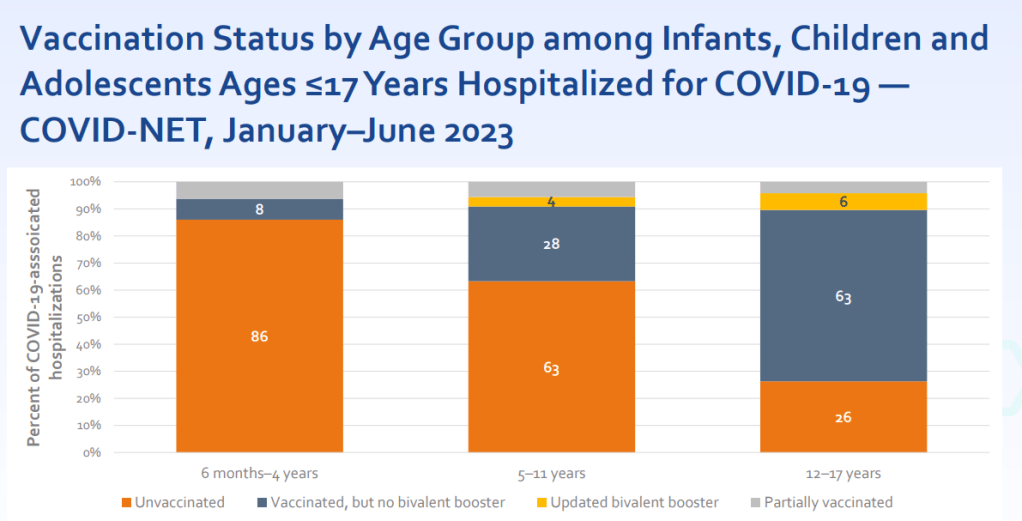
    One of the CDC presentations focused on how this fall’s vaccines may benefit young children. Last fall and winter, hospitalization rates were higher for COVID-19 than for the seasonal flu across all young age groups, from infants (under six months) to 12-17 years old. The vast majority of the children hospialized were not vaccinated or hadn’t received last year’s booster.

    For some CDC advisory committee members, these data were convincing in suggesting that this fall’s vaccine should be recommended for children, experts told STAT News. Vaccines updated to match current variants have a clear benefit for all age groups.

    Long COVID remains a significant risk for Americans across age groups.

    Another CDC presentation discussed Long COVID, as one of the potential adverse outcomes of a COVID-19 case. The CDC shared new data from a national survey conducted in 2022, which suggests that 9% of Americans ages 35 to 49 have experienced Long COVID symptoms (defined as symptoms lasting at least three months after a COVID-19 case). Adults ages 50-64 and 18-34 also reported high levels of Long COVID, at 7.4% and 6.8% ever experiencing symptoms, respectively.

    Many studies have shown that vaccination lowers risk of Long COVID, though it does not by any means eliminate this risk. While it’s good to see the CDC incorporating Long COVID into its vaccine risk/benefit discussions, much more research is needed to better understand how to prevent this debilitating condition.

    A Novavax vaccine is still in the pipeline.

    Novavax also presented data to the CDC’s advisors this week, suggesting that its vaccine (also based on XBB.1.5) should perform similarly to the Pfizer and Moderna options. But unlike the Pfizer and Moderna vaccines, Novavax’s has yet to receive FDA approval. The company has said it’s still planning to distribute its vaccine this fall, but it’s unclear when the FDA may authorize it. 

    Some people are eager to receive the Novavax vaccine this fall, rather than Pfizer or Moderna’s, because this vaccine uses a different mechanism to boost the immune system. It may also lead to fewer side effects than the mRNA vaccine, making it a potentially good option for people who’ve had particularly strong reactions. (I know a couple of readers have sent me questions about this, and aim to do a deep-dive on Novavax in a future issue.)

    Only 17% of Americans received last fall’s bivalent booster.

    The booster uptake last year was low, according to the CDC. Even among seniors, only 43% received the booster. Can we do better this year?

    A POLITICO/Morning Consult poll found that about 60% of respondents said they “probably or definitely” would get this year’s vaccine. (The poll included about 2,000 registered voters from across the U.S.) But it’s likely that access issues could get in the way for many people, as getting this COVID-19 vaccine will be much more challenging than it’s been in past rollouts.

    HHS program should provide free vaccines for 25-30 million adults.

    The Department of Health and Human Services has officially launched its “Bridge to Access” program, designed to provide free COVID-19 shots to uninsured Americans. Through this program, the HHS is essentially buying a small number of shots and distributing them to pharmacies, federally supported health centers, and other providers. You should be able to view these providers at vaccines.gov, according to the HHS. But I’ll be curious to see how well that actually works.

    This year’s vaccine rollout will be much harder to track.

    In the past, I’ve written about how the U.S. has failed to monitor breakthrough cases, or COVID-19 infections that occur after someone is vaccinated (and the hospitalizations, deaths, and long-term symptoms that may result). This year, not only are we failing to track breakthrough cases—the U.S. no longer has any national case data at all. We also no longer have vaccination data, as the CDC is not collecting this information from state and local health systems.

    So, how will we know how this year’s vaccine rollout goes? It’ll likely be a lot of guesswork, extrapolating from a few state/local health departments, polling data, and other smaller-scale research to estimate how many people are getting vaccinated nationally. This challenge is just another example of the damage that the federal government has done in the last year by dismantling many of its COVID-19 data systems.

  • New data on BA.2.86 suggest the fall booster may work well

    New data on BA.2.86 suggest the fall booster may work well

    Since BA.2.86 emerged a couple of weeks ago, scientists around the world have been racing to evaluate this variant. Several teams posted data in the last week, and the news is promising: while BA.2.86 does have an advantage over past variants, the lab findings suggest that vaccines (including the upcoming boosters) and past infections provide protection against it.

    The new studies come from research groups in the U.S., China, Japan, Switzerland, and South Africa. These scientists studied BA.2.86 by growing the variant in petri dishes and evaluating it against antibodies from blood samples. Overall, they found that BA.2.86 can infect people who were recently infected with XBB.1.5 and its relatives, but this variant isn’t as successful at getting into human cells as XBB.1.5.

    Another notable study came from researchers at Moderna, who evaluated how the company’s upcoming booster shot performs against BA.2.86. This team found that the booster—which is designed from XBB.1.5—helps the immune system prepare for XBB variants as well as BA.2.86. While lab studies like this one don’t translate perfectly to real-world effectiveness, the data do suggest that Moderna’s booster should protect well against BA.2.86 infection for a few weeks after vaccination, and against severe disease for longer.

    You might have seen the figure below shared around on social media in the last few days. This chart, from the Moderna team, shows how the new booster improves immunity toward several variants. For example, patients who received the booster had 8.7 times more neutralizing antibodies against BA.2.86 and 10 times more neutralizing antibodies against XBB.1.5 than those who had not received it.

    This figure, from a preprint by Moderna scientists, shows how the company’s upcoming fall booster performs against different variants.

    Pfizer has also tested their new booster against BA.2.86 and found similar results, according to a report from Reuters. This company’s results have yet to be shared in a scientific paper, though.

    The studies I’ve discussed here are all preprints, meaning the results have yet to be peer-reviewed (outside of the informal review process that happens on social media for this type of urgent research). It’s also worth noting that lab studies look at immune system signals, rather than actually tracking who’s getting this new variant and their disease outcomes.

    Even if BA.2.86 is not “the next Omicron,” as some scientists suggested based on its mutations, it could still contribute to a new uptick in cases this fall. And all cases carry the risk of severe illness, Long COVID, and other poor outcomes. The new boosters are likely to help reduce risk (which is good news), but other measures are still needed.

    References about the new studies:

  • Variant Q&A: Why scientists are concerned about BA.2.86, and which questions they’re still investigating

    Variant Q&A: Why scientists are concerned about BA.2.86, and which questions they’re still investigating

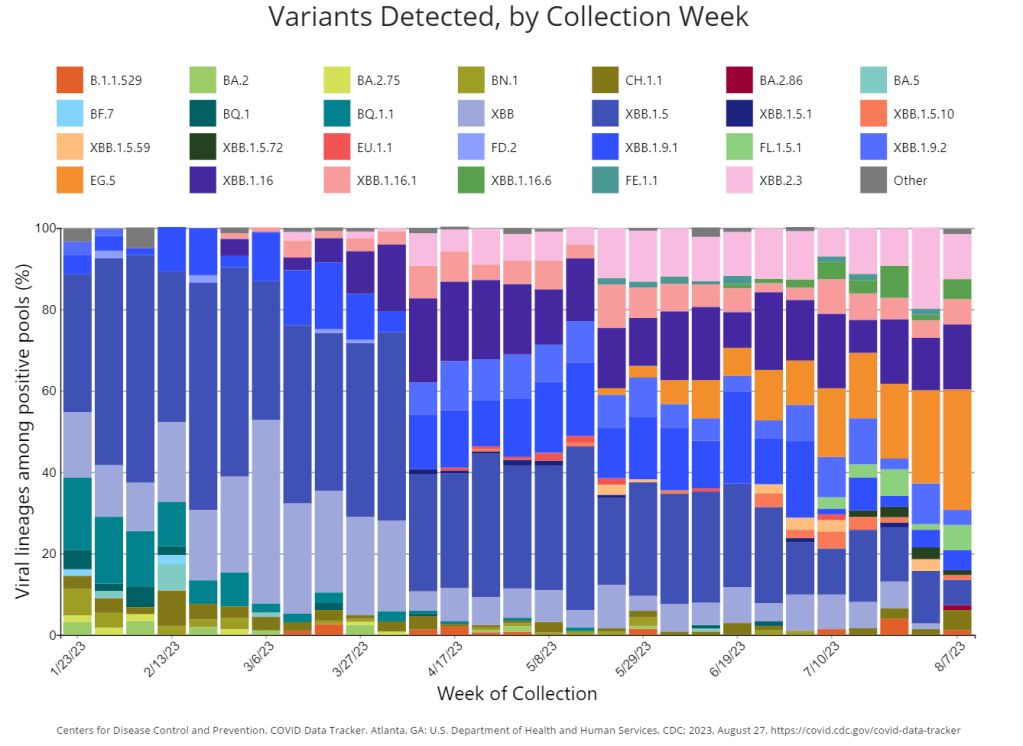
    The CDC’s Traveler Surveillance program, which offers free PCR tests to international travelers entering the U.S., was one of the first surveillance programs to pick up BA.2.86, pictured in dark red on the right-most bar of this chart.

    Last week, I introduced you to BA.2.86, a new Omicron variant that’s garnered attention among COVID-19 experts due to its significant mutations. We’ve learned a lot about BA.2.86 since last Sunday, though there are many unanswered questions to be answered as more research is conducted.

    Here’s my summary of what we know so far—and what scientists are still working to understand. Overall, this variant has some concerning properties, but more data are needed before we know what kind of impact it will have on disease transmission and severity.

    Where did BA.2.86 come from?

    BA.2.86 was first identified in Israel earlier this month. Scientists then picked it up in Denmark, the U.S., U.K., and several other countries across multiple continents (and in people without recent travel history), suggesting that it has been spreading under the radar for a while.

    However, as I’ve noted with past variants, the country where BA.2.86 was first identified is not necessarily the country where it developed. Many countries around the world are doing fairly limited COVID-19 testing and sequencing these days, so nations like Israel and the U.S. (which have more robust surveillance, relatively speaking) are likely to catch new variants.

    Why are scientists concerned about BA.2.86?

    BA.2.86 worries experts because it has a number of mutations: about 30 in its spike protein, compared to BA.2, its closest relative. The spike protein is the part of the coronavirus that binds to and enters human cells, so mutations tend to accumulate here, enabling the virus to cause new infections in people who have already been infected or vaccinated.

    BA.2, you might remember, was a dominant variant in early 2022, so it’s unexpected to see a descendant of this lineage pop up now. Scientists hypothesize that BA.2.86 might have evolved in a single person with a persistent infection; the virus could have multiplied and mutated over the course of several months or a year in someone originally infected with BA.2. This evolution also could have occurred in an animal population, then transferred back to humans.

    Scientists have similar hypotheses about the original Omicron variant, which was also very different from circulating strains when it emerged. In fact, BA.2.86 is about as different from XBB.1.5 (a recently dominant variant globally) as Omicron BA.1 was from Delta.

    Where has BA.2.86 been identified so far?

    Surveillance efforts in many countries have now found BA.2.86, ranging from Thailand to South Africa. This variant is evidently already spreading globally; unlike Omicron’s initial emergence, however, we don’t have a singular country to watch for signals of how BA.2.86 may impact transmission trends.

    In the U.S., researchers have found BA.2.86 in three different states:

    • One case in Michigan, from a person tested in early August
    • One traveler returning to a D.C.-area airport from Japan, their infection caught through the CDC’s travel surveillance program
    • Wastewater from a sewershed in Elyria, Ohio

    As surveillance is currently fairly uneven across the U.S., we can likely assume that BA.2.86 is present in other states already. Continued testing in the next few weeks will provide a clearer picture of the situation.

    How does BA.2.86 impact transmission and disease severity?

    This is one question that we can’t answer yet, though scientists are concerned about its potential. In a risk assessment report published this past Wednesday, the CDC said that mutations present in BA.2.86 suggest that this variant may have greater capacity to “escape from existing immunity from vaccines and previous infections” when compared to recent variants.

    However, this is just a hypothesis based on genomic sequences. The CDC report cautions that it’s too soon to know how transmissible BA.2.86 is or any impact it may have on symptom severity. To answer this question, scientists will need to identify more cases caused by this variant, then track their severity and spread.

    Will our new booster shots work against BA.2.86?

    The FDA and CDC are planning to distribute booster shots this fall, based on the XBB.1.5 variant that dominated COVID-19 spread in the U.S. this spring and earlier in the summer. As Eric Topol points out in a recent Substack post, this booster choice made sense a couple of months ago, but it’s unlikely to work well against BA.2.86 if that variant takes off.

    More research is needed on this topic, of course, but the existing genomic data is concerning. Having an XBB.1.5 booster this fall, if we see a BA.2.86-driven surge, would be like having a booster based on Delta, when Omicron is spreading: better than no booster, but unlikely to provide full protection.

    “The strategy of picking a spike variant for the mRNA booster at one point in time and making that at scale, going through regulatory approval, and then for it to be given 3 or more months later is far from optimal,” Topol writes. “We desperately need to pursue a variant-proof vaccine and there are over 50 candidate templates from broad neutralizing antibodies that academic labs have published over the last couple of years.”

    Will current COVID-19 tests and treatments work for BA.2.86?

    According to the CDC’s risk assessment, current tests should still detect BA.2.86 and treatments should work against it, based on early studies of the variant’s genomic sequences. More research (from health agencies and companies) will provide further data on any changes to test or treatment effectiveness.

    Mara Aspinall points out in her testing-focused Substack that rapid tests, in particular, tend to be unaffected by variants because they test for the N protein, a different part of the coronavirus from the spike protein (which is the main area of viral evolution). However, if you’re taking a rapid test, it’s always a good idea to follow best practices for higher accuracy—testing multiple times, swabbing your throat, etc.—and get a PCR if available.

    How are scientists tracking the coronavirus’ continued evolution?

    BA.2.86 has arrived in an era of far less COVID-19 surveillance, compared to what we had available a year or two ago. Most people rely on rapid tests (if they test at all), which are rarely reported to the public health system and can’t be used for genomic surveillance. As a result, it might take longer to identify BA.2.86 cases even as this variant spreads more widely.

    However, there are still some surveillance systems tracking the virus—and all are now attuned to BA.2.86. A couple worth highlighting in the U.S.:

    • Wastewater surveillance increasingly includes testing for variants. The CDC has a dashboard showing variant testing results from sewage; this is happening in about 400 sewersheds now and will likely increase in the future.
    • The CDC also supports a travel surveillance program at major international airports, in partnership with Concentric by Ginkgo and XpressCheck. This program caught one of the first BA.2.86 cases in the U.S. (the traveler from Japan mentioned above).
    • Several major testing companies and projects continue virus surveillance, via both limited PCR samples and wastewater. These include Helix, Biobot, and WastewaterSCAN.

    What will BA.2.86 mean for COVID-19 spread this fall and winter?

    While BA.2.86 is similar to Omicron BA.1 in its level of mutations, it’s not yet driving significant disease spread at the same level that we saw from Omicron when that variant first emerged in late 2021. All warnings at this point are tentative, based on very limited data.

    In a Twitter thread last week, virologist Marc Johnson pointed to three potential scenarios for BA.2.86:

    • It could “fizzle,” or fail to outcompete currently-circulating variants and spread widely despite its concerning array of mutations.
    • It could “displace” the current variants and contribute to increased transmission, but not cause a huge wave on the same level as Omicron BA.1 in late 2021.
    • It could cause a major wave, comparable to the initial Omicron spread.

    Based on analysis from Johnson and other experts I follow, the second scenario seems most likely. But if the U.S. and other countries had meaningful public health protections in place, we could actually contribute to those odds, rather than leaving things up to evolutionary chance. Remember: variants don’t just evolve in a vacuum. We create them, by letting the virus spread.

    Sources and further reading:

    More variant reporting

  • National numbers, August 13

    National numbers, August 13

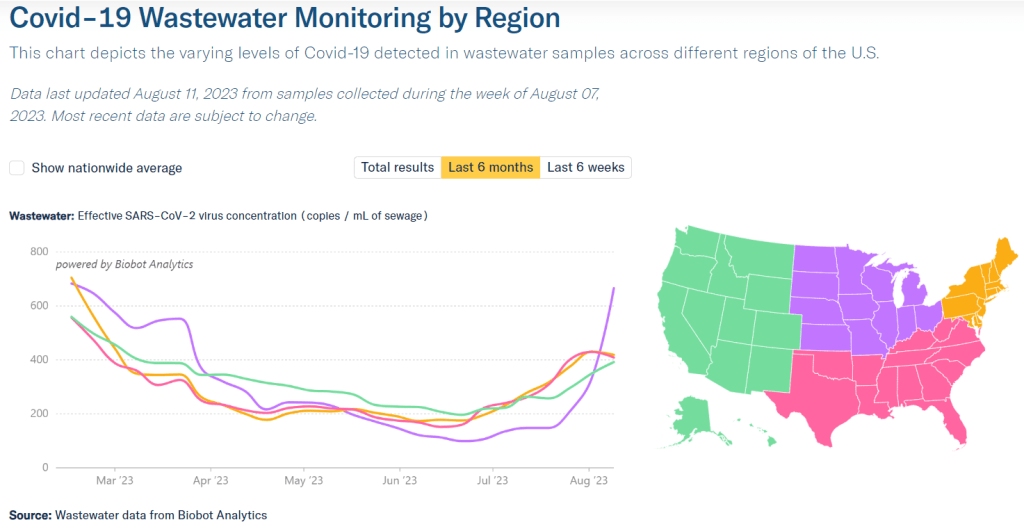
    Wastewater data from Biobot Analytics suggest that coronavirus levels in the Northeast and South may be leveling off, while the Midwest is seeing a major spike.

    During the most recent week of data available (July 23 through 29), the U.S. reported about 9,000 new COVID-19 patients admitted to hospitals, according to the CDC. This amounts to:

    • An average of 1,300 new admissions each day
    • 2.8 total admissions for every 100,000 Americans
    • 13% more new admissions than the prior week (July 16-22)

    Additionally, the U.S. reported:

    • 10.6% of tests in the CDC’s surveillance network came back positive
    • A 9% higher concentration of SARS-CoV-2 in wastewater than last week (as of August 9, per Biobot’s dashboard)
    • 31% of new cases are caused by Omicron XBB.1.6; 17% by EG.5; 11% by XBB.2.3; 10% by XBB.1.9 (as of August 5)

    All major COVID-19 metrics continue to increase in the U.S., as we deal with a late-summer surge. Wastewater surveillance suggests that current virus spread is on pace with the Delta surge in 2021, though other data sources are less reliable these days.

    Wastewater data from Biobot continue to show an uptick nationally, following the same upward trend that started in late June. The CDC’s wastewater surveillance system and WastewaterSCAN network report similar trends.

    Biobot’s regional data suggest that the Northeast and South, the first two regions to see COVID-19 increases this summer, might be approaching their peaks, but it’s too early to say for sure. Regional test positivity numbers, from the CDC, show no sign of slowing their rise.

    Meanwhile, COVID-19 spread is going way up in the Midwest, per Biobot and WastewaterSCAN. Some sewersheds in Iowa, Michigan, Ohio, and nearby states have reported their viral levels in wastewater more than doubling over the last couple of weeks.

    Test positivity nationwide is now over 10%, per the latest data from the CDC’s respiratory virus testing network. Walgreens’ COVID-19 dashboard, which displays testing data from its pharmacies (i.e. a smaller sample size than the CDC network), reports a record high: of about 2,400 COVID-19 tests conducted in the week ending August 6, 45% were positive.

    Hospital admissions for COVID-19 are also on the rise, with about 1,300 new hospitalizations for COVID-19 each day in the week ending July 29, per the CDC. While it’s true that these numbers are far lower than peaks during prior surges, the data are also less reliable now— with fewer hospitals reporting to the CDC and fewer measures in those hospitals (like masking) to control infections.

    A lot of articles in the last couple of weeks have connected the recent surge to EG.5, the latest Omicron subvariant gaining ground in the U.S. However, this variant is not necessarily causing the surge; it doesn’t seem to be meaningfully more contagious or more severe than other recent strains, scientists are finding.

    Rather than a variant, I would personally attribute this surge to summer travel and gatherings, combined with waning immunity—it’s been many months since most Americans had contact with the virus through vaccination or infection.

    All of the virus-spreading activities going on right now will give SARS-CoV-2 more avenues to mutate. And there are other variants circulating globally that could cause more problems in the U.S. as well, as Eric Topol outlines in a recent Substack post. The next booster can’t come soon enough.

  • National numbers, June 11

    National numbers, June 11

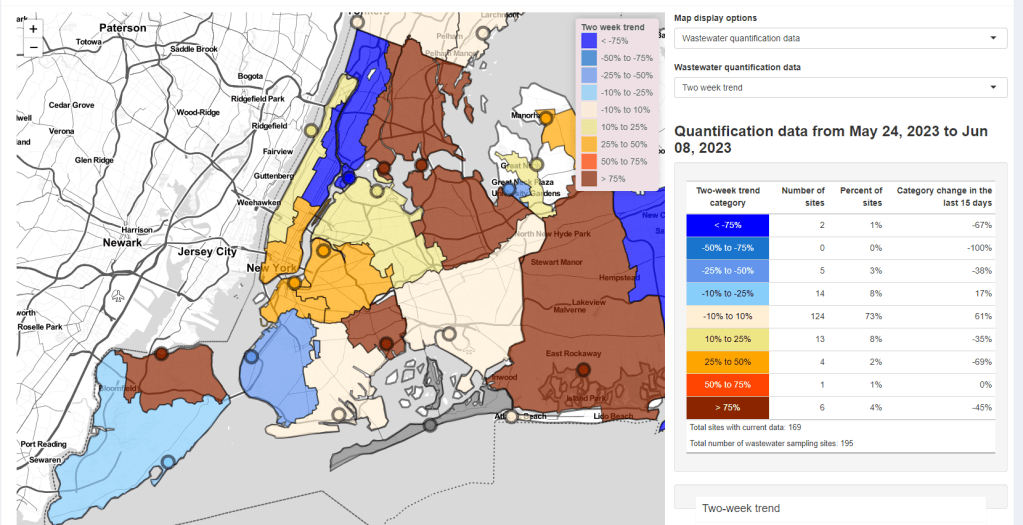
    Some NYC sewershed have reported substantial increases in coronavirus levels in recent weeks. Screenshot from the New York State wastewater dashboard.

    In the past week (May 28 through June 3), the U.S. reported about 7,200 new COVID-19 patients admitted to hospitals, according to the CDC. This amounts to:

    • An average of 1,000 new admissions each day
    • 2.2 total admissions for every 100,000 Americans
    • 6% fewer new admissions than last week (May 21-27)

    Additionally, the U.S. reported:

    • 4.2% of tests in the CDC’s surveillance network came back positive (an 8% decrease from last week)
    • 40% of new cases are caused by Omicron XBB.1.5; 26% by XBB.1.16; 21% by XBB.1.9 (as of June 10)
    • (Biobot update delayed)

    Nationally, the COVID-19 situation in the U.S. is similar to where we’ve been for the last few weeks. Major metrics (such as we have them) show an overall plateau in disease spread. Wastewater trends in a few places suggest a summer surge might be coming, but it’s hard to say for sure.

    Hospital admissions and test positivity (from the specific network of labs reporting to the CDC) are trending slightly down at the national level. But there are still about 1,000 people being hospitalized with COVID-19 every day.

    Biobot Analytics, my usual go-to source for wastewater surveillance data, did not update their dashboard this week due to a tech issue. The company’s most recent data, as of May 29, show plateaus in all four major regions.

    The CDC’s National Wastewater Surveillance System (NWSS) shows a similar picture. Among about 1,100 sewage testing sites that recently reported to the CDC, 60% reported decreases in coronavirus levels in the last two weeks while 40% reported increases.

    New York City is one of the places seeing wastewater increases, as I noted last week. Patterns differ somewhat across the city’s fourteen sewersheds, with some reporting more than 1000% increases in wastewater levels in recent weeks while others are still in plateaus.

    Both the New York/New Jersey and New England regions are reporting slight upticks in their test positivity, according to the CDC’s surveillance network. This (along with the trends in NYC’s sewage) could be a precursor of more COVID-19 spread this summer, but it’s currently hard to say for sure.

    The CDC updated its variant estimates (now reported every other week) this past Friday. XBB.1.5 is still the most common lineage, causing an estimated 40% of cases, the CDC reports. XBB.1.16 and XBB.1.9 continue to outcompete it, causing about 26% and 21% of cases respectively.

    These newer lineages have yet to contribute to a significant shift in transmission, from what I can tell. We have yet to see if past immunity in the U.S. can hold off against the ever-evolving Omicron variants this summer.

  • National numbers, May 21

    National numbers, May 21

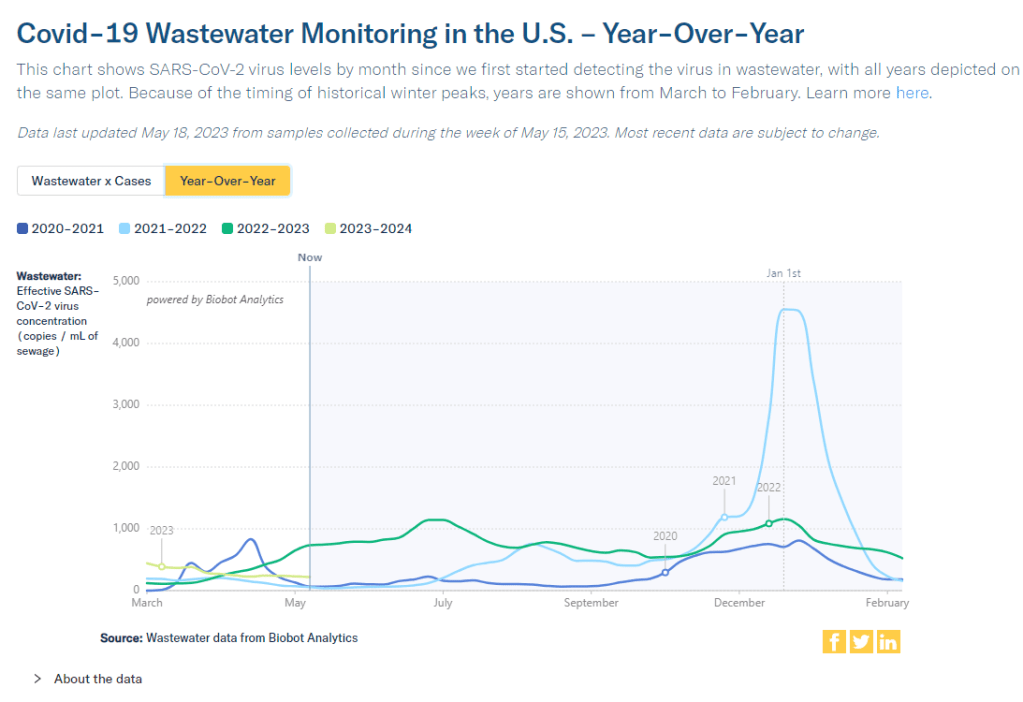
    According to wastewater data from Biobot, COVID-19 spread right now is lower than at this time last year, but higher than the prior two years.

    In the past week (May 7 through 13), the U.S. reported about 9,200 new COVID-19 patients admitted to hospitals, according to the CDC. This amounts to:

    • An average of 1,300 new admissions each day
    • 2.8 total admissions for every 100,000 Americans
    • 5% fewer new admissions than last week (April 30-May 6)

    Additionally, the U.S. reported:

    • A 4% lower concentration of SARS-CoV-2 in wastewater than last week (as of May 17, per Biobot’s dashboard)
    • 64% of new cases are caused by Omicron XBB.1.5; 13% by XBB.1.9; 14% by XBB.1.16 (as of May 13)
    • An average of 75,000 vaccinations per day

    Nationwide, COVID-19 spread in the U.S. continues to be in a somewhat-middling plateau: lower than the massive amount of Omicron transmission we all got used to throughout late 2022, but still higher than the lulls between outbreaks we saw in prior years.

    Biobot’s national wastewater surveillance offers a helpful visual for this comparison. As of May 20, the company calculates a national average of 221 viral copies per milliliter of sewage (a common unit for quantifying SARS-CoV-2 in wastewater), based on hundreds of sewage testing sites in its network.

    In late May of last year, when early Omicron offshoots were spreading widely, this value was several times higher: 736 viral copies per milliliter. But around the same time in 2021 (when millions of Americans were getting their first vaccine shots) or 2020 (when the very first big surge had ended), wastewater concentrations were under 100 viral copies per milliliter.

    It’s also important to note that wastewater concentrations have been fairly level for a couple of months now, both nationally and for all four major regions. High immunity across the population and a lack of divergent new variants have kept us from seeing a new surge since the 2022 winter holidays; but without widespread safety measures, I suspect we’re unlikely to see a drop in transmission below the current baseline.

    Hospital admissions, now the CDC’s primary metric for tracking this disease, show a similar picture to the wastewater data. Numbers are low and ticking ever-so-slightly downward, but they’re not zero: about 1,300 people were admitted to hospitals with COVID-19 each day in the week ending May 13.

    Deaths with COVID-19 also remain at low yet significant numbers. While the CDC reports only 281 deaths in the last week, this information is now presented with a greater delay than during the federal public health emergency, as the agency had to switch from death reports received directly from states to death certificate data. For the week ending May 6, the CDC revised its number up from about 300 to 622 COVID-19 deaths.

    There are no changes to variant estimates this week, as the CDC is now updating that data every other week rather than weekly. XBB.1.5 remains the dominant variant, with XBB.1.16 and XBB.1.19 slowly gaining ground.

    Overall, it’s getting harder to identify detailed COVID-19 trends, but a lot of data still do remain available. I’ll keep providing updates as best I can.

  • National numbers, May 14

    National numbers, May 14

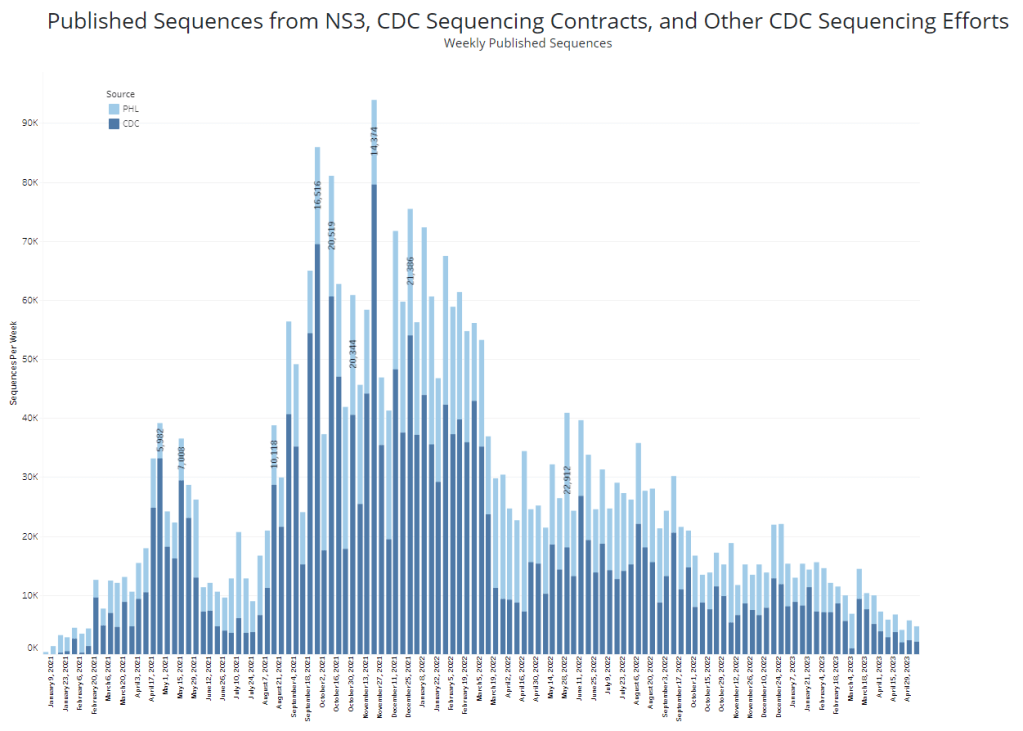
    The CDC and its partners are sequencing far fewer coronavirus samples than they have at prior periods of the pandemic, making it harder to spot new variants of concern.

    In the past week (April 30 through May 6), the U.S. reported about 9,500 new COVID-19 patients admitted to hospitals, according to the CDC. This amounts to:

    • An average of 1,400 new admissions each day
    • 2.9 total admissions for every 100,000 Americans
    • 7% fewer new admissions than last week (April 22-29)

    Additionally, the U.S. reported:

    • A 14% lower concentration of SARS-CoV-2 in wastewater than last week (as of May 10, per Biobot’s dashboard)
    • 64% of new cases are caused by Omicron XBB.1.5; 13% by XBB.1.9; 14% by XBB.1.16 (as of May 13)
    • An average of 70,000 vaccinations per day

    COVID-19 spread continues to trend down in the U.S., though our data for tracking this disease is now worse than ever thanks to the end of the federal public health emergency. If newer Omicron variants cause a surge this summer, those increases will be hard to spot.

    As a result of the PHE’s conclusion this week, the CDC is no longer collecting national case counts or testing data. Instead, the agency now recommends using hospitalization data to monitor how hard COVID-19 is hitting your community—even though this metric typically lags behind actual infection patterns—while variant data and wastewater surveillance may provide warnings about new surges.

    My national updates will take a similar approach. This week, hospital admissions continue their national plateau, with a decrease of about 7% from the week ending April 29 to the week ending May 6. The CDC’s national map show that admissions are low across the country, with 99% of counties reporting fewer than 10 new admissions per 100,000 residents.

    Wastewater surveillance also suggests that, while there’s still a lot of COVID-19 in the U.S., disease spread is still on a plateau or slight decline in most of the country. Biobot’s data show a minor national downturn in recent weeks; trends are similar across the four major regions, though the decline is a bit steeper on the West Coast.

    The variant picture also hasn’t changed much: XBB.1.5 caused about two-thirds of new cases in the last two weeks, according to the CDC’s estimates. XBB.1.6 caused about 14% and XBB.1.9 caused 13%; these newer versions of Omicron are gaining ground, but fairly slowly. Regionally, XBB.1.6 is most prevalent in the Northeast and on the West Coast, while XBB.1.9 is most prevalent in the Midwest.

    It’s worth noting, though, that the CDC has switched its variant reporting from weekly to every other week, as fewer patient specimens are going through sequencing for variant identification. The agency and its surveillance partners are sequencing around 5,000 samples every week, compared to over 80,000 a week at the height of the first Omicron surge.

    Limited sequencing efforts will make it harder for the CDC to quickly identify (and respond to) new variants of concern. The same challenge is happening around the world, as PCR tests become less broadly available. Sequencing coronavirus samples from wastewater may help, but that’s only happening in a small subset of sewage testing sites right now.

    One last bit of good news: vaccine administration numbers are up in the last couple of weeks, as seniors and other eligible high-risk people get their second bivalent boosters. About 70,000 people received vaccines each day this week, compared to around half that number a few weeks ago. If you’re eligible for a second booster, this is a good time to make an appointment!

  • National numbers, May 7

    National numbers, May 7

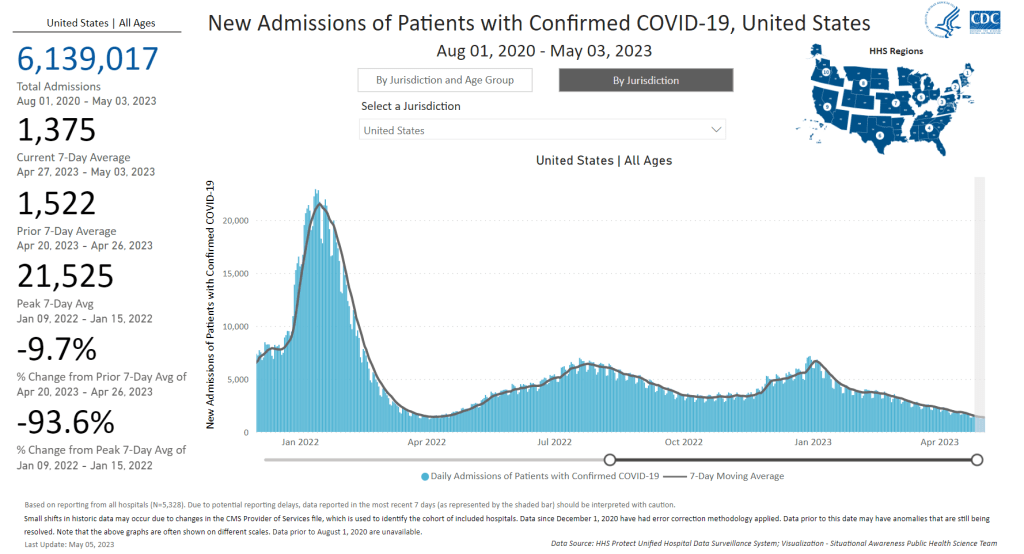
    New hospital admission for COVID-19 continue to drop, though they are at higher levels than we’ve seen in past lulls. Chart from the CDC dashboard.

    In the past week (April 27 through May 3), the U.S. officially reported about 77,000 new COVID-19 cases, according to the CDC. This amounts to:

    • An average of 11,000 new cases each day
    • 14% fewer new cases than last week (April 20-26)

    In the past week, the U.S. also reported about 10,000 new COVID-19 patients admitted to hospitals. This amounts to:

    • An average of 1,400 new admissions each day
    • 2.9 total admissions for every 100,000 Americans
    • 10% fewer new admissions than last week

    Additionally, the U.S. reported:

    • 1,100 new COVID-19 deaths (150 per day)
    • 67% of new cases are caused by Omicron XBB.1.5; 13% by XBB.1.9; 13% by XBB.1.16 (as of May 6)
    • An average of 60,000 vaccinations per day

    The national COVID-19 plateau persists. Cases, new hospitalizations, and wastewater surveillance all indicate slight declines (but persistent disease spread) across the country. New variants are on the rise, but have yet to noticeably change these trends.

    New COVID-19 cases declined by about 14% last week compared to the week prior, while hospital admissions declined by 10%. While the case numbers might seem low (just 11,000 reported each day), they are a drastic undercount of true infections, as we can see by comparing total new cases to new hospitalizations.

    This week, the CDC’s reported cases were about eight times the number of new hospital admissions reported by the agency. While this time last year, new cases were 30 times new hospital admissions. In other words, as case reporting gets less accurate, we are still tracking cases with severe sypmtoms (i.e. those that require hospitalization), but missing many of the mild or asymptomatic cases—that could still lead to detrimental outcomes, like Long COVID.

    Wastewater surveillance—which provides population-level data regardless of how many people are getting PCR tests or otherwise seeking healthcare—suggests that the U.S. has been at an overall plateau of COVID-19 spread, but a higher one than we’ve experienced in past lulls (such as in spring 2021, when people were receiving their first vaccine doses).

    Biobot’s national wastewater data shows fairly steady transmission for the last month. The company’s regional data shows a similar picture; the West Coast has slightly higher coronavirus levels than the other three major regions, but is on a decline. A few counties in California and other West states have seen increases recently, but it’s not a sustained pattern across the board.

    Newer versions of the Omicron variant are competing with XBB.1.5, but the transition is happening slowly. XBB.1.5 still caused about two-thirds of new cases in the U.S. last week, according to CDC estimates, while XBB.1.16 and XBB.1.9 both caused about 13% of new cases.

    It’s currently hard to say if the country will face a real surge from XBB.1.16 and XBB.1.9. XBB.1.16 has wreaked some havoc internationally, but it may be similar enough to the variants now circulating in the U.S. that it won’t make a huge dent. Or, if we do see an increase in cases, it could be more like a “mini-wave” of largely-mild infections than a surge that really strains the healthcare system.

    This “mini-wave” idea has been covered by a few news outlets recently, including Nature and the Atlantic. It’s certainly promising that the U.S. hasn’t had a real surge since the winter holidays, now almost six months ago—but we have to remember that any new cases, no matter how low the numbers are, can lead to potential severe symptoms and long-term illness. I, for one, am not letting up my guard on safety.

  • National numbers, April 30

    National numbers, April 30

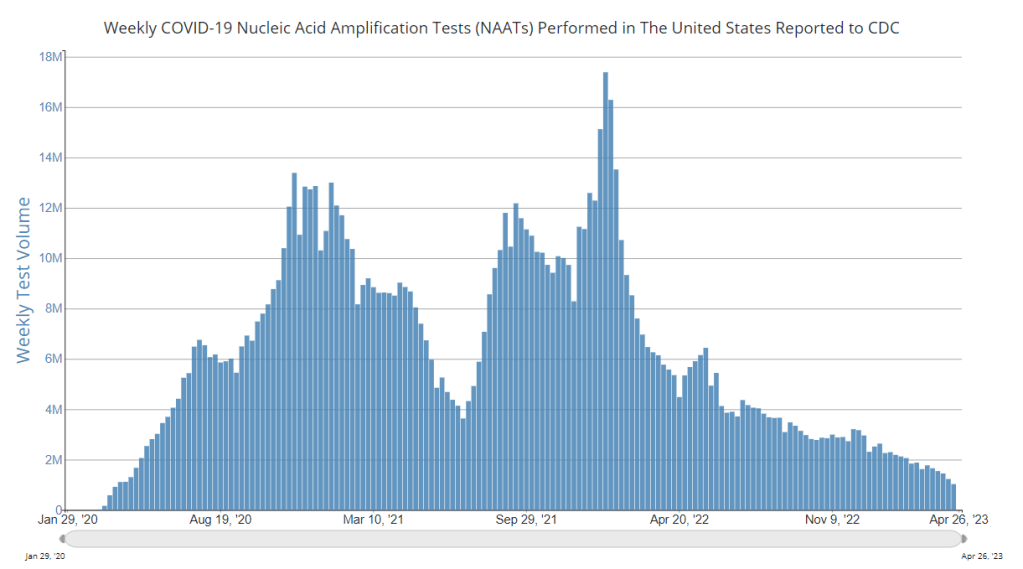
    The number of COVID-19 tests reported to the CDC has declined precipitously since peak COVID-19 surges, even though COVID-19 spread has not. Chart from the CDC.

    In the past week (April 20 through 26), the U.S. officially reported about 88,000 new COVID-19 cases, according to the CDC. This amounts to:

    • An average of 13,000 new cases each day
    • 10% fewer new cases than last week (April 13-19)

    In the past week, the U.S. also reported about 11,000 new COVID-19 patients admitted to hospitals. This amounts to:

    • An average of 1,500 new admissions each day
    • 3.2 total admissions for every 100,000 Americans
    • 16% fewer new admissions than last week

    Additionally, the U.S. reported:

    • 1,100 new COVID-19 deaths (150 per day)
    • 69% of new cases are caused by Omicron XBB.1.5; 13% by XBB.1.9; 12% by XBB.1.16 (as of April 29)
    • An average of 40,000 vaccinations per day

    Major COVID-19 metrics continue to suggest an ongoing (though slight) decline in the virus’ spread nationally, despite the rise of newer and more contagious variants. The moderate plateau persists.

    Officially-reported cases and new hospital admissions declined by 10% and 16% respectively last week, compared to the week prior. According to the CDC’s data notes, three states (Florida, Iowa, and Pennsylvania) did not report cases last week, while two states (Louisiana and Indiana) reported extra cases from their historical backlogs.

    In addition to the ongoing reporting issues from state health departments, it’s important to remember that PCR testing continues to decline across the country. About one million PCR and similar lab test results were reported to the CDC last week, compared to peaks over 10 million per week during major surges.

    Still, the hospitalization numbers and wastewater surveillance data lead me to suggest that we really are in a transmission plateau. Wastewater data from Biobot show a slight decline in national coronavirus concentrations over the last month.

    All four regions of the country are also experiencing COVID-19 plateaus, according to Biobot’s data. The West Coast and Midwest have slightly higher coronavirus levels than the Northeast and South, but there aren’t huge differences between the regions.

    The West and Midwest are also hotspots for XBB.1.16 and XBB.1.9, the two Omicron subvariants that have started competing with XBB.1.5 over the last few weeks. This competition is happening slowly; XBB.1.5 declined from an estimated 84% of new cases during the last week of March to 69% of new cases this past week, according to the CDC’s estimates.

    At this point, it’s hard to tell how much of an impact the latest variants will have on overall COVID-19 spread. And these connections likely will only get more difficult to parse out, as PCR testing continues to decline and reporting gets less reliable. The CDC itself is currently evaluating how to adjust its data-sharing practices when the federal public health emergency ends on May 11.